Tag Archives: Faith

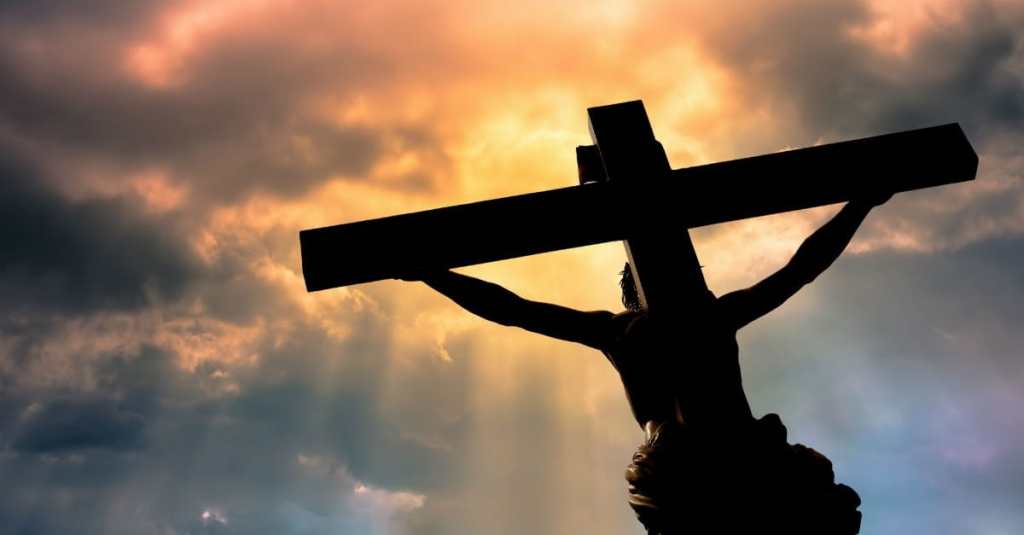
Palm Sunday – The Cross

The Face of Christ

Study:  Reflect on a time you experienced weakness and suffering.  Where did you find the strength to continue?

Pray:  Gaze upon a crucifix and offer to Christ any struggles you are facing right now.  Bring the needs of your loved ones to the foot of the Cross as well.

Serve:  Is there someone in your life who is carrying a heavy cross right now?  How can you offer comfort and assistance?

Palm Sunday Readings (with Year A reading for the Procession with Palms)

Fr. Andrew’s Homily Podcast

How many times throughout our lives have we made the sign of the Cross?  Stop and think:  at Mass; meal prayers; morning & evening prayers; special gatherings; and moments of blessing and grace.  This simple action, which we teach to children at an early age, invokes a connection with the passion of Jesus.

We adorn our homes with the Cross.  A crucifix is a common gift to a new home; crosses are placed in bedrooms and common areas as a reminder that Jesus is the source of our help and strength.

We adorn ourselves with the Cross as well:  a crucifix on a chain; a cross in our pocket; earrings; rings; bracelets; and all the extra cards, bookmarks, figurines, and miscellaneous items that remind us that Jesus died on a Cross.

The passion we read every year on this day focuses our attention on the central mystery of our faith.  Out of love for us God sent His Son, Jesus, who gave his life on the Cross that we might have eternal life.  Through his suffering and death, we recognize that God has made a pathway possible that we might all journey through this life to the gates of Heaven.

The Cross teaches us many lessons:

  • Life is difficult, and at times painful
  • Weakness and sin are part of our experience
  • God identifies with our pain
  • God dies that we might have life

At the core of our teaching the Cross stands as the testament of God’s love for us.  Yet the Cross appears to be an embarrassment – after all, why would God (all powerful, all knowing, supreme) choose to be humiliated?  Does that not mean that God is weak?  Why could God not take away our sins in a way that showed majesty and splendor?

In reality, the weakness revealed in the Cross uncovers our frailty, not God’s.  Jesus endured the Cross because of our broken, wounded nature.  He carried the Cross because we were unable to – as St. Paul writes “The wages of sin is death” in Romans 6:23 – and he bore the suffering, pain, and grief that are the natural result of our sinfulness.  God is not weak, rather God takes on our weakness so that we can be made whole.

The Cross proclaims the truth that God meets us where we are in life.  In our weakness, in our humiliation, in our low moments of doubt and sin God comes to us.  Jesus, like us in every way but sin, understands our pain because through his Cross he shares in the suffering of the world.  He knows us, loves us, and saves us through his Cross.

Every time we make the sign of the Cross may we recall what the Lord endured for us.  Through the Cross we discover our strength as we trust in God’s love and  seek to follow that love as we journey through this life toward the world to come.

We adore you, O Christ, and we praise you.  Because by your Holy Cross you have redeemed the world!


3rd Sunday of the Year – Step into the Light

In the Light

Study:  Are there parts of my life that are in the dark?  Is there anything that needs to brought into the light of Jesus?

Pray:  Ask the Lord for light to see insight and out – both in your heart and in your relationships.  Pray for the strength to face what you see.

Serve:  Is there someone in your life struggling to face God’s light?  How can you help them see clearly?

3rd Sunday Readings

Most of us use our sense of sight more than any other.  We are visually oriented – in our reading, electronic media, use of film, and interaction with one another.

But sight requires light to see clearly.  We stumble in the dark, get disoriented easily when we cannot see, and can lose our way without our gift of sight.

This is not just true in the physical world, but in the spiritual as well.  Our lives are defined by the choices we make, the words we speak, and the actions we perform.  They are all evidence of what’s really going on in our heart.  In the spiritual light of faith we understand who we are; we can examine our lives by the light of Jesus and discover ourselves.

Furthermore, in the light we can be truthful with one another.  We tend to hide our sins and weaknesses in the dark – to cover up our failures and avoid exposing our messes to the light where others can see them clearly.  Yet we also know that those who love us most truly know us the best, warts and all.  They love us not because we are perfect, but because their love (which sees us clearly) is greater than our weaknesses.

The readings today give us a lot of thoughts about light:

  • Light shines on us in our darkness (1st)
  • The Lord is our light (Psalm)
  • Light leads to repentance (Gospel)
  • In the light Jesus calls us to follow (Gospel)

Is there a darkness in our lives today?  Have we been stumbling in the dark and lost our way to God and one another?  Jesus Christ brings light which will not only reveal our lives on the inside but also on the outside.  God’s light uncovers who we truly are and how we relate to others.  In the light we can be honest, sincere, and real.  In the light we can acknowledge our failures and return to the one who forgives us.

The invitation: come into the light!  We do not need to be afraid – God knows us better than we know ourselves.  Stepping into the light helps us to recognize where we can grow, so we can be transformed by the grace of Jesus and live in His light.

  • On the inside – we fearlessly look at the darkness in our hearts.
  • On the outside – we face the darkness in our relationships.

Once the light of Jesus helps us to see clearly we can make the changes we need to live authentically as his disciples.  By His light we can receive the grace, guidance, wisdom, and strength we need.  Let there be light!


Epiphany – Responding to the Light

Fireworks Galaxy - ngc6946

Study:  When did you experience a moment of profound insight that led you to action?

Pray:  Are there any major decisions or challenges in your life right now?  Pray for the light to see your way, and the courage to carry it out!

Serve:  Is there someone in your life in need of light?  Can you help them understand or give them strength to support their actions?

Epiphany Readings

Think for a moment about all the different ways we respond to light:
* Christmas lights
* Stop and Go lights
* Night lights
* Flashlights
* Candlelight
* Lantern light
* Key chain & Pocket lights
* Car lights
* and many, many, more!

All these lights surround us and help us navigate our everyday activities.  They bring guidance, comfort, joy, understanding, and security to our lives.  Indeed, light is a precious gift that brings meaning and purpose to our world.

Yet it is not enough for light to simply shine upon us; light is the beginning – but it evokes and calls forth a response from us.

Look at it this way.  A stop-and-go traffic light cannot simply be seen; it must be followed and acted upon (or else you are likely to get rear-ended).  Failure to respond to the light leads to difficulty, while those who are guided by the light and act accordingly find their way.

We hear about light in the Gospel today.  The Magi observed the light, and they followed and searched until they understood what it meant.  The light was the beginning; only through their journey and response did they discover the precious gift of Jesus – the Light of the World.

Many saw the light.  It was there in the sky for all to see.  Yet only a few responded and recognized that the starlight was a sign from God.  Thus, it was not enough just to see; for indeed we celebrate those who both saw and acted upon the light.

It is our belief that God continues to shine upon us today.  The Light of Christ burns brightly – in the Scriptures, the Sacraments, moral teachings, our conscience, our prayer, and the comfort and support of family and friends.

Yet even as God is revealed to our world the light alone is not enough.  We, too, are invited to act as the Magi and respond to the light.  May we open our eyes and our hearts this day, recognizing the Lord and responding to His Light.


Christmas – The Nativity of the Lord

Nativity

Study:  Reflect on your life right now.  Is there something difficult that needs God’s grace?

Pray:  Take a moment in your prayer to accept the love of Jesus.  Pause on the readings of Christmas and allow his grace to touch your heart.

Serve:  Share the love of Christ with another – a gentle word, a kind deed, and tender thought.

Christmas Eve Readings:    Vigil Mass    Mass at Midnight

Christmas Day Readings    Mass at Dawn    Mass during the Day

The titles are endless:

* King of Kings   * Lord of Lords   * Prince of Peace

* Rod of Jesse   * Key of David   *Desire of Nations

* Wonder Counselor   * God Hero   * Emmanuel

* The Messiah   *Christ the Lord

Yet the Savior of the world did not stand on his title, did not presume his glory, and did not claim power.  He was born homeless in the midst of poverty and the threat of violence.  Simply put, the Lord came into our world in the most humble way – to remind us that nothing, NOTHING is out of reach of God’s saving grace.

Born like all of us as a vulnerable baby, dependent on others, he would grow to teach us about his Father in heaven and how we are called to love and serve.  Again, the Lord did not claim his power, but rather invites us to hear his voice and follow.

Have you heard the bells of Christmas?  Some are tiny ornaments on the tree.  Some are massive that hang in belfries and call us to worship.   Some are on the sleigh.  Others are rung by hand.  In many ways the bells remind us of Jesus – the sound we hear is an invitation to act.

No matter where we have been and what we have done, Jesus Christ comes into our world – in the messy, challenging, difficult, stressful, and chaotic parts of our lives – and he calls us gently and lovingly.  Do we listen?  Do we respond?

He knows us, he shares our nature, and he reaches out.  There is nothing to fear – he understands us better than we understand ourselves – and he loves us completely.  This Christmas let the love of the Savior touch your heart.  Hear his call and respond with love for the Lord and the people God has put in your life today.

Merry Christmas!


34th Sunday of the Year – Christ the King

Jesus Christ

Study:  Consider people you know who have been good role models of leadership.  What qualities did they possess that you admired?

Pray:  Is there a major decision or choice in your life that requires guidance.  Ask the Lord for direction.

Serve:  Is there someone you know who is searching for meaning and purpose?  Is there some way that you can help them find their path in life?

34th Sunday Readings

The Feast of Christ the King brings the Church calendar year to a close.  Next week begins Advent, and we will start a new liturgical year with the cycle of “A” readings in the Lectionary for Mass.

Why do we end the year with the notion of Christ the King?  Why do we place this feast here?  What’s the point?

The feast has several levels of meaning.  By calling Christ our King we are making a statement that Jesus is the Lord of our lives.  It means that we place Christ first, and that we serve the Lord Jesus with the allegiance of our hearts, minds, and bodies.  We belong to Christ, who rules us.

In addition, to claim Christ as our King means that we are members of his kingdom.  Through our baptism we are called to the community of faith, the Church, and we possess an inheritance that is ultimately not of this world.  We are citizens who have a responsibility to work together – for this world and the world to come.

Furthermore, the King will come at the end of time to call His faithful people home to heaven.  We believe that the world will end on a future, unknown day (and once again, let me stress it is an UNKNOWN date…).  This feast reminds us that in the end we belong to one home or the other, one Lord or another.

Finally, to say that Christ is our King reminds us that all our power, strength, hope, and direction come from Him.  The skills and talents we possess are from the King (who made us).  The forgiveness we cherish is from the King (who died for us).  The life of the Holy Spirit which sustains us was sent by the King (who asked the Father on our behalf).

Therefore, to claim Christ as our King is to make a statement about who we are.  As followers of this King we offer our lives in service to the one who is our Lord.  We make this King our first priority in all things, and we look upon Jesus Christ as both the beginning and end of our existence.

This is a good time for us to search and prepare our hearts.  As this Church year comes to an end we begin to make ourselves ready for the Lord who comes to us, that he might find us alert and watchful for his arrival.  May we renew our allegiance to Christ our King so that he will rule us with mercy, grace, and love.


33rd Sunday of the Year – Life is difficult

Life is difficult

Study:  Reflect back on life – what have been some major obstacles that you faced?  How did you find the strength and wisdom to overcome them?

Pray:  What current obstacles are before you right now?  Bring these to prayer and ask the Lord for guidance and perseverance.

Serve:  Is there someone in your life who is facing a difficult time in life right now?  How might you be able to offer support?

33rd Sunday Readings

M. Scott Peck, author of the classic personal growth book The Road Less Traveled, begins his text with a simple statement:

Life is difficult.

If we assume this point – that there are times in our lives that are difficult – then we can gain a clear perspective on those moments which confront us with struggle.  We recognize that challenge is indeed a part of life, and how we respond to difficulty shapes and defines who we are.

Difficulty poses a common trap.  When life challenges us we may be tempted to avoid the situation altogether.  It may (falsely) appear that it is easier to stay away from the problem – to run away, hide, pretend it is not there, or direct our attention on something else.

When this happens we may choose an (apparently) easier path.  This is the direction of least resistance; we do not seem to experience the stress or unease we felt before.  Yet this feeling does not last for long.  Sooner or later, the problem we attempted to avoid returns, usually greater than before.

In the end we are confronted with two crucial steps.  First we must recognize the situation (life is difficult).  Second we face the struggle and choose an appropriate response.  Sounds like fun, right?

Wrong…

The Gospel today is clearly not what we call a “warm-fuzzy” sort of reading.  Luke makes it clear that a life of faith will be marked with difficulty.  Pain and suffering will confront us from a variety of perspectives throughout our lives.

The Cross of Christ is our model for this brutal truth.  We know that there is hope and resurrection awaiting us, but we also know that the path to eternal life may also demand steadfast patience and sacrifice.  Indeed, the Lord asks no less than our very lives.

Yet while this reading presents us with a sort of blunt honesty, it also provides us with a powerful hope.  God will not abandon us in our weakness to journey alone.  In our moments of struggle the Lord walks with us, offering strength and guidance to help us on the way…even when life is truly difficult.


31st Sunday of the Year – How do we respond?

Response

Study:  Look back on some recent responses to others.  Have these responses been guided by Jesus Christ?

Pray:  Are there any major decisions or challenges in my life?  Take these to prayer and ask the Lord for direction.

Serve:  How can I help someone to make the right decision?  How can I help them make a holy response to their circumstances?

31st Sunday Readings

A man had two twin sons.  One son was an optimist, the other was a pessimist.  On their birthday their father brought them to the barn.  Two stalls were marked, one with each boy’s name, and in the middle of each stall was a small pile of manure.

The pessimist immediately began to complain of the smell, wondering why he had to clean up the mess of an animal.  The optimist immediately began to search through the barn.  When his grinning father asked him what he was looking for, the boy replied, “I want to see my new horse!”

Life often offers us situations that contain both good and bad elements.  At such times we have the opportunity to make choices that illustrate our priorities and values.  In others words, our responses reveal what is going on in our hearts.

The Gospel today offers two powerful responses.  Jesus and Zacchaeus both respond to the situations in which they are placed, and their actions reveal their sincerity and conviction.

Jesus encounters Zacchaeus on his journey through Jericho.  We are informed that Zacchaeus is a chief tax collector – despised by the local population as a greedy man who supports the Roman Empire.  He is a “sinner” to the people, and their grumbling shows that they believed he had no business with Jesus.

Yet the Lord makes no distinction in his greeting to Zacchaeus.  He calmly speaks to the man, informing him that he will dine at his house that day.  The response of Jesus is simple:  he reaches out to a person in need of conversion and healing, regardless of past history.

Zacchaeus also displays an amazing response.  The fact that he climbed a tree to see the Lord indicates that he wanted to make a change in his own life.  When Jesus offers him an invitation, Zacchaeus immediately accepts; furthermore, he boldly states a change of heart in his financial practice!

These two responses serve as an invitation for us as well.  Like Jesus, we may examine those situations where we are called to reach out to others.  Like Zacchaeus, we may study those moments when we wish to accept the mercy and help of another.  In both cases, our responses will reveal what is going on in our hearts.  May the Lord help us to choose wisely, as we respond to the world around us.


29th Sunday of the Year – Sacred Scripture

Bible

Study:  Do I have an opportunity to read from the Bible every day?  Can I make a few minutes free to read a little Scripture and pause to reflect on what God’s Word says to me?

Pray:  In my daily prayer, do I take a moment to consider how Sacred Scripture can lead me closer to the Lord and others?

Serve:  How might I put what I discover into practice?  How can I live out my faith today?  Where is the Lord calling me to put my life into action for Christ?

29th Sunday Readings

The second reading today reminds us of the power of the Scriptures.  In particular, two verses stand out:

“All Scripture is inspired by God
and is useful for teaching,
for refutation, for correction,
and for training in righteousness,
so that one who belongs to God
may be competent,
equipped for every good work.”
(2 Timothy 3:16-17)

In light of these words there are several points that surface.  First, do we realize the richness and depth of the Bible?  Do we recognize that this text has guided and directed the Church for two thousand years, offering wisdom and insight for daily life?  Let’s face it, sometimes we can take the Scriptures for granted, and thus miss out on the Lord’s revelation for our world.

But if we do acknowledge the importance of God’s Word, do we actually take time each day to listen?  This is the second point – knowing the Bible is important is not enough – we need to read it!  The Lord invites us and calls us to know Him; through a steady diet of Scripture we open our hearts to the grace of God.

Third, (and this is the hard part) do we let this Word move us?  As we listen to the teaching and wisdom of our faith, do we change our lives accordingly?  The Scriptures teach us about the Lord, our faith, and our life.  Do we put what we receive into practice?

Now let’s be clear.  Parts of the Bible require careful interpretation and study.  Parts of the Scriptures are written through a particular cultural perspective.  Sometimes the message demands skilled and trained responses through the insight and teaching of the Church.  Fortunately our Catholic tradition provides vast resources for learning and understanding God’s Word.

I would invite all of us to take a little time each day to reflect on the Scriptures.  Start with Luke’s gospel.  Read a little every day and think about the message.  Ask questions.  Pray about what is read.  After all, it is the Lord’s good news – given to us for strength and life!


27th Sunday of the Year – A Good Servant

Adoration

Study:  How can I share the time, talents, and treasure that God has given me?

Pray:  Where do I hear the Lord’s voice calling me today?

Serve:  Who has the Lord put in my life?  Who can I help today?

27th Sunday Readings

What does it mean to be a good servant?  The Gospel parable offers a simple illustration for our reflection today.  Each of us has work to do; our vocation (whatever it is) leads us to particular tasks and duties.  Let’s break it down:

* What does it mean to be a good person?
* How am I called to live in the world?
* How does my faith direct me to live?
* Who are the people I care for in my life?
* What tasks are set before me to do?

The fact is, we all have a part to play in this life.  We all have people to serve, work to do, and examples to offer to those around us.  These tasks may vary with our age, gender, education, and resources – but they are all part of God’s call to proclaim the Good News of Jesus Christ.

The point of the parable is that we should not think that the work we do has special merit.  Just because the Lord blesses us with unique resources or gifts does not entitle us to privilege.  We are called to do our work, mindful that it is our part in God’s plan.

This means that we do our work with care, attention, and purpose.  We do this not because we seek special treatment, but because the Lord invites us to share our talents for the greater good of all.  It is not enough to go through the motions; we offer the best of our lives that we might make a difference!

As servants of Jesus Christ we are commanded to follow the Lord throughout this life until we are called home.  And when we stand before the Lord we will discover both what we did with our lives and what we failed to do.  In all this we live that we might be good servants – willing to carry out the task at hand.

We turn to our faith in our moments of need.  We pray that God will assist us in our times of trial, that we will offer the best we have in our service.  We look to the Lord for guidance and strength.  We trust that the Christ will never leave us.

It is this faith that sustains us when doubt and fear surface in our hearts.  It is this faith that supports us when we feel alone.  And it is this faith that becomes the bedrock for our service – that we might be good servants, following the Master’s call.


26th Sunday of the Year – Road Signs

Road Signs

Study:  In your personal life, what have been some of the best “signs” that have pointed you in the right direction?  Is it a person, an experience, or perhaps an activity?

Pray:  Ask the Lord for the spiritual sight to recognize God’s signs within our daily lives.

Serve:  How might you be a source of direction and guidance for another?  How might your life point the way for another to follow?

26th Sunday Readings

I often am traveling in unfamiliar places.  Unsure of my directions, I am extra careful when it comes to reading the road signs; all it takes is one wrong turn to cause a delay or even greater confusion.

Road signs are important for travel.  They guide us, remind us of our distance and time, reassure us about our direction, and help us reach our destination safely.  These signs make certain that the trip will result in our timely and secure arrival.

We use signs in other parts of our lives as well.  We look for cues from one another in our relationships to show us if we are on good terms with others.  We have progress reports to help us assess how our work is going.  And we often ask for evaluations after programs to determine if the presentation was helpful.  All of these examples show us that signs aid us in living our lives in a healthy and happy fashion.

In the Gospel we hear the familiar story of the rich man and Lazarus.  It is a classic tale about the reversal of fortunes between this world and the next.  Yet the twist in this parable happens when the rich man, from the midst of his suffering, wants to go back and warn his brothers about their impending fate.  Abraham reminds him, “If they will not listen to Moses and the prophets, neither will they be persuaded if someone should rise from the dead.”

This sobering statement reminds us that our choices result in consequences that hold us accountable.  Our words and actions make a difference, for good or evil, and the great power of our choices affects ourselves and others in many ways.

Yet Abraham’s reply can also fill us with hope.  We possess the Scriptures; we know the commandments God offers us.  With these signs we can journey through life aware of our opportunities and responsibilities.  God has given us everything we need to face our joys and sorrows in this world, and with these “road signs” we trust that we will be united with God completely in the eternal world to come.