Tag Archives: Catholic

Easter Day

Easter Lily

Study:  When have you experienced a profound moment of change and growth?  What brought it about?

Pray:  Open your heart to Jesus Christ.  Let the joy of the resurrection transform your life.

Serve:  Claim your faith!  Let your love for the Lord direct your thoughts, words, and actions – in whatever you face today.

Easter Day Readings        Fr. Andrew’s Homily Podcast

In the early hours of that first Easter Day we celebrate an incredible hope as word spread through the city of Jerusalem – Jesus is alive.

His followers had been crushed by the agony of the Cross.  Lost – beyond all sense of pain, sorrow, and grief – from the darkness of their fear and despair they passed on the message: we have seen him, we have touched him, we have eaten with him – the Lord has been raised!

I have always been struck by the transformational effect the resurrection of Jesus had upon his disciples:

  • Fear to Faith
  • Helplessness to Hope
  • Lament to Love
  • Cowardice to Courage

The same disciples who once fled for their lives will now go out into the world to proclaim the Good News of Jesus Christ.  They will face persecution, suffering, and martyrdom in order to testify to the truth of Easter Day: the Resurrection of Christ.  What’s more, they will do this with an overwhelming sense of conviction and strength.

No one can ignore the power of this effect.  The encounter with the Risen Lord changes everything.  What is there to be afraid of?  Jesus has broken the chains of sin and death – we can face anything in this world with confidence.  Jesus has triumphed, and in the light of Easter Day we now draw on his strength to face our battles with joy.

The death of Jesus on the Cross was for our sins; the resurrection of Jesus was for our lives.  The power of Easter Day directs our attention to the sacred and precious gift of life.  Life is worth fighting for, worth dying for, and worth living for – in this world and the next.  The resurrection reveals God’s love for our lives; we are worth the sacrifice of the Cross and empowered to live with faith, hope, and love.

How will we live this great promise of faith?  How will we allow the power of Easter to transform us?  For remember: the moment we acknowledge the truth of the resurrection our lives fundamentally change.  Directed by the saving work of Christ we now engage the world on new terms: we witness through word and action the love of Jesus each and every day.  With our eyes fixed on heaven we boldly walk this earth as his disciples.  We live our lives with real truth and power.  We live our lives as God’s sons and daughters.

The authentic witness of our faith is THE WAY that people truly discover Jesus.  It was true for the disciples on that first Easter Day, and it is true for disciples today.

Perhaps today is the day that our faith takes on a deeper meaning and purpose in our lives – placing Jesus first in all that we say and do.  May this Easter Day fill our hearts with grace and power to live in the light of Christ.  May we let the Lord into our hearts and allow our lives to be transformed by his love.

Christ is alive!  Alleluia!  Alleluia!


Easter Vigil

Candlelight

Study:  How did you learn your Christian faith?  When did it become something you claimed for your own?

Pray:  This is a good time to count our blessings and draw near to the Lord in gratitude for the gift of life.

Serve:  Perhaps there is someone to whom you might want to say, “I love you.”  Perhaps this is a good time right now…

Easter Vigil Readings

This holy night finds the Church celebrating the profound mystery of Christ’s saving work.  The Easter Vigil recalls the great moments of salvation history, rejoices with those who enter into full communion with the sacramental life of the Church, and is nourished by Eucharist.  Here are the four key components:

  • The Liturgy of Light
  • The Liturgy of the Word
  • The Liturgy of Initiation
  • The Liturgy of the Eucharist

The Liturgy of Light (or Lucernarium) begins the Easter Vigil.  In the darkness the image of light is used to proclaim our hope in Christ.  Several things happen:

  • A new fire is blessed and from its flames the light of the paschal (Easter) candle is lit
  • This candle is processed into church where the faithful light their own candles from it.
  • By this sea of candlelight the great Easter proclamation of Christ our Light – the Exsultet – is offered.

The Liturgy of the Word recounts the epic story of salvation history through several Old Testament Scriptures:

  • Creation – Genesis 1:1-2.2 and Psalm 104 or 33
  • Abraham’s Sacrifice – Genesis 22:1-18 and Psalm 16
  • Passage through the Red Sea – Exodus 14: 15-15:1 and its Canticle (Exodus 15)
  • The New Jerusalem – Isaiah 54:5-14 and Psalm 30
  • Salvation Offered Freely to All – Isaiah 55:1-11 its Canticle (Isaiah 12)
  • The Fountain of Wisdom – Baruch 3:9-15 and Psalm 19
  • A New Heart and a New Spirit – Ezechiel 36:16-28 and Psalm 42-43

We then move from the Old t0 the New Testament:

  • The Gloria is sung
  • A reading from  Romans 6:3-11 – Christ, raised from the dead, dies no more!
  • The Alleluia is sung
  • The Gospel is read – Mt 28:1-10; Mk 16:1-7, Lk 24:1-12 (depending on the year)

The Liturgy of Initiation then follows where those who have been preparing to enter the Church now receive their sacraments.

  • The Litany of the Saints is sung
  • The Baptismal Font is blessed
  • The Sacrament of Baptism is celebrated
  • The Assembly renews their Baptismal Promises
  • The Sacrament of Confirmation is celebrated

Finally, the Liturgy of the Eucharist allows the entire community to draw near to the altar to receive Jesus Christ in the sacrament of his Body and Blood.  The newly baptized receive Holy Communion for the first time in the company of their fellow Catholics.  Like every Mass:

  • Bread and Wine are brought to the altar
  • The Priest prays the Eucharistic Prayer
  • The Lord’s Prayer is said, followed by the Sign of Peace
  • We receive the Lord Jesus in Holy Communion

The great promise of faith, founded upon God’s saving work through time in the history of salvation, is proclaimed on this holy night.  May Christians around the world renew their faith in Jesus Christ – sharing his love and light with one another.

Christ our Light!


Good Friday – What Wondrous Love Is This

Good Friday

Study:  Consider a time in life when all hope seemed lost.  Where did strength come from?

Pray:  Offer a prayer of acceptance for the love and saving work of Jesus.  Gaze upon a crucifix and reflect on his sacrifice.

Serve:  Acts of love, kindness, and sacrifice come in all shapes and sizes; where might you offer your life today for another?

Good Friday Readings

Have you ever had a bad day?

Let me be brutally clear:  have you ever had a day so bad that it seemed as if the earth had swallowed you up and you were trapped under a crushing weight of pain, sorrow, agony, loss, humiliation, abandonment, or confusion – utterly devoid of all direction, purpose, and meaning?  A place where reality overflows with suffering?

Welcome to the Cross of Jesus Christ.

Nothing on this “Good Friday” looks good at first glance:

  • Betrayal from friends
  • Unjust accusations
  • Corrupt justice
  • Ego and political power trips
  • Cruel humiliation
  • Timid frailty and cowardice
  • Brutal physical punishment
  • Powerlessness
  • Mockery
  • Death

Why?  Why!  Why would God allow this?  What could such horrible suffering teach us about ourselves or God?

Answer: What wondrous love.

Jesus Christ endured this day out of love for a wounded and broken humanity.  He died in this wretched way for our sinful weakness because we could not be healed on our own.  He carried his Cross because of our worst days – the days that we regret over the thoughts, words, and actions that we cannot take back.

The Cross reveals the depth of God’s love: a love without limit or boundary.  There is nothing, NOTHING, that can keep us from the wondrous love of Christ.  Jesus embraces our human faults, sins, and weaknesses – and meets us there with the Cross that should have been our own.  His Cross bridges the gap caused by our sins and restores us to a life of grace.

God’s love shines with a strength that humbles us.  God comes to us in our most fragile and unlovable moments to heal and bless.  This love – freely given and bestowed, provided by the Lord’s grace alone – requires only one thing:

Our acceptance.

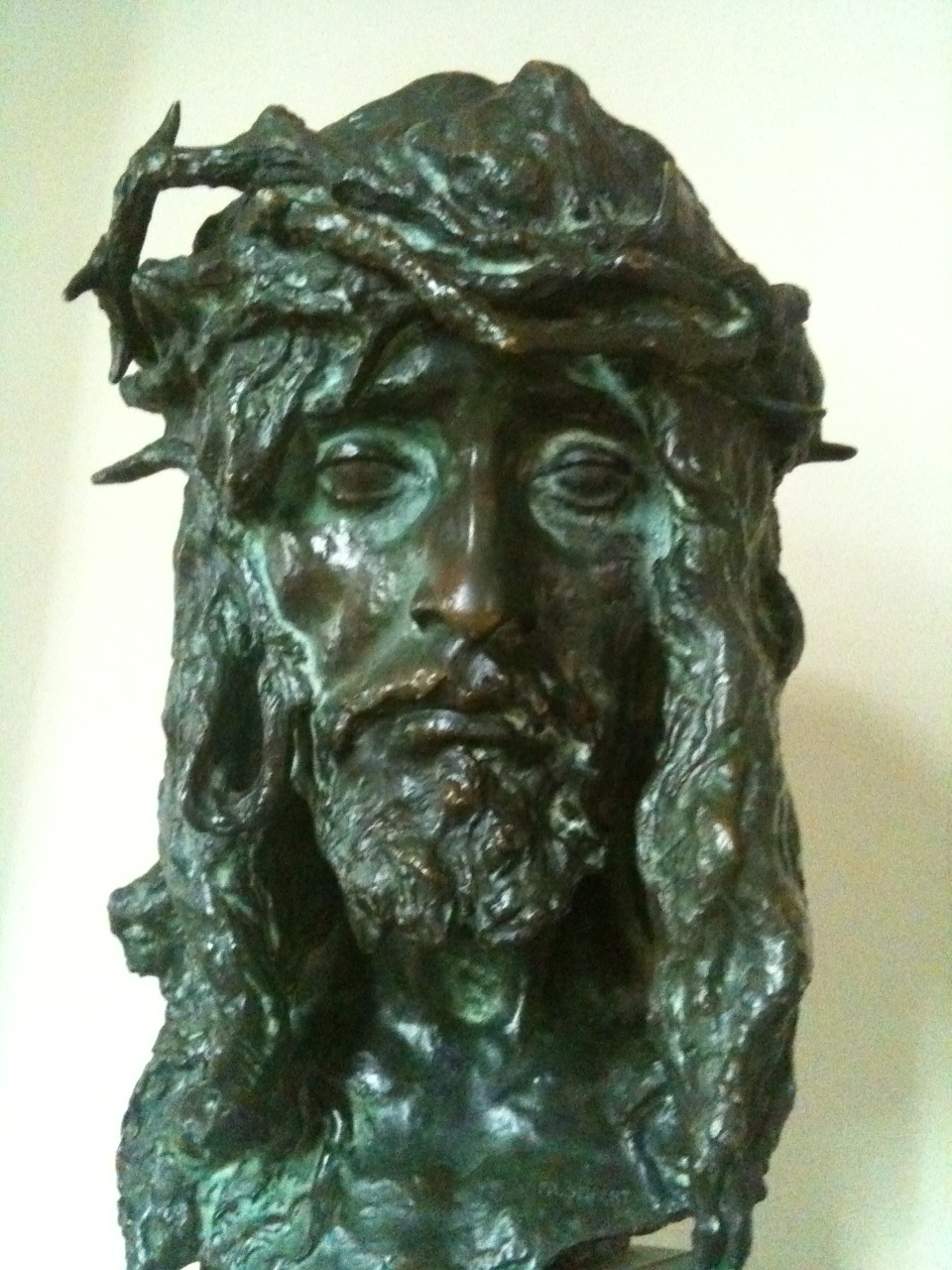
We are invited today to look into the eyes of Jesus and recognize the one who knows us completely and loves us entirely.  We have the chance today to accept this love and walk in his light.  Perhaps sometime today we will have the opportunity to get down on our knees and recommit our lives to Christ – who offers this Wondrous Love for our salvation.


Holy Thursday – Sacrament & Service

Holy Thursday - 1

Study:  Where do you find strength in your spiritual life?

Pray:  Ask the Lord for guidance and wisdom to recognize his face in the poor, the suffering, and those in need.

Serve:  Are you being drawn to help another right now?  How can you serve those God has placed in your life today?

Holy Thursday Readings

Growing up in rural northern Wisconsin, I had the opportunity to work on several dairy farms.  The work was hard, but we were always well fed.  Many times I recall hearing the words, “Eat up, we’ve got work to do.”

It’s a simple message really.  There is work to be done; it will be demanding and require a lot of energy.  If you don’t have the necessary strength you won’t be able to follow through.

The same holds true for the spiritual life.  Life makes many demands upon us, and as we serve and love others we, too, require sustenance for the work before us.

The Lord knew this.  He left us the Sacrament of his Body and Blood – food that nourishes our souls and gives us the grace and strength of Jesus himself.  Receiving Holy Communion, as the apostles did at the Lord’s Supper, is the primary way that we are fed spiritually.

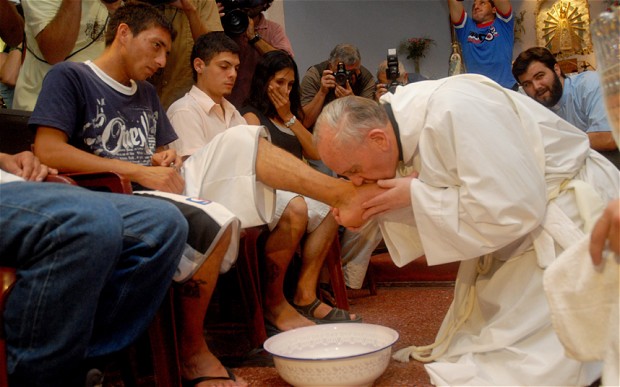
But this grace has a purpose.  At the Lord’s Supper, Jesus washed the feet of his disciples and gave them an example of service to direct their actions toward one another.  As modern day disciples, we witness our faith every time we genuinely serve others with sincerity and respect.

Consider this:

  • We receive the Body of Christ (Holy Communion) to become the Body of Christ (the Church).
  • As the Body of Christ is transformed (at the altar) we are transformed (in the world).
  • As the Body of Christ is broken (in shared communion) we are broken (sharing our lives in service for others).
  • As the Body of Christ nourishes us (in communion) we nourish others (in action that brings help, strength, and comfort).

In other words, receiving Holy Communion – instituted at the Lord’s Supper – strengthens us for the Lord’s work as his disciples.  May our next reception of the Lord’s Body and Blood give us the grace we need to recognize the face of Jesus and respond with loving service.

?????


Holy Week

Holy Week

Study:  Recall a time in your life when you experienced death and new life.  Where did you find the strength?  Who helped you through this time?

Pray:  Spend some time reflecting on the death and resurrection of Jesus this week.  Read Mark 14-16; Matthew 26-28; Luke 22-24; and John 18-21.  Take in as many prayer opportunities as possible in your parish.

Serve:  Who in your life is dealing with life and death issues right now?  How might you be present to them to offer help, comfort, or strength?

Holy Week audio retreats from the US Bishops

We enter into the heart of the Christian mystery: Holy Week offers us a time to pause, reflect, and pray as the Church ponders on the life, death, and resurrection of Jesus Christ.

This mystery, often called the Paschal Mystery, recalls us to the saving work of the Lord.  His death frees of from the burdens of sin and death, and his resurrection opens for us the path to eternal life.  This mystery is profoundly experienced over the Triduum – the 3 Great Days:

  • Holy Thursday – the Mass of the Lord’s Supper
  • Good Friday – the Passion of the Christ
  • Easter (Vigil/Day) – the Resurrection of the Lord

On Holy Thursday we find ourselves in Jerusalem, eating with the disciples at the Lord’s Supper and feeling awkward as he washes their feet – wondering how we would react if he did that for us.  We might identify with Peter or Judas – especially when we consider the times we have willingly betrayed or turned our back on the Lord.

On Good Friday we experience the physical pain, emotional abandonment, and personal humiliation on the path to Calvary (also called Golgotha or Skull Place) and look on with horror at the cruel death of Jesus.  We might also consider the times we have helped others – as Simon did when he was forced to carry the Cross of Christ.    And then we stand in profound sorrow with Mary, the Mother of Jesus, helpless as the innocent suffer injustice.

On Easter we wait in vigil and rise early in the morning with Mary Magdalen, only to find to our wonder and joy that the tomb is empty:  Christ is alive!  Our world, like that of the apostles, is changed forever as we experience new hope and life.

A word to the wise – we get out of Holy Week what we put into it.  Here are some simple ways for an incredible experience.

  • Make church services a top priority – Holy Thursday, Good Friday, and Easter (Vigil or Day).
  • Take time to read and reflect on the scriptures (see at the top under “Pray”).
  • Make Holy Thursday an opportunity to offer a special act of service or kindness to another.
  • Make Good Friday fasting extra special with a gift to a particular charity that helps the poor.
  • Make Easter a time of gratitude – take a quiet moment to count our blessings and thank the Lord.
  • Find some time throughout this week to tell the people in our lives how much we love them.

May this be a time for all of us to grow closer to the Lord and one another.


Palm Sunday – The Cross

The Face of Christ

Study:  Reflect on a time you experienced weakness and suffering.  Where did you find the strength to continue?

Pray:  Gaze upon a crucifix and offer to Christ any struggles you are facing right now.  Bring the needs of your loved ones to the foot of the Cross as well.

Serve:  Is there someone in your life who is carrying a heavy cross right now?  How can you offer comfort and assistance?

Palm Sunday Readings (with Year A reading for the Procession with Palms)

Fr. Andrew’s Homily Podcast

How many times throughout our lives have we made the sign of the Cross?  Stop and think:  at Mass; meal prayers; morning & evening prayers; special gatherings; and moments of blessing and grace.  This simple action, which we teach to children at an early age, invokes a connection with the passion of Jesus.

We adorn our homes with the Cross.  A crucifix is a common gift to a new home; crosses are placed in bedrooms and common areas as a reminder that Jesus is the source of our help and strength.

We adorn ourselves with the Cross as well:  a crucifix on a chain; a cross in our pocket; earrings; rings; bracelets; and all the extra cards, bookmarks, figurines, and miscellaneous items that remind us that Jesus died on a Cross.

The passion we read every year on this day focuses our attention on the central mystery of our faith.  Out of love for us God sent His Son, Jesus, who gave his life on the Cross that we might have eternal life.  Through his suffering and death, we recognize that God has made a pathway possible that we might all journey through this life to the gates of Heaven.

The Cross teaches us many lessons:

  • Life is difficult, and at times painful
  • Weakness and sin are part of our experience
  • God identifies with our pain
  • God dies that we might have life

At the core of our teaching the Cross stands as the testament of God’s love for us.  Yet the Cross appears to be an embarrassment – after all, why would God (all powerful, all knowing, supreme) choose to be humiliated?  Does that not mean that God is weak?  Why could God not take away our sins in a way that showed majesty and splendor?

In reality, the weakness revealed in the Cross uncovers our frailty, not God’s.  Jesus endured the Cross because of our broken, wounded nature.  He carried the Cross because we were unable to – as St. Paul writes “The wages of sin is death” in Romans 6:23 – and he bore the suffering, pain, and grief that are the natural result of our sinfulness.  God is not weak, rather God takes on our weakness so that we can be made whole.

The Cross proclaims the truth that God meets us where we are in life.  In our weakness, in our humiliation, in our low moments of doubt and sin God comes to us.  Jesus, like us in every way but sin, understands our pain because through his Cross he shares in the suffering of the world.  He knows us, loves us, and saves us through his Cross.

Every time we make the sign of the Cross may we recall what the Lord endured for us.  Through the Cross we discover our strength as we trust in God’s love and  seek to follow that love as we journey through this life toward the world to come.

We adore you, O Christ, and we praise you.  Because by your Holy Cross you have redeemed the world!


5th Sunday of Lent – A Second Chance


Second Chance

Study:  Reflect on a time when you were given a second chance.  How did you feel?  How did you respond?

Pray:  Is there something in your past that has held you back from growing?  Ask the Lord for the grace to begin again.

Serve:  Is there someone you know who could use a second chance?  How can you help them to start over?

5th Sunday of Lent Readings

Fr. Andrew’s Homily Podcast

Anyone who plays games knows about second chances.  They happen in board games when we get to “roll again”, and they happen in sporting events when one team gets a break through a change in the action.  They are part of the game, and they usually bring plenty of excitement and interest.

A second chance usually gives the player new opportunities and hope.  When a second chance is offered, it provides for the possibility to correct past mistakes.  Second chances can revitalize a player’s efforts.  Simply put, they can breathe new life into the game.

In the Gospel today we hear how Jesus calls Lazarus back from the dead.  Lazarus, who had been in the tomb four days, was loved by family and friends alike.  This love is witnessed in Jesus, whose tears reveal the depth of his concern.

I have always wondered how the story of Lazarus continued after this miracle.  What did people say every time they saw him?  Did people point to him as an example of the power of Jesus?  Did he wake up each day thanking God for another opportunity to love the people around him?

This miracle shows us a fundamental truth about God:  the Lord grants us second chances. Through the miracle of Jesus, Lazarus has been given back the gift of life.  This miracle provides the possibility for him to look back on the past and make a break with it.  In other words, his new life is an opportunity to begin again.

The story of Lazarus inspires us with hope.  God gives us second chances, too!  There are times when we may reflect on our lives, and we know that there is something that needs to change.  We need to let it “die” so that God can call us back to life.

Perhaps we have acted or spoken in a way that has been harmful to another.  Perhaps we have abused our bodies or put ourselves or others at risk through unwise choices.  Or maybe an event or decision in the past has kept us from living our lives in the present.

Whatever it is, God gives us a second chance.  Through his journey from Good Friday to Easter Sunday, Jesus makes it possible for us to break from sin and live in the light of God’s grace.  We can start again, living with the faith, hope, and love that can only come from Jesus Christ.


4th Sunday of Lent – A Life Worth Living

Beautiful Life - People

Study:  When have you sensed and recognized the precious value of life?  How did you respond?

Pray:  Offer prayers for those who struggle to embrace the gift of their lives.

Serve:  Is there someone nearby who is overcome by weakness, failure, or struggle?  How can you help?

4th Sunday of Lent Readings

The philosopher in me ponders a recurring question:  Why does God bother with us?  Why does the Lord of all creation seem to care about us?  Why does God have anything to do with us, especially when the universe is such a big place?  After all, why would God want to spend time caring for over seven billion people – aren’t there more important things to do?

Consider the role God plays in the readings this week:
1st – God chooses us according to our hearts.
Psalm – God shepherds us in our need.
2nd – God enlightens us in our darkness.
Gospel – God heals in our weakness.

In all four cases, God is acting on our behalf, despite our weakness, failings, and struggles.  The Lord continues to reach out to people, making hope possible in the midst of the challenges of life.  It does not seem to matter that people make mistakes or fall short of their abilities.  God still seems to care.

We are told that we are made in the image and likeness of God (Genesis 1:26), and we are told that God loved us so much he sent Jesus (John 3:16). What then can we learn about the Lord from these readings we hear today?

It seems to me that throughout these readings we discover that God values our lives, even when they are broken and limited by sickness and sin. God looks at us, with all our faults, and rejoices whenever we turn our hearts and minds to Jesus.

If the Lord finds joy in our lives, however feeble or faint, should we not do the same?  If God was willing to give us Jesus that we might have eternal life, should we not reflect on just how powerful this gift of life really is and act accordingly?

When we acknowledge that God acts for us because God loves us – completely, sincerely, and out of a thorough knowledge of all our sins – then we have hope.  We recognize that life is precious, and we find inspiration to make the most of this day, this moment, lest we lose even one opportunity to share our lives with God and one another.  With understanding comes this simple fact: we possess a life worth living – made by God, redeemed by God, and sustained by God!

Once we believe that Jesus died because he loves us, then all the actions we see in the readings today make sense.  May we embrace what God has done for us, and share with joyful hearts a life worth living.


3rd Sunday of Lent – Thirsty for Water

Living Water

Study:  When have you been in need for water?  When have you been in need of God’s grace?

Pray:  Is there something in your life that is parched and dry?  Ask the Lord for the Living Water that refreshes our souls.

Serve:  Is there someone you know who is withered and weak?  How can you bring them new strength and assistance?

3rd Sunday of Lent Readings

Fr. Andrew’s Homily Podcast

Imagine a tall glass of water.  You are tired and hot, and you hold the cool glass and start to drink.  Immediately, relief spreads through your throat and body, and as you set down the glass you say, “Ahhh!” and smile.

We all have experiences of being thirsty.  Maybe it is after a few slices of pizza or some extra salty snacks; perhaps it’s before an operation or medical checkup, when we are told that we cannot eat or drink anything from midnight on; it could be that we have just had a lot of exercise and are dehydrated.  Yet no matter what the situation is, we know the feeling when we are thirsty for water.

Our bodies need water.  Some studies tell us we  should be drinking a minimum of eight glasses a day.  This dependence on water is found in our survival; a person can live for weeks without food, but only a couple of days without water.

Our critical need for water becomes the source of the images found in the first reading and Gospel today.  Water is the subject for both Moses and Jesus.  Under God’s direction and guidance, Moses strikes the rock and provides water for the people in the desert.  Jesus, through his discussion with the woman at the well, reveals that he is the water that gives eternal life.

These readings remind us that God brings the Living Water to us.  In our need the Lord quenches our thirst as he did for the people in Meribah.  In our need the Lord comes to us as he did for the woman at the well.  For just as we need water to sustain our bodies, so too do we need Jesus Christ to give us life in this world and in the world to come.

Are you spiritually thirsty?  Is there something missing that you long for in your soul?  Is it love, joy, peace, patience, kindness, goodness, faithfulness, gentleness, or self-control?  Just as our bodies respond to water with renewed strength, so also our thirst for “living water” reminds us that God offers us refreshment for our souls.  Lent is a perfect time to recognize our need for the Lord and ask for the grace and strength to face the challenges of today.

It is with water that we welcome new members into the Christian family through baptism.  It is with Holy Water that we sign ourselves with the Cross of Jesus Christ.  During the Easter season we will celebrate the sprinkling rite as we renew our own baptismal promises.  In all these cases, water becomes the medium to remind us of God’s presence.

Every time we pick up a glass of water we have the chance to remember how dependent we are on this simple substance.  May this reminder lead us more deeply into the mystery of God’s love for us and our need to recognize the Lord each day in the world around us.  May we drink deeply from the living water of Jesus Christ.


2nd Sunday of Lent – Promises

Sunrise Promise

Study:  Consider moments when you have made and kept a truly important promise.  How did that promise inspire and help you grow?

Pray:  Ask the Lord for the gift to trust in His promises.  Pray for guidance to follow Christ – even when it is difficult.

Serve:  How can you help someone who is striving to keep their promise of faith?

2nd Sunday of Lent Readings

Growing up, I earned money by baby sitting.  I watched a number of kids (that is, until I got a driver’s license…), and I learned several valuable lessons.  One of the things I discovered was not to promise to do something unless I was absolutely certain I could carry it out.  If something went wrong and I had to change plans, the kids would shout, “You PROMISED!!!!”

Promises have tremendous power.  A promise can inspire us, offering strength and hope in our moments of weakness.  Promises are a sign of our trust in the word of another.  We accept a promise when we believe that another person will live up to an agreement or contract.

There are two crucial elements about promises:  making them and keeping them.  Making a promise means that we invite another into a relationship of trust.  Keeping a promise means that we fulfill our agreement through our words and deeds.

Both of these elements are necessary.  If we only make promises (without fulfilling them) then our word is meaningless, and people are unable to count on us in a time of need.  Yet if our fear of action holds us back from making promises, then we will never be considered by others as approachable or accessible; we become distant and separated from other people.

In the Scriptures today we see God’s promises extended to Abram and Jesus.  Abram is promised God’s blessing and prosperity upon himself and his descendants.  Jesus, revealed through his transfiguration, is promised the glory that will be fulfilled through his death and resurrection.

For Abram and Jesus, life will not be easy.  Difficulties and sorrows will accompany their path through life.  Yet the promises revealed in these readings show that they will be sustained in their trials.  God’s promises will give both hope and life.

These promises belong to us as well.  Like Abram and Jesus, we know the struggle and challenge that can occur in life.  There are moments when we look to God’s promises to be made and kept, that we might persevere in our desire to live a good and holy life.  May we accept the Lord’s promise of strength and guidance, trusting that as we live according to our faith in Christ, we are confident that the Lord is near.