Tag Archives: Catholic

Saints Peter and Paul

Peter and Paul

Study:  What are the unique gifts that God has given me?  How might I be called to share my life with others?

Pray:  Ask the Lord for the guidance and direction you need.

Serve:  What needs are before you right now?  How can you help another with your life?

Saints Peter and Paul Vigil Mass Readings

Saints Peter and Paul Sunday Mass Readings

Every year on June 29th the Church celebrates two of its greatest figures – Saint Peter and Saint Paul.  Since this feast falls on a Sunday, we transfer the readings and prayers of this feast to all the weekend masses.

When you think about the influence that these saints have had through their leadership, writing, and example it is easy to see why the Church chooses a day to honor their memory.  Their lives are part of the very foundation of our faith; they were human instruments by which God was able to share the Good News of Jesus Christ.

Saint Peter, for all his human weaknesses and failings, offered his leadership for the early Church.  The very fact that he made mistakes, spoke out of misunderstanding, and sometimes let fear and doubt cloud his judgment is the very reason why many people respect him.  Rather than get frustrated or dejected, he kept getting up and following Christ.

Saint Paul, who formerly persecuted the Church, would become its greatest advocate through his immense number of letters, exhortations, and journeys.  At times misunderstood or openly attacked, he continued to proclaim the message of Christ.

Life was not easy for these men!  They were physically tortured, imprisoned, falsely accused, mocked, ridiculed, beaten, and at times abandoned.  They gave up their families, their careers, the stability of their lives – ALL FOR THE LOVE OF CHRIST.

In the end, this immense personal sacrifice would culminate with the greatest of all offerings: they would give their lives for their faith.  Peter would be crucified upside down (stating that he was unworthy to die in the same way as his Lord).  Paul would be beheaded.  Their deaths both took place in Rome, where they spent the last days of their lives, teaching and preaching in the name of Jesus.

These men were some of the very foundation stones of our faith.  Upon the example of their lives we have built our Church.  We are their living legacy; their example inspires us.

Yet they also remind us of our obligation to the next generation.  Just as Peter and Paul shared their faith, so too we are called to do the same.  We have the opportunity to continue their work, and thus be an example to future Christians of the love and faith that comes from Jesus Christ.


The Body and Blood of Christ

Holy Communion

Study:  Reflect on the last time you received Holy Communion.  Were you attentive to the great gift of Jesus Christ – body & blood, soul & divinity – that you received?

Pray:  The next time you are at Mass, take a moment to prepare yourself to receive the Lord with an open heart.

Serve: Communion gives us strength to do the Lord’s work; who in my life could use a helping hand today?

The Body and Blood of Christ Readings

I love pasta.  I love to cook it; I love to eat it; and I can spend hours talking with family members and friends in order to learn more about how different sauces and seasonings affect flavor and taste.

In addition, I enjoy the numerous shapes and styles of pasta.  Spaghetti is a timeless classic, but there is also vermicelli, cappelini, fettuccine, conchiglie, tagliarini, cappelletti, tortellini, ravioli, rigatoni, ziti, m0staccioli, farfalle, cannelloni, campanelle, lasagna, penne rigate…….!

The list goes on and on in an immense and diverse variety of forms.  Different sauces work better with particular shapes, and cooking styles differ from one pasta to another.

And yet with all of this variety, pasta is still a very simple food.  While it has a place of honor in Italian cooking (did I mention I am Italian?), it can be found in most cultures – each sporting unique ways to prepare this basic form.

Food is an essential need in all life.  We need food to survive physically, yet food is more than just sustenance. When people gather to eat, food often becomes the means to draw others into conversation, companionship, and celebration.  Thus, food can nourish the body and the soul.

Jesus knew this simple fact.  He fed people when they were hungry (Mt 14:13-21, Mk 6:30-44, Lk 9:10-17, Jn 6:1-15, Mt 15:32-39, Mk 8:1-10).  The Lord met this basic need repeatedly, helping people to be physically sustained by giving them bread to eat.

Yet Jesus makes an astonishing claim.  He says that he is the living bread (Jn 6:51).  Thus, Jesus not only gives the people food, but he tells them that he is the food they need for eternal life.  This claim is underscored in the Gospel today, and it is supported by the words of Jesus at the Last Supper (Mt 26:17-29, Mk 14:12-25, Lk 22:7-20, and 1 Cor 11:17-34).

Every time we gather for Mass we follow the Lord’s command to take bread and wine and in His name receive His Body and Blood.  The Lord becomes food for us that we might have life in this world and in the next.  As we receive Communion may we recognize that the Lord Jesus is near, offering us his very self that we might have the food of eternal life.


The Most Holy Trinity

Holy Trinity

Study:  When in your life have you experienced love without words?  How did you know that you were loved even when nothing was said?

Pray:  Ask the Lord for guidance – who am I called to love today?  How am I called to love?

Serve:  What random act of kindness can I offer today for another?  How can I let the Love of Christ shine through my efforts?

Holy Trinity Readings

Fr. Andrew’s Homily

In my travels I have found myself on occasion in the company of people who did not speak English.  Indeed, when I would try my limited Spanish or Italian (or even my Latin!), I found that we had no common foundation upon which to communicate.  I wanted to share my thoughts, but I did not possess the medium to make it happen.

As I was explaining this frustration to one of my professors, he shared with me a common language that affects us all.  It is a language that all of us can understand even though we use different words to explain it.  The language?  Mathematics.

Imagine the number five (“5”).  Around the world the number is essentially the same, yet the word to describe it is very different:
In English:    “five”
In Italian:    “cinque”
In Greek:    “pente”

You get the idea.  The number means the same, but is spoken in a different way in each language.

Through time and space God has come to humanity in many different ways.  God has communicated to us through different instruments (Prophets, Dreams, Visions, Saints, Nature…), and God has spoken in many different languages (Jesus spoke Aramaic, the New Testament is written in Greek, St. Augustine wrote in Latin…).

Yet God uses one word again and again among us – LOVE.  Indeed, we are told that God is love (1 John 4:8).  This love is seen most clearly in the mystery of the Trinity, where God comes to us in love to teach us how to love one another.

God the Father created us in love.  God the Son redeemed us out of love by his death and resurrection.  God the Holy Spirit sustains us in our lives to put this love into practice.

Jesus speaks of the love of the Father (John 15:9), and the Lord tells the disciples that out of love he will ask the Father to send the Spirit (John 14:16).  Love is the reason God made us, God saved us, and God strengthens us today.

If love is the language God shares with us, then we are invited to speak this language in our lives. Our call as Christians is to proclaim in our words and actions the love of God – Father, Son, and Holy Spirit.  For if our love is sincere, then it will communicate in a language that breaks all boundaries.


The Feast of Pentecost


Holy-Spirit-Dove

Study: Where in my life have I experienced God’s grace and strength?

Pray:  What particular needs in my life call for the help of the Holy Spirit?

Serve:  Where can I use the gifts God has given me to serve another right now?

Pentecost Mass Vigil Readings        Pentecost Mass Day Readings

Fr. Andrew’s Homily

The image St. Paul uses in the 2nd reading this weekend is a body.  Composed of different parts which do unique and special functions, the body is united when all the parts come together.  So, too, all of us are united into the Body of Christ through the power of the Holy Spirit.  Look at these themes from Pentecost Mass Readings of the Day:

  • The Spirit gives power to communicate across barriers of race and tongue (1st Reading)
  • The Spirit gives life and renews the face of the earth (Psalm response)
  • The Spirit gives different gifts to people for different needs (2nd Reading)
  • The Spirit is breathed on the disciples by Jesus (Gospel)

In other words, the Holy Spirit unites people, renews life, provides unique gifts, and is granted to the Church by Christ.  This is the day that the disciples were empowered to continue the mission of Jesus; filled with the Spirit they will witness the Good News of the Lord through their words and actions.

Their example becomes our model.  The same Spirit that changed their lives comes to us.  The same Spirit that gave them the grace and strength to go forth gives us the power we need to offer our lives for Christ.  God continues to invite us to serve, and the Lord pours forth the Holy Spirit to help us carry out the work of this day.

Are there barriers in our life?  Come Holy Spirit!

Are there parts of life in need of renewal?  Come Holy Spirit!

Are there gifts we have that need to be used and directed?  Come Holy Spirit!

Jesus freely gave the gift of the Spirit to his disciples – may we turn to the Lord with conviction that as we call for the Holy Spirit in our lives we will be given what we need for the work of this day.

Come Holy Spirit, fill the hearts of your faithful and kindle in them the fire of your love.
V. Send forth your Spirit, and they shall be created.
R. And You shall renew the face of the earth.

Let us pray.

O, God, who by the light of the Holy Spirit, did instruct the hearts of the faithful, grant that by the same Holy Spirit we may be truly wise and ever enjoy His consolations. Through Christ Our Lord. Amen.


Feast of the Ascension

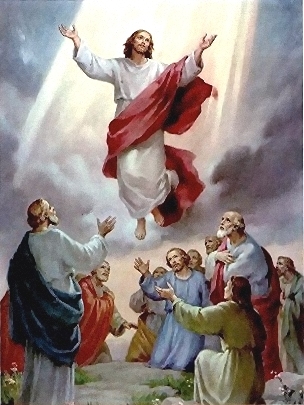
Ascension

Study:  Name some of the most powerful life transitions (school, work, relationships, death).  What life lessons did you learn from these experiences?

Pray:  Ask the Lord to send the Holy Spirit into your heart for the wisdom and strength to face new transitions.

Serve:  Who in your life is facing a difficult time of transition right now?  How can you be a source of support?

Feast of the Ascension Readings

Fr. Andrew’s Homily

Her name was Miss Toft.  She was the magical kindergarten teacher who introduced me to the wonders of school.  From the very first day of class she seamlessly wove learning and fun together.  She was kind, funny, and dedicated to the kids in her class.

As the school year came to an end all of us were excited about summer, but several (myself included) did not want to leave.  We had gotten familiar with the routine, we knew what to do, we enjoyed our class, and we loved our teacher – besides the older kids were BIGGER and there was the great unknown of elementary school looming ahead.

“I don’t want to leave kindergarten!” I said.

She said, “But Andrew, if you don’t leave kindergarten, you will never discover all the great things in school.  Every grade has new things to learn and I know that you will like it.”

Then I got to the real point. “But I don’t want to leave you!” I cried.

She gave me a hug and said with a teary smile, “Even if I’m not your teacher I will be just down the hall.  You can say hi to me any time you want, and I will always be here for you.”

Looking back that moment was the first of many experiences of a simple truth: sometimes we have to say farewell in order to grow.

Throughout life there are numerous moments when we face a transition – we say farewell to a place, a person, or an experience in order to begin a new chapter in life.  The very process of letting go provides space in our hearts to experience new opportunities and thus grow and stretch in order that we can become more.

The disciples had been with Jesus for three years.  They had journeyed with him throughout his ministry.  They had witnessed the miracles, the healings and the teachings.  They were at the Last Supper, the Garden of Gethsemane, and from a distance they saw the agony of the Cross.  Then for a few glorious weeks, they encountered the Lord in all his resurrection glory – and just when things seemed to be incredibly wonderful he leaves them in the Ascension.

Why?  So they could grow in a new way.

It was time for them to take his teaching and example to the world.  Filled with the Holy Spirit (which we celebrate next week at Pentecost) those simple men will transform cultures and civilizations with the Good News of Jesus.  They will do more then they ever dreamed possible – because Jesus said farewell to them so that they could grow.  The Feast of the Ascension articulates the reality that sometimes the only way we can become more is when others step out of our lives and allow us (or obligate us!) to continue on our own.  The transition is not easy, but it does create new opportunities.

Jesus walks with us through our transitions as well.  Even when letting go and saying farewell seem impossible to do, the Lord guides us and teaches us that through this process we discover new insights and strengths to grow as his disciples.

What transition am I experiencing right now?  Do I view it as a painful obstacle or as an opportunity to discover new insights?  Perhaps the best thing we can do in a transition is to look for the lesson the Lord might be trying to teach, and then figure out how we can put it into practice.


6th Sunday of Easter – Transformed by Love

Love tasks

Study:  Recall the people in life have loved us unconditionally.  How did their love help you change and grow?

Pray:  Ask the Lord for the grace to recognize the people in our midst we are called to love.

Serve:  Love takes many forms.  What can I do today for another person out of love?

6th Sunday of Easter Readings

Fr. Andrew’s Homily Podcast

For the last few months the eyes of the world have directed to the words and actions of Pope Francis.  It has been a time of extensive media coverage on the Church and its message of hope to a new generation.

During this time many people have experienced the rich treasure of Roman Catholicism.  The history, symbolism, and global significance have helped provide a deeper understanding of the internal structure of the Church.

Many people have responded to the Pope’s teaching and example.  It is an exciting time to participate in the Church, and I personally am renewed and energized in my desire to grow in my  vocation to the priesthood – even in the midst of transition and change.

Change is a part of life.  Through our experiences and encounters we develop and discover new perspectives and resources within our lives.  Change happens when we open our hearts to those around us and put into action our new insights.

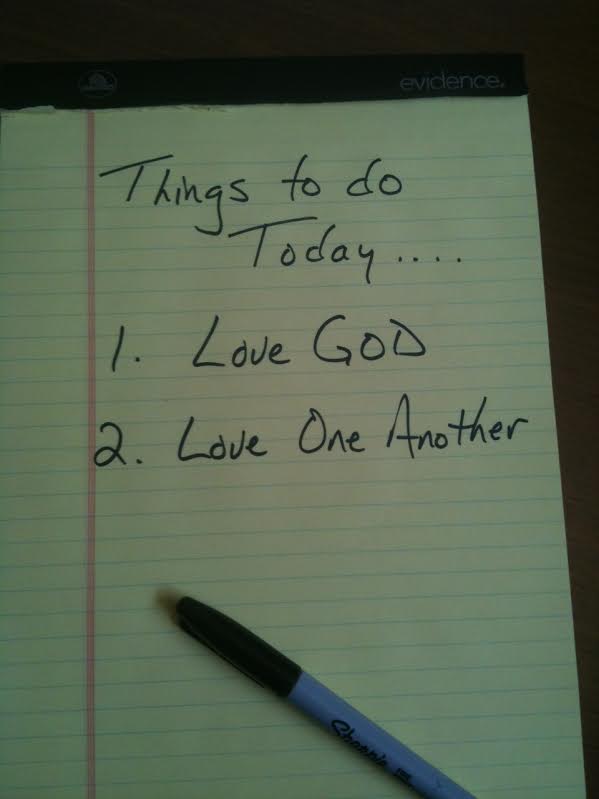
In the Gospel Jesus states that to love him means to keep his commandments.  There are two:
1.  Love God
2.  Love one another.

It is important to note that these commands are not just about being busy.  To love means to be in relationship with others; love invites us to grow in our awareness and understanding for one another.  This knowledge leads to greater respect and value for all life.

In the Gospel love is a verb.  It must be acted upon, practiced, and carried out in all parts of life.  To love means to work at a relationship – and thus be open to spend the time and effort necessary.

Yet when we open our hearts to love we are changed.  As we experience love, as we work at it, we discover that our hearts get stretched.  We become challenged to grow, to make room so that we can love more deeply, more completely.

Jesus promises that we will have help.  As we open our lives to the power of love, the Spirit will come to help us and guide us.  Transformed by love, we trust that God will continue to direct us, until the cycle of love and change brings us one day to the Kingdom of Heaven.


5th Sunday of Easter – Living Stones

Stones

Study:  Reflect on a challenging time in your life.  How did you give and/or receive strength from others?

Pray:  For what particular strength do you need to ask the Lord?  Come to the “Living Stone” who is Jesus and seek the strength you need!

Serve:  Where can you cooperate with others right now?  How can your strength help others ?

5th Sunday of Easter Readings     Fr. Andrew’s Homily Podcast

Imagine a piece of construction brick or stone.  At a distance the pieces look the same, with similarities in color, texture, shape, and size.  Yet on closer examination we perceive that every piece of brick or stone is different; when seen clearly each stone is unique.

We use stones all the time in our building and construction.  We use them in walls, fireplaces, foundations, and paving.  Stones possess an inherent toughness – they are the bones of the earth – which makes them useful and vital in life.

In the second reading we hear how the Scriptures use the image of a stone in our life of faith.  Peter writes that all people should come to Jesus, a living stone, so that we might be built into a spiritual house.  Following the example of Jesus, we become “living stones” that all might see God’s kingdom here on earth.

Stones remind us of two important points.  First, stones are strong, and we are called to live our faith with the same durability and toughness.  Life is not easy, and there are times when we recognize our weakness and failures.  Yet through our relationship with Christ we gain strength and power that we do not have by ourselves.  Through Christ our talents and gifts become strong resources to be used by God.

Second, in construction stones are used in cooperation with others, and this same cooperation is part of our human experience.  Take a stone or brick out of a wall and it becomes weaker; take a person out of a community and a change is felt.  Simply put, just as a stone adds strength to those around it, so to our lives make a profound difference on those around us.

As living stones we offer our God-given strengths and abilities to build up God’s people here on earth.  Sharing our lives, we become a powerful tool through which Jesus Christ continues to be revealed to all people through time.

Stones teach us about strength and cooperation.  These insights are part of every human experience and are used throughout our lives.  As God’s living stones we discover that our faith gives us power when we work together with those around us.  May that power help us to build God’s kingdom, leading others to Christ.


4th Sunday of Easter – The Gate of the Shepherd

sheep gate

Study:  When have I heard the Lord calling me?  How have I responded?

Pray:  Take time to ask Jesus for guidance and strength.

Serve:  How can I support someone who is searching for meaning, purpose, and answers in life?

4th Sunday of Easter Readings        Fr. Andrew’s Homily Podcast

During my travels in Israel, I had the opportunity to visit with some of the Palestinian people who raised sheep in the rocky countryside.  On one of my trips I met a young boy named Ali who was twelve years old.  He was very shy until I asked him if he would show me his sheep.  With a huge smile he took me by the hand and led me out into a small enclosure.

As we approached the sheep Ali began to call them by name – “Ahmed, Azim, Abram” – and so on.  When the animals heard their names, they came one by one to be fed with some grain Ali had brought.  I marveled at how the sheep trusted this little boy, for without fear or worry they came immediately at the sound of his voice.

After a few minutes I asked if I could feed the sheep.  Ali gave me a grin and said, “You can try.”  He handed me some grain and I tried calling the sheep.

“Azim!  Here Azim!”  I kept calling the sheep but they merely looked at me and moved away.  When I realized that the sheep would not come to me I looked at Ali.  His chest swelled with pride and he said, “They only come to me, because they know me!”

A shepherd’s life is not easy.  The sheep must be constantly guarded from wild animals that prey upon them.  Shepherds endure long, lonely hours exposed to the cold and the elements, ensuring that the sheep will always be under constant care.  Because they are together so much, the shepherd knows each sheep, and they respond when called.

In the Gospel today the Lord tells us that he our shepherd and gate.  The image reminds us that we too are cared for and loved by one who is always near, always listening to our needs and seeking our protection.  Our Lord not only loves us, but knows us intimately – better than we know ourselves.

Yet just as the Ali’s sheep made the choice to listen to the shepherd and not to a stranger, so we too make choices in our response to the many voices in our world.  We know that their are many elements in our world that if we heed would only lead to temptation and sin.

The Shepherd invites us each day to follow his call.  Let us hear his words and respond, thus being guided by the one who knows us out of love.


3rd Sunday of Easter – In the Breaking of the Bread

Pita Break

Study:  Recall profound moments of Holy Communion in your life – your First Communion; Communion at a major event; Communion when you faced a particular need.

Pray:  The next time you receive the Body of Christ, open your heart to the grace and power of the Lord.

Serve:  Perhaps you know someone who is not able to get to Mass; consider ways to bring Communion, have a visit, or arrange a way to get to Mass.

3rd Sunday of Easter Readings

They were two disciples.  They had followed Jesus, believed in Jesus, and now were on the road to Emmaus after the death of the Lord.  While we do not know what they were saying to each other, I can only imagine their doubt, fear, and confusion.  They had placed their hope in Jesus, and he had died.

They meet a stranger.  We know he is Jesus, but we are told that “their eyes were prevented from recognizing him.”  The stranger begins talking with them, listening to them, and then he begins to teach and explain.

On the road we learn that the stranger shows all the prophecies and messages within the Scriptures.  He tells them that it was necessary that the messiah would suffer death and then enter into glory.  He talked for most of the seven mile walk about Moses and all the prophets, and when they reached Emmaus he looked like he was going farther.

Still they did not recognize him.  Yet he spoke with such fire and insight the disciples begged him to stay with them.  At the meal he:

  • took bread,
  • said the blessing,
  • broke it,
  • and gave it to them.  (Luke 24:30)

And their “eyes were opened” and they knew that it was the Lord.  In the breaking of the bread the disciples recognized Jesus in their midst.  He had taught them through the Scriptures, and he was revealed to them through the meal.

This is what we do at every Mass.  First, we open our hearts to the Scriptures, that like the disciples we might hear how God continues to speak to us today.  Then we put into practice the command of Jesus to take bread and wine which we:

  • Take
  • Bless
  • Break
  • Give

in his name that we might receive the Body and Blood of Jesus himself (this is in Mt. 26:26-29; Mk. 14:22-25; Lk. 22:19-20;  Jn. 6:51-58; 1 Cor. 11:23-24).

This weekend we welcome our 2nd grade children at the Cathedral to join us as we follow the command of Jesus Christ.  We pray that these children and their families will continue to grow closer to the Lord through their communion.  And we pray that all of us will continue to recognize the Lord in our midst, through the breaking of the bread.


2nd Sunday of Easter – Peace be with You

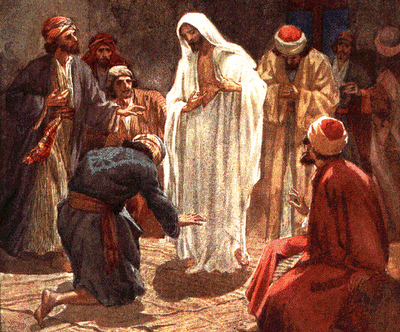
Jesus shows his wounds to Thomas - by William Hol

Study:  Reflect on a time in life when you experience a profound sense of peace.  Where did it come from in your life?

Pray:  Ask the Lord for the gift of his peace, and pray for the guidance to cultivate a peaceful heart.

Serve:  How can you bring the Lord’s peace to another right now?

2nd Sunday of Easter Readings        Fr. Andrew’s Homily Podcast

Every year we hear this Gospel reading from John on the Sunday after Easter.  The Church, in its wisdom, has found that these verses continue to speak to our hearts in a way that moves and teaches us.

In the past I have reflected on Thomas; I can identify with his questions and sarcasm!  I can easily understand how someone who can see and touch the risen Christ might still harbor doubts that he has been raised from the dead.  In the past I have reflected on his doubt, largely because I could comprehend his words and actions.

Yet this year I am struck by something different.  In this short passage Jesus says three different times, “Peace be with you” to his disciples.  Why?

Imagine the feelings and emotions of the disciples.  They had followed Jesus for three years.  They heard the teaching and preaching.  They saw the miracles and witnessed the healings.  And they stood at a distance (having run for their lives) when the mob came and the soldiers crucified Jesus.

In those last few days before his crucifixion, they had experienced the entire spectrum of human emotion, and until the truth of the resurrection sunk in, they were adrift in their grief and loss.

So what are the first words of Jesus to them?  What introduction is used to begin the new era of hope and power marked by the resurrection?  Just four little words:

Peace be with you.

How desperately we need to hear these words!  Peace – in our hearts, our homes, our country, and our world!  The risen Christ fills our hearts not only with faith, hope, and love – but with a peace, a serenity that cannot come from anything else.

With this phrase Jesus calms their fears and soothes their concern.  He gently and lovingly meets the disciples where they are, and he urges them (remember Thomas!) to grow in faith.

How do we take these words to heart today?  In our desire to cultivate a peaceful heart, it is important to always remember the WHAT and the HOW.

“What” refers to the object of our desire.  We seek peace: in the solitude of our heart; in our relationships with others; in the values and purpose of our lives.  “What” we seek  is the goal that orients the direction of our lives and provides a guide to keep us on track.

“How” refers to the manner we go about it.  Do our thoughts, words, and actions consistently reflect our desire for peace?  “How” we live is equally crucial, for it demonstrates the unified manner of our lives – nourishing and strengthening us by the constant reinforcement of our (peaceful) behavior.

“Peace be with you” becomes both the goal and practice of each moment: we strive for peace even as we diligently work to cultivate peace in our hearts.  Jesus himself gives us the strength for both: he teaches us to value peace, and he sustains us to grow in peace when we are challenged by the discord and stress of life.

As the Lord’s followers, these words are our heritage.  Peace begins in us, and as the disciples of the Prince of Peace, we are called to work for and build his Kingdom of Peace here on earth.  Fear is left behind as we focus on Christ and dwell – in peace!