Tag Archives: Catholic

23rd Sunday of the Year – Speaking and Listening

speaking and listening

Study:  When was a time when I failed to speak up?  When was a time I failed to listen?

Pray:  Call upon the Lord for the wisdom to know when to speak and when to take heart to the words of another.

Serve:  Is there someone in my life right now that I am called to speak to?  Or listen to?

23rd Sunday of the Year Readings

Do you remember the Aesop’s fable “The Boy Who Cried Wolf” that we used to hear as children? It is a simple yet profound tale. A young boy is given the responsibility to watch over the animals in the event of an attack from the wolves. Bored of his duties he calls out “Wolf!” and laughs as the area villagers come running.

Delighted with his game the boy cries “Wolf!” a few more times, each time getting the attention of the people. Finally disgusted with his actions they no longer respond, even when a real wolf shows up and attacks the child; his failure to keep watch prevented his message from being heard.

In the first reading today Ezekiel says that being a prophet is a lot like being a watchman. The watchman was responsible for protecting the people from bandits and wild animals. The watchman was required to stay alert, remaining vigilant and ready to call out in a moment’s notice should danger arise.

If danger came, and the watchman failed to alert the people, then the watchman was at fault. But if the watchman called the alarm and no one came, then the people were at fault. Simply put, if the watchman does his duty and no one comes, then those who hear the warning and fail to respond are held accountable.

Likewise, anyone who hears a word of encouragement or guidance and fails to respond is also accountable. Ezekiel, the Psalm, and the Gospel today all point out that there are times when we must open our hearts to messages that we may not want to hear. We may be tempted to “harden our hearts.”

Let’s face it. No one wants to be told what to do. No one wants to be disciplined or chastised; we love our freedom and independence too much for that! Yet there are times when the Church is empowered to keep watch, lest members of the community drift into choices and actions which are harmful and destructive.

This is not easy! The scriptures today alert us to the fact that there are moments when we may be asked to either give or receive a hard word out of love. We might have to give it – to help another from making a mistake. We might have to receive it – and allow another to help us from falling into trouble. Keeping watch is never easy, but without the support of each other, we run the risk of a far greater harm.


22nd Sunday of the Year – Suffering

Station - Jesus in Crucified

Study:  Recall a moment when you encountered personal suffering.  What gave you strength to continue?

Pray:  Many people are suffering right now in our world.  Pray for those in need and join your heart with them to God.

Serve:  Where is the suffering face of Christ in your life right now?  How can you help another who is in need?

22nd Sunday of the Year Readings

Some of the toughest questions I routinely encounter as a priest occur during sickness or untimely death. In the midst of great suffering and pain, a loved one comes up to me and asks, “Father, why did this have to happen? Why do they have to suffer? Why doesn’t God take the pain away?”

In the anguish of the moment no answer is adequate; the pain hurts too much, and seeing another suffering is often too hard to describe with words. Our hearts feel more than we can say, and the emotions overflow the limits of our soul.

We encounter suffering in many ways: at the graves of loved ones; in hospital and nursing home rooms; at the bedsides and wheel chairs of homebound; through news stories of tragedy; and in quiet moments all alone. Many of us are familiar with the grief and pain of suffering, and we are quick to recognize its presence in those around us.

In the Old Testament and Gospel readings today we encounter suffering. Both Jeremiah and Jesus raise two crucial points:
1. The pain is real.
2. The suffering is part of their witness.

First, neither Jeremiah nor Jesus deny that suffering is part of their lives. They do not hide from it, repress it, pretend it is not there, or run away out of fear. Their suffering is real; they acknowledge the truth of what they must face and confront it.

Second, the pain they face is part of their ministry. Simply put, they suffer because they have remained faithful to God. Jeremiah burns with the fire of a prophet; to remain silent would destroy him and deny God’s word. Jesus knows that only through his death and resurrection can he fulfill his Father’s will; to run away would deny God’s plan for salvation history.

From the example of Jeremiah and Jesus we discover that our suffering is part of a much larger picture. We know that suffering is an element of life, mixed with the joy and beauty we encounter daily. We know that it will come in difficult and sometimes unexpected ways.

Yet God is present in our suffering. Just as Jeremiah and Jesus knew that God was present with them, so too we can see that the Lord is near, giving us strength and hope. Thus suffering may be a way that we draw closer to God, mindful of our need.


21st Sunday of the Year – Keys

Keys

Study:  Recall a time when you were entrusted with power.  How did you use it?

Pray:  Ask the Lord for guidance over the things and situations in your control right now.

Serve:  How can you help someone who is struggling with a decision of leadership?  How can you offer solid support?

21st Sunday of the Year Readings

Fr. Andrew’s Homily

Take a look at the keys in your pocket.  As you hold them, think about what they do:

  • The doors they open
  • The cars they open & start
  • The authority and power they reveal

Keys allow us access and empower us with authority.  Keys give us control over our physical world and they help us to use resources wisely and well.  They are also symbols that speak to identity and purpose – just think about what happens when our keys are lost or taken from us….

In the first reading and the Gospel today we discover the power of God’s keys:

  • Key of the House of David
  • Keys of the Kingdom of Heaven

These promises to Eliakim and St. Peter are mighty – they will receive the power, authority,and  responsibility from God lead and guide.  Consider these three points:

Power: they receive the strength and ability to carry out the work entrusted to them.  Power gives them resources and skills to accomplish great things.  Without power they are weak; with God’s power they can do more than they ever dreamed possible.

Authority: these keys are a sign of leadership and respect.  The keys they possess allow them to direct and command others.  Those who hold the keys are followed; those who hold the keys stand before us and provide wisdom, insight, and vision.

Responsibility: “From everyone to whom much has been given, much will be required; and from the one to whom much has been entrusted, even more will be demanded.” (Luke 12:48b)  With great power comes great responsibility, and those who have been given strength and ability are required to use it with wisdom.  Indeed, having the keys of Authority are a burden to demonstrate transparency, accountability, and trust.

Again, look at the keys in your pocket.  How do we use them?  Today we might consider the gifts and talents God has given us: we have an opportunity at this moment to exercise our own power and authority with God’s guidance, knowing that one day the Lord will seek an accounting with what we have done.

May our own keys inspire us to live with conviction and direction – using the resources we have received with the insights offered by our faith in Jesus Christ.  The Lord is the source of all keys, may we call upon him to help us use them!


20th Sunday – Welcoming the Stranger

Welcome

Study:  Recall a time when you were a stranger – at school, work, or in a new community.  How did it feel?  What was it like when someone welcomed you?

Pray:  Seek the Lord for guidance, especially to recognize and respond to those in search of a place to fit in.

Serve:  Who do you know right now who would benefit from a simple welcome?  How can you practice hospitality to someone today?

20th Sunday of the Year Readings

Fr. Andrew’s Homily

One of the things I enjoy whenever I go on vacation is the opportunity to pray at other parishes as a parishioner.  I put on a pair of slacks, a button down shirt, and I walk in as a stranger.  Nobody knows that I am a priest, and so I have the privilege to see a parish firsthand – like an ordinary visitor.

I find many insights when I walk in.  I try to keep my ears and eyes open, observing how people react to one another.  Do they smile?  Do they go out of their way to welcome?  Do they take the time to greet and help one another in their need?

As a stranger in these parishes I am an outsider, unknown without history or recognition.  I have no connections to families, businesses, or authority.  In other words, hospitality is often the only reason why anyone would speak to me; they have no other practical reason to do so.  Sure, they might want a new parishioner, but you can usually distinguish between sincerity and a sales pitch:  one comes from the heart, the other goes for the wallet.

When I encounter a welcoming parish, I always take mental notes.  What can I bring back to the Cathedral?  What actions already affirm what we do?  I usually scribble my notes on a piece of paper, saving them for a special opportunity to put them into practice.

Hospitality is a central part of the Christian life.  We reach out to strangers, visitors, and guests, because throughout time people of faith have discovered God’s presence whenever they have reached out to others.

The readings today have a common theme.  While God has spoken through a particular people (namely Israel), God calls all people – even strangers and foreigners – through faith to prayer and worship.  The gift and call to the Jewish people is “irrevocable” as Paul writes today.  Yet through this call people have seen the saving power of Christ and responded with life and joy as they welcome family, friends, and strangers to fellowship.

Practically, we live this theme whenever we reach out to one another.  When we recognize that God calls all people, we discover that we are part of a vast and rich family – fellow inhabitants on this rock we call planet Earth.

This is why we go out of our way to welcome one another.  This is why we take the time to introduce ourselves, greeting and meeting fellow members of a much larger family.  Whenever we take the time to reach out to one another, we live out our most basic call – welcoming one another with the hospitality of a people of faith.


19th Sunday of the Year – Walking on Water

Walking on Water

Study:  Recall a moment in life when you were doubtful or afraid.  How did you face it?

Pray:  Ask the Lord for the strength and wisdom to face doubts and fears.

Serve:  Is there someone in your life who is struggling with doubts or fears?  How might you help them?

19th Sunday of the Year Readings

Fr. Andrew’s Homily

This Gospel story (Matthew 14:22-33) follows immediately after the reading from last week.  Here’s a quick recap:

* Jesus hears of the death of John the Baptist
* Jesus seeks solitude in a deserted place
* The crowds find Jesus; he ministers to them
* Jesus feeds the hungry with fishes & bread

After the people have eaten, the Lord makes the disciples get into a boat while he dismisses the crowd.  The following events occur:
1.  The disciples are in the boat on the water
2.  Jesus goes up the mountain to pray alone
3.  The wind and the waves are getting strong
4.  Late at night Jesus comes on the water
5.  Seeing Jesus, the disciples are terrified
6.  Jesus, “Take courage, it is I, do not be afraid!”
7.  Peter to Jesus “Command me to come to you.”
8.  Peter goes to Jesus, is frightened and sinks
9.  Jesus rescues Peter “Why did you doubt?”
10. The disciples:  “Truly you are the Son of God!”

Note that Matthew’s Gospel differs from Mark’s account (6:45-52) in three ways:
1.  The dialogue between Jesus and Peter
2.  Peter walking (sort of) on the water
3.  Confession of faith – Jesus the Son of God

The story speaks of Peter’s desire to follow Jesus, even as it clearly shows his human weakness.  Peter tries, fails, and calls upon Jesus to save him in his need.  As a result, the disciples recognize the Son of God in their midst.

The early Church took this passage to heart.  Like the boat tossed on the waters, early Christians knew all too well the dangers of faith – risking their lives to follow Jesus.  Like Peter, they had their moments of weakness; like Peter, they called upon the Lord in their need.

We can see ourselves in this situation as well.  There are times when we desperately want a strong and steadfast faith; we seek the Lord and desire to follow His path for our lives.  Yet we are also aware of our limitations, failures, and fears.  May we, like Peter, call upon Jesus in our need; may we trust in the Lord’s strength and love to save us.


18th Sunday of the Year – a Miracle

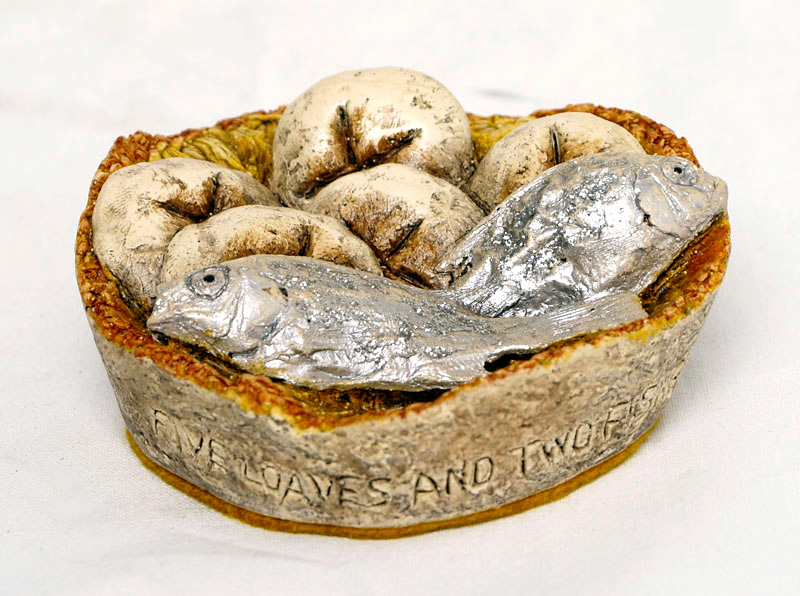
fishes and loaves

Study:  Where in my life have I experienced God’s abundant grace?  Where and when have I encountered a miracle?

Pray:  Jesus met the people in their needs; perhaps we might come to the Lord with our concerns and fears.

Serve:  How might we be an instrument of grace for another today?  Has the Lord put someone in our life right now to serve?

18th Sunday of the Year Readings

Fr. Andrew’s Homily

The Gospel this week offers a familiar story that many of us have heard on numerous occasions.  The miracle of the fishes and loaves offers a rich opportunity to reflect on a variety of themes that are central to the Christian disciple.

In order to do this, let’s take a step-by-step review of this story:

1.  Jesus hears of the death of John the Baptist
2.  Jesus seeks solitude in a deserted place
3.  The crowds eagerly seek Jesus
4.  Jesus sees the crowds and pities them
5.  Jesus cures their sick
6.  The people are hungry and far from home
7.  The disciples tell Jesus to send the people away
8.  Jesus tells the disciples to feed the people
9.  The disciples say there is only 5 loaves & 2 fish
10.  Jesus TAKES, BLESSES, BREAKS, GIVES
11.  There is an abundance (leftovers of food!)

Here are a few observations:

1.  Jesus’ heart is moved with sorrow for the death of John the Baptist.  Perhaps he is considering his own approaching death, and he seeks some quiet personal time.  Yet when the crowds crush in upon him, the Lord pities and responds to their needs.  It is the generous and loving heart of Jesus that is worthy of reflection and observation here.

2.  Jesus observes that many people are sick, and the Lord takes the time to heal their bodies.

3.  The people have been with Jesus all day.  They are far from home, and they have not eaten.  While the disciples want the Lord to send them away, Jesus commands them to feed the people; when they use the limited food supply as their excuse, Jesus takes, blesses, breaks, and gives them an abundance.  Thus, Jesus cares for the people – body and soul in a way that is truly overwhelming.

4.  The same verbs of taking, blessing, breaking, and giving are used to describe the Lord at the Last Supper.  This feeding miracle is just another form of Eucharist!

Jesus moves beyond his own personal concerns to love, respond, and serve others.  The Lord cares for both the physical and spiritual needs of people in a generous way.  May we follow his example in our own lives of service and ministry.


17th Sunday of the Year – Making Choices

Making Choices

Study:  What decisions am I facing right now?  What resources can I turn to for guidance and direction?

Pray:  How does my faith in Jesus Christ help direct my choices?  Ask the Lord for insight!

Serve: Can I help someone right now who is facing a difficult choice?

17th Sunday of the Year Readings

Fr. Andrew’s Homily

Do you remember the old game show  Let’s Make a Deal?  The host was Monty Hall, a smooth talking guy who would present possible options to contestants.  Those lucky few who were selected could take a certain gift in front of them, or they could choose from behind door number 1, 2, or 3 for an unknown prize.

The catch was that no one knew what was behind the door.  Sometimes it was a bogus prize, worthless and unusual.  Sometimes it was a fabulous gift, many times more valuable than the first prize they could have had.

I use to “play” the game with my grandmother.  She and I would pretend that we were contestants.  We would decide whether we would have stayed with what we knew, or would have risked it on something unknown.  (And just for the record:   Grandma almost always won…..)

The principle of the game was simple.  Do you stay with what you have or do you risk it in the hope of winning much, much more?  When is it enough?  When are we satisfied? What is it that we really want?

Here are three points that often surface:
* Risk – What’s it worth to us?
* Priorities – What’s important to us?
* Satisfaction – When is it enough for us?

The game show’s appeal was strong because it was grounded in the same issues we face everyday.  Life is filled with uncertainty and new challenges; we are routinely confronted with choices which require us to make decisions that can have great and small consequences on our lives.  We have to explore a variety of questions, and in the process we learn a great deal about who we really are.

In the Scriptures today these choices are highlighted in the selection of Solomon and the Pearl of great price.  Confronted by choices, the people in the readings determine risk, priority, and satisfaction before making their decision.

The same is true for us.  God gives us opportunities everyday to make choices that reveal the content of our hearts.  Through our actions and decisions we discover what we value.  As we examine our lives this day, may we seek God first as we look to the Lord for guidance and wisdom to make good decisions.


16th Sunday of the Year – Weeds & Seeds

Weeding

Study:  What good thing in my life needs to be cultivated to grow?  What bad thing needs to be removed?

Pray:  Do I see the issues in my heart with clarity and honesty?  Ask the Lord for guidance.

Serve:  Can I help someone to grow?  Are there opportunities right now where my service can help others become stronger and better?

16th Sunday Readings

Fr. Andrew’s Homily

I love spending time in a garden.  I love watching the beauty of nature unfold from spring to fall as the plants grow and mature.  My moments in the garden are times for solitude (its just me and the mosquitoes).  I pray, reflect on current issues and needs, and enjoy the satisfaction which comes from time well spent.

I will also freely admit that when I get the chance I actually like weeding.  As a boy I hated it; the work seemed like a punishment and a useless chore.  Yet now I look forward to the time I can spend without care or worry as I dig out unwanted weeds.

That’s a good thing since weeds do not stop growing!  I can spend hours working in the garden, making sure that it is immaculate and pristine, and come back the next day to find a new set of weeds stubbornly about the business of growing right in the midst of my peppers, tomatoes, and basil.

Weeds are persistent (as anyone who has been away from the garden for more than a week knows), and if left untouched can and will take over a garden – choking out all the other plants.

In the Gospel today Jesus uses the example of weeds and seeds to convey some basic truths about our lives:
1.  Patience is required to let the seeds grow.
2.  Weeds are a part of life.

Every gardener knows that you cannot force a plant to grow; it develops over time at a set and natural pace.  Patience is necessary to allow the seed to change and transform to full maturity.  The plant needs time and steady attention if it is to flourish.

Gardeners also know that weeds are always present.  Only through constant care and attention can a person stay on top of the weeds; discipline is required if the garden is to be kept in control.

The fact is, we live in the garden of life.  Like a seed, we grow and mature through time and constant attention.  Only through patient application can we become the creation that God dreams us to be.

Yet we also know that in our life there are weeds.  Temptation and sin are a part of our world, and if left unattended they threaten to choke us off from God and one another.

May we place our trust in Christ, the master gardener, to help us with the weeds and the seeds!


15th Sunday of the Year – Weeds, Seeds, and Growing Things

Garden 1

Study:  What are some virtues that you would like to cultivate in your life?  What are some vices that need to be weeded out?

Pray:  Everyday provides a new opportunity for personal growth.  Ask the Lord for the strength and wisdom to grow in holiness.

Serve:  Name one little thing you can do for another; now make it happen.

15th Sunday Readings

Fr. Andrew’s Homily

Since returning to the Cathedral as rector five years ago, one thing I miss is gardening.  Time is precious, and my current work does not readily lend itself to the effort it takes to keep a garden.  Yet all things being equal, there is no place I would rather be than rooting around in the dirt – picking weeds, pruning, staking, watering, hoeing, and “looking at” the plants.

Gardening is a metaphor that teaches us about ministry and life.  Spending time in the garden forces us to slow down and attend to a cycle that is not our own.  We pay closer attention to the wonder and beauty of nature, and we can be surprised and  amazed by what we see.

Plants truly are hopeful optimists in a world of pessimism.  Every year my flowers and vegetables produce thousands of seeds, each seed capable of new and beautiful life.  Yet for all these seeds only a few survive.  Some are taken as produce, some by the weather, and some by the rabbits!

Nature knows that life is difficult.  There are so many obstacles and challenges in the world that it is essential to cast hundreds and thousands of seeds, just so that a few might be able to continue the cycle of life.  The power of nature is that even a few seeds can change the landscape, bringing nourishment and beauty to the earth.

Jesus knew this.  He spoke to hundreds and thousands of the hope and life that are possible in His Father’s Kingdom.  He cured countless people and preached tirelessly to any who would hear.  Like the garden plants, he cast LOTS of seed.

Yet many people did not act on his message.  Many mocked him, plotted against him, or simply walked away.  Some got excited for a time, but then they got bored, discouraged, or caught up in other interests.  Simply put, much of the seed cast by Jesus was lost or destroyed.

Yet in his parable to the crowds Jesus shows his tremendous hope.  It only takes a few seeds for an incredible harvest!  A 30x, 60x, or 100x harvest was amazing in the ancient world (and it is not too shabby today!).  For those who heed the word of God, they, too, will yield a crop that will defy worldly doubt.

I’m willing to bet that all of us continue to carry the Lord’s seed in our lives.  The invitation today is that it will take root and flourish in our hearts.  We are given the chance to garden our souls, fostering a faith that is worthy of the Lord’s harvest.


14th Sunday of the Year – Meek & Humble of Heart

Humility Quote

Study:  Name someone in your life who lives with sincere humility.  What behaviors stand out?

Pray:  Humility comes from knowing ourselves – warts and all.  Ask the Lord for the insight to truly see the blessings & burdens, successes and sins, that lie in our hearts.

Serve:  Is there a thankless or difficult task that you can do for another?  Can it be done with a loving sincerity?

14th Sunday Readings

In June of 1994 I came to Rome.  I had lived in the Holy Land since January and I was making my visit to my Italian roots as the last part of my journey. I stayed at the Benedictine monastery and school – St. Anselmo – which was governed by a monk from St. John’s, Abbot Jerome Theisen.

Abbot Jerome was a remarkable man.  A brilliant scholar with a pastoral heart, his duty as Abbot Primate was to visit Benedictine monasteries around the world – working to improve and strengthen monastic life across the globe.  Yet for all the travel and prominence of his work, Abbot Jerome was a gentle and humble man.

Shortly after he had arrived in Rome, the Abbot Primate began a regular routine of gardening each day.  He firmly believed in the Benedictine phrase, “Ora et Labora” (Prayer and Work) and set an example for the other monks by taking a certain amount of physical exercise each day.

On one particular morning, Abbot Jerome was out in the monastic gardens at work among the roses.  He was wearing a plain and well worn habit, devoid of any finery or ostentation.  He looked like a simple monk – and somewhat grubby at that!

While he was in the middle of his weeding a monk from another religious order came calling.  Seeing the elderly “brother” on his knees in the dirt he said, “Brother, is the Abbot Primate here today?”

Abbot Jerome replied, “Yes, he is here.”

The monk said, “I wish to speak with him.”

Abbot Jerome stood up and responded, “Very well.  What would you like to discuss?”

The monk, affronted by the impertinence of a dirty, sweaty “brother” (for what priest would be gardening…?) said, “Brother, I am an Abbot, and I demand to see the Abbot Primate AT ONCE!”

Abbot Jerome dusted his hands off his black habit, and extended his right hand in greeting.  He gently said, “Certainly.  I am Abbot Jerome.  How can I help you?”

The embarrassed monk stuttered an apology, and after a few moments excused himself.

************

I have often thought of Abbot Jerome’s example.  Regardless of wealth, learning, or status, may we have the perspective to see ourselves, called by God to a meek and humble heart!