Tag Archives: Catholic

33rd Sunday of the Year – Living in the Moment

Calendar 1

Study:  Have you ever had a time when you were not prepared to be “in the moment” and you missed something special?  How can you be more aware and attentive to the present?

Pray:  Ask the Lord for guidance to both live in the present moment and plan for the needs of future.

Serve:  Who needs help right now?  How can you respond with faith, hope, and love?

33rd Sunday of the Year Readings

Fr. Andrew’s Homily

My universe is constructed by my desk calendar.  Without that simple little book I wouldn’t know what was the next event or who was the next person I needed to see.  My calendar keeps me on track, and it helps me to use my time as effectively as possible.

Often I find myself scheduling events weeks and even months in advance.  From weddings to workshops, holidays, concerts, sacraments, meetings, planning committees….indeed the list keeps going as I use my calendar to organize the many events that are part of my life.

Yet I know I am not alone.  Most households have “the calendar” – that monthly planner that coordinates sports schedules with doctor’s visits, conferences, dances, fundraisers, parties, and a host of other personal activities.  The calendar informs us about who needs to be where, when and with whom.

While calendars help keep us focused on what lies ahead, they do pose a danger.  We can get so caught up in what is coming that we forget to pay attention to what is currently going on.  In other words, we may risk losing the present moment when we worry too much about the future to come.

As we come to the end of the Church year, we focus on the “end times.”  People wondered when the world would end, and they worried about what the future would bring.  Yet amidst their anxiety about the future, we discover two central themes.

First, as Christians we do believe that the world will end.  We hold that there is a judgment and  we trust that our faith in Jesus will lead us to the Kingdom of Heaven.

Second, while we believe that the world will end, we also believe that no one knows when this event will occur.  Jesus himself reminds the crowds in the Gospel that many signs and events will happen, and many will claim that they have significance.  Yet the Lord reminds us that these portents are simply part of the world.

We find ourselves then, planning for the future even as we concentrate on living in the moment.  We plan and we hope; but in the end the best we can do is live this day with all our heart, trusting that God will place opportunities where we can live our faith, confident in the future to come.


The Dedication of the Lateran Basilica

St. John Lateran exterior

Study:  Think back to churches that have real significance in your life.  What was going on at the time?

Pray:  Step into a church and take a moment to pray.  First, reflect on your blessings – thanking God.  Second – offer your petitions for special needs and concerns.  The Lord is listening.

Serve:  Do you know someone who has a hard time getting to church?  Can you help them?  Do you know someone who has been away from the Church…can you help them?

The Dedication of the Lateran Basilica Readings

Fr. Andrew’s Homily

This weekend we celebrate a feast in the Church that is a little out of the ordinary.  Throughout the year we honor saints, angels, events in the history of salvation, and seasons in the liturgical calendar.

But buildings?

Yep.  The readings this weekend are for the anniversary of a dedication of a building – a church.  Now this is not just any building; the Lateran basilica has an important place in the history and significance of our faith:

  • Pope Sylvester I dedicated it on Nov. 9, 324
  • The land was owned by the Laterani family
  • Called the “mother and head of all churches”
  • Episcopal seat of the Pope as Bishop of Rome
  • Papal residence from the 4th century to 1309
  • Site of 5 Ecumenical councils

Now why would we do this?  Why take a day out of the calendar to honor a building?  Here are few reasons:

  1. Buildings are a part of life
    – living, working, learning, praying!
  2. This church is loaded with history
    – many great events happened here
  3. Buildings can inspire and shape our faith
    – form a community for prayer/service
  4. Our faith uses buildings as an example
    – temple, dwelling, refuge, house, etc.

The readings today use the idea of a building to help reveal God’s presence among us.  The image of a building (especially a Temple) develops several themes:

  • From the Temple of God comes life
  • All dwellings (temples belong to the Lord
  • Each one of us is a Temple of God
  • Jesus described his own body as a temple

Church buildings not only serve to gather us for prayer, but they shape the very way we pray.  They are places where we recognize the Lord’s presence in a powerful way.  By honoring a particular church this weekend, we pause to remember the role that buildings (especially churches) play in our faith.

A building by itself is nothing.  A building filled with people alive for Christ is awesome.  May this feast remind us that all our buildings and bodies are simply places – created by God in order to dwell among us.

St. John Lateran interior


The Feast of All Souls

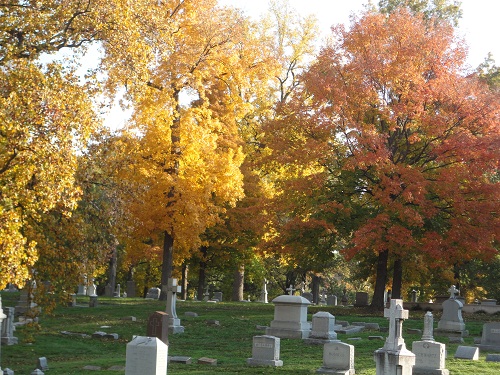
cemetery

Study:  Recall close family and friends who have died.  Reflect on how they blessed your life.

Pray:  Remember those who are grieving the loss of loved ones in your prayers.

Serve:  Is there an act of kindness you can to for someone grieving?  How can your support help them face the reality of death and the hope of the resurrection?

Readings for the Feast of All Souls

I would like to explain how we get this feast on the weekend. Normally, the feast of All Saints is a Holy Day of Obligation in the Church. However, when a Holy Day falls on a Saturday or a Monday it is “suppressed” so that the Sunday mass does not lose its importance. And when a feast (like All Souls) actually falls on a Sunday – then that is often the feast whose prayers and readings are used.

This is why I went to seminary for a decade….!

There are a number of possible readings to choose from for this feast. They should sound familiar; indeed, for anyone who frequently attends funerals they will echo with past memories.

The Feast of All Souls is a celebration where the whole Church remembers all who have died. On this day we offer prayers, hear readings, and recall the memories of our beloved dead.

Yet the way we do this is in the example and image of Jesus Christ. Think of Holy Week: we celebrate Good Friday (the day He died) and Easter Sunday (the day He rose).

During those days we recall the suffering and pain of Jesus in His last hours on earth. We recite the passion, process the Cross, and dwell upon His sorrow and anguish. Yet it also means that we celebrate with joy His resurrection from the tomb. We fill the church with flowers, sing alleluias, and rejoice that His death led to new life.

What’s true for Jesus is true for us. When we remember our beloved dead we must remember both our grief (because of death) and our hope (because of eternal life). As we offer our prayers this weekend, we then not only admit our sorrow at the loss of a loved one, but we cling to our belief that we will one day be together with the Lord in Heaven.

Therefore, to be genuine people of faith we both acknowledge the pain of death and affirm the hope of eternity. In this way we do not overly focus on one or the other, but recognize that both are a part of our lives as disciples of Christ here on Earth.

On this feast we remember our beloved dead. We hold fast in faith that their passing is not the end, but the beginning of a new life with Christ in Heaven. In this feast we are thus also reminded that we, too, will one day make this journey. May we trust that as others have traveled from death to life, we will follow in the Lord’s path as well.


30th Sunday of the Year – Living our Faith

Love God & Others

Study:  Reflect on some people who live their faith through their loving thoughts, words, and actions.

Pray:  Is there a person or situation in your life that calls for greater charity?  Ask the Lord for the wisdom and guidance to do it.

Serve:  Is there someone in your life right now who would benefit from your time, attention, and/or effort?  How can you help?

30th Sunday of the Year Readings

Fr. Andrew’s Homily

I thought I would take this week to talk about something that arises out of the gospel message. The question comes from the insight of Jesus in today’s reading. Simply put, what is the central and most important part of being a Christian? What should be the focus around which we build our lives?

The answer is explicit: LOVE.

Jesus takes the two commands, love of God and love of neighbor and links them as the heart of the Christian message – from which the teaching of the entire Scriptures finds its soul. Love is the sign of the Church, it is the proof of faith, and it is the reality which reveals to others the depth of our commitment as disciples of Jesus Christ.

But what do these commands mean for us? After all, the question for each of us is “How does the law of Love affect me? How do these commands shape my life?”
I look at this from three different angles:

* By how I THINK.
* By how I SPEAK.
* By how I ACT.

In other words, do my thoughts, words, and actions reveal the law of love in my life? When I look at myself in each of these areas do I measure up with the commands of Jesus?

Imagine that each of these parts of life could be made into a movie. I see myself watching “The Thoughts of Fr. Andrew,” followed by “The Words of Fr. Andrew,” and then “The Actions of Fr. Andrew.” Do I like what I see on the screen?

When we come to the end of our lives, I doubt if many of us will wish we had worked more, or earned more money, or bought more things. In the end I expect most of us will wish we had spent more time loving the people in our lives – through what we thought, said, and did.

This love, which comes from God, is intended for us to share while we are here on earth. Our faith tells us that one day the Lord will call us home. On that day may we find ourselves prepared; having loved one another in this life we will then step into eternal Love in the Kingdom of Heaven.


29th Sunday of the Year – God & Country

Caesar's

Study:  Name a role model who lives a principled life.  What is it that they say or do that inspires you?

Pray:  Ask the Lord for the strength to make the right choice, especially over a difficult or challenging situation.

Serve:  Is there someone in your life who looks to you for guidance and example?  How can you help them?

29th Sunday of the Year Readings

Fr. Andrew’s Homily

The first reading, psalm, and gospel readings today touch upon the notions of earthly and heavenly governance. Part of our human condition requires that we recognize our need for others; by working with people we unite in strength, and by serving the Lord we understand our values and priorities in life.

Let’s start first with human governance. In the first reading from Isaiah we hear how God has anointed Cyrus – the pagan king – as the instrument for Israel’s redemption. While the king does not know the Law or the Prophets, he gives the people of Israel a new opportunity by conquering their enemy, Babylon.

This distinction between the pagan King and the people’s faith is a helpful guide for us today. While Christianity has made countless contributions to Western Civilization, we find ourselves living in a culture that has many non-Christian influences. Some are good, some neutral, and others are just plain bad. Yet Isaiah teaches us today to look for what is good and useful, recognizing that God can work through a variety of instruments.

Since we live in this world filled with all these different elements, we are constantly challenged to discern and choose those options which are good, holy, and true. It is not always easy! Indeed, we can find ourselves confronted by issues that push and stretch us in a variety of ways.

So how do we decide? The gospel today offers a gem from the Lord:

“Repay to Caesar what belongs to Caesar
And to God what belongs to God.”
Matthew 22:21

We have duties and obligations as members of both heaven and earth. In the world we have our responsibilities – voting and jury duty, abiding civil laws, serving in local organizations, and actively living as good citizens. And as a people of faith, we are bound to follow the teaching and commandments of Jesus Christ.

So what do we do in a conflict? In the end we remember that all creation is the Lord’s. When pushed to extreme, we follow Christ. God made this world, and one day we will be called out of it. May our example show to others our desire to be good citizens – both on earth, and in heaven.


28th Sunday of the Year – Banquet Invitation

Banquet

Study:  How do I respond to the Lord’s call to the Eucharist?

Pray:  Take time each day to listen to the Scripture readings for daily or weekly Mass – it is a powerful way to prepare for the Eucharist.

Serve:  Is there someone who you can bring to Mass?  Perhaps the fellowship or hospitality may help another to grow in faith.

28th Sunday of the Year Readings

Fr. Andrew’s Homily

Two themes surface in the readings today that require further reflection:
1. God prepares a banquet for us
2. God invites us to come to the feast

The imagery of the banquet feast is found in the readings from Isaiah, the Psalms, the Matthew’s gospel. There are several points of interest here:
* God does the cooking! (Not us!)
* The food is the finest quality (rich & choice)
* The banquet is an important event (you better show up)

The fact is, when God throws a feast it is lavish in every detail. The event is on a grand scale with the best food and drink. What’s more, the Lord is the host of the meal! God prepares a banquet in every respect – as Chef, Host, Servant, Substance, and Lord.

The “feast” has more than just one meaning. This banquet is first of all the great gathering at the end of time when we join the Lord in heaven. This “heavenly banquet” is the final celebration when all the saints unite in the glory of the risen Jesus; what a meal that will be!

Furthermore, since the resurrection of Jesus, Christians have gathered together for the Lord’s supper, where Christ himself feeds us with his Body and Blood. Here on Earth we are “saints in the making” who strive to follow the Lord through the struggles of life. This Eucharist is the feast that gives us the strength we need to face each day with faith, hope, and love.

Both of these banquets – one on heaven, the other on Earth – are presented by the Lord. We receive Christ’s body and blood so that we might follow the Lord through this world to the world that has no end.

Now the second point is this: Do we come and attend? If Christ has prepared a banquet for us in heaven and on earth, then do we respond to the Lord’s call by receiving his heavenly food on earth, and living on this earth as citizens of heaven?

Today the Lord calls us to the great banquet that will happen at the end of time. This feast is the final goal of our journey of faith. For this journey we need strength, and the Lord provides each week for the spiritual food we need to continue on our way.

May we come and receive with open hearts!


27th Sunday of the Year – At Work in the Vineyard

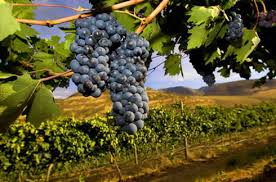
vineyard

Study:  Recall a time when you rejected something you knew was right.  Did you finally swallow your pride and admit it or did you maintain your original rejection?

Pray:  Ask the Lord for the wisdom and guidance to choose what is good, holy, and true.

Serve:  Who in your life is facing a difficult or challenging decision right now?  How can you help them?

27th Sunday of the Year Readings

Fr. Andrew’s Homily

In the ancient world there were three plants that were very important:
* wheat — for making bread
* olives — for making oil
* grapes — for making wine

These three foods were central to the diet of the people in the Gospel story. Bread was the staple; it was unleavened and similar to our “pita bread” today. Oil was used for cooking, bathing, cleaning, perfume, and household applications. Wine was the principle alternative to water – and when added to water, the alcohol in the wine insured a certain level of safety.

Vineyards were a common part of people’s experience. Even today the Mediterranean region is filled with vineyards, some small, others massive. Thus, when the Scriptures refer to vineyards, the image was familiar and easily understood.

Keeping a vineyard is hard work! The vines need constant attention: pruning, weeding, watering, and keeping them tied up off the ground. Patient care is required as workers routinely check the health of the plant so as to prevent any disease.

In the Gospel today we hear how a landowner leased his vineyard out to tenants who worked for him. At harvest time he sent his servants to gather his portion of grapes, only to have them rejected and injured. Finally he sent his son who was killed by the tenants.

One way to understand this story is to see the tenants as the people of Israel. They rejected the servants (the Prophets) sent by the landowner (God), and killed the only son (Jesus). Simply put, their work in the vineyard did not yield good fruit; their actions resulted in rejection and death.

But what happens when we place ourselves in the story? What happens when we see ourselves as the servants in the vineyard?

Everyday God sends messengers into our hearts. We know how we should live and offer our lives through many sources: our conscience; friends & family; the Scriptures; the teaching of the Church.

Let’s face it. We work in a different vineyard, the garden of life. We labor as tenants on the Earth, bearing fruit that will one day be harvested by the Owner. May our work in the vineyard be worthy when he calls, and may our reception of his servants show our respect and our love.


26th Sunday of the Year – Words & Actions

Trust Quote

Study:  When in your life have actions “shouted down” the words we hear?

Pray:  Ask the Lord for the strength to be consistent in what we say and do.

Serve:  How do my words encourage others?  How do my actions show my care and support?

26th Sunday of the Year Readings

Fr. Andrew’s Homily

It seems like there are certain phrases that get said throughout our lives.  These words are commands, invitations, and requests to make things happen – and they come in many forms:

“Take out the trash”
“Clean your room”
“Do the dishes”
“Come to my…” (athletic game, concert, etc.)
“Would you volunteer at…” (pick one!)
“Help me with…”

Let’s face it.  We are asked to do many things throughout this life.  From chores and tasks to acts of kindness and civil responsibility, many of these actions are simply part of our existence on this earth.

Yet once we hear these words we are asked to respond.  This happens in two crucial ways:

* What we say  (our WORDS)
* What we do     (our ACTIONS)

When we are confronted with a request or invitation how we respond says a lot about who we are.  If our words and actions are in agreement everything is fine – “yes” means yes and “no” means no.  But if we say one thing and do another, then the weight of our choice is measured in our actions.

This is the message of the Gospel today.  Jesus speaks of two sons who receive a request from their father.  One says yes but does not act, the other says no but changes his mind and acts.  In the end, the one who acted did his father’s will.

We journey through life confronted by countless choices everyday.  Some things we know should be done, others should not.  Some things are options that could be done; we have to weigh the priorities of our time, energy, ability, and need.  Yet what we discover is that we are defined not by what we say, but by what we do.

As people of faith we have other commands to follow:  Love God; Love one another; Repent and forgive; Work for justice; Seek peace.  Indeed our faith is reflected not in our words but our actions; even the Golden Rule “Do to others as you would have them do to you…” (Mt 7:12) is nothing more than a reminder that actions speak louder than words.


25th Sunday of the Year – Generosity

generosity (1)

Study:  How have I reacted in the past when someone I know has been particularly blessed or fortunate?  Am I supportive or jealous?

Pray:  Ask the Lord for the grace and wisdom to celebrate sincerely with others when they have received special gifts or opportunities.

Serve:  How can you support others in their moments of blessing?  How might you be generous with gratitude for another person’s good fortune?

25th Sunday of the Year Readings

Fr. Andrew’s Homily

Consider the following possible situations and scenarios:

  • Your neighbor that you have known for over twenty years has just won the lottery.
  • A high school classmate that you didn’t talk to very much in school makes it big in Hollywood.
  • A relative gets left a hefty sum of money from an old uncle and goes on a long trip around the world.
  • A kid who used to ride your bus to school is now the executive at the company – and is your boss.
  • A fellow employee in another office gets a big bonus for a successfully completed project.
  • Your best friend has the opportunity to have a special audience with the Pope – through a connection with a friend in the Vatican.

All of these scenes have one thing in common: through an encounter with generosity and/or opportunity another individual benefits and possesses rewards that we do not share.

How do we react? How do our attitudes and actions change toward those who have received unexpected (and sometimes unearned) generosity? While I know that I hope that I would be good natured, polite, friendly, and supportive – a part of me echoes with the sentiments of the workers in today’s Gospel.

There is a sense of justice, a feeling that we should get what we deserve that goes against the grain of the message today. The last workers got the same wage, even though they only worked a fraction of the time. It’s not fair!

In reality, the story went beyond fairness. No worker was cheated. No worker was denied a fair and agreeable wage. The Master simply wanted to be generous out of concern and care for others.

The fact is, God is generous to all of us. There are moments when we have fallen short of the Lord’s justice through sin and temptation. Yet like the workers today, we receive God’s generosity even when we have not earned it. May we live accordingly.


The Triumph of the Cross

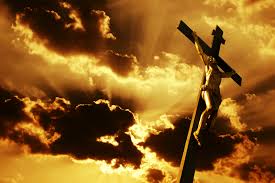
triumph of the Cross

Study:  Reflect on a moment when you encountered real suffering and loss.  Where did you find the strength to continue?

Pray:  Call upon the Lord for the guidance and wisdom to carry on, especially in the midst of difficulty.

Serve:  Perhaps you are called – like Simon of Cyrene – to carry a cross for another.  Who in your life right now could use your help?

Feast of the Triumph of the Cross Readings

How many times throughout our lives have we made the sign of the Cross?  Stop and think:  at Mass; meal prayers; morning & evening prayers; special gatherings; and moments of blessing and grace.  This simple action, which we teach to children at an early age, invokes a connection with the passion of Jesus.

We adorn our homes with the Cross.  A crucifix is a common gift to a new home; they are placed in bedrooms and common areas as a reminder that Jesus is the source of our help and strength.

We adorn ourselves with the Cross in many ways:  a crucifix on a chain; a cross in our pocket; earrings; rings; bracelets; and all the extra cards, bookmarks, figurines, and miscellaneous items that remind us that Jesus died on a Cross.

The Paschal Mystery – the death and resurrection of Christ – speaks to the heart of our  faith.  Out of love for us God sent Jesus, who gave his life on the Cross that we might have eternal life.  Through his suffering and death, we recognize that God has made a pathway possible that we might all journey through this life to the gates of Heaven.

The Cross teaches us many lessons:
* Life is difficult, and at times painful
* Weakness and sin are part of our experience
* God identifies with our pain
* God dies that we might have life

At the core of our teaching the Cross stands as the testament of God’s love for us.  On one hand the Cross is an embarrassment – after all, why would God (all powerful, all knowing, supreme) choose to be humiliated?  Does that not mean that God is weak?  Why could God not take away our sins in a way that showed majesty and splendor?

Yet on the other hand, the Cross is a statement that God meets us where we are in life.  In our weakness, in our humiliation, in our low moments of doubt and sin God comes to us.  Jesus, like us in every way but sin, understands our pain because through his Cross he shares in the suffering of the world.  He knows us, and loves us even more.

Every time we make the sign of the Cross may we recall what the Lord endured for us.  May the Cross be our strength as we trust in God’s love, and may we seek to follow that love as we journey through this life toward the world to come.