Tag Archives: Mercy

Advent Service: Reconciliation

Three Great Things

Study:  When was the last time you went to Confession?

Pray:  Ask the Lord for the guidance and strength to make an examination of conscience

Serve: Is there anything in my life that is keeping me from genuninely helping others?

Fr. Andrew’s Homily

This homily was given at a communal penance service at the Cathedral on December 13, 2014 prior to the opportunity for individual confessions.  The theme “Taking out the Trash” was used to convey that just as we need to remove the garbage from the kitchen (before it starts to stink), we also need to look into our hearts and remove what does not belong.  The encounter with grace offers us the courage to look honestly and trust that the Lord will give us the strength we need to turn to him and experience his mercy, forgiveness, and love.


1st Sunday of Advent

Marley's Ghost

Study:  When have I been swift to respond to the needs of others?  When have I been slow?

Pray:  Ask the Lord for the clarity of sight to perceive the real needs within my reach.

Serve:  Don’t wait…do!

1st Sunday of Advent Readings

Fr. Andrew’s Homily

A Christmas Carol

Part I: Marley’s Warning

Every year I enjoy rereading the holiday story A Christmas Carol by Charles Dickens.  I watch as many different movie and drama adaptations as I can, and I find in this simple tale much wisdom and insight.

The story recounts the life of Ebenezer Scrooge, a miserable old man who is visited on Christmas Eve by the ghost of his business partner, Jacob Marley.  Marley informs Scrooge that he will be visited by three ghosts who will show him the error of his ways.  During the visits we discover the story of Scrooge’s life, feeling both pity and anger at the circumstances and choices that have shaped him.  As Scrooge slowly changes, he finally discovers the joy and spirit of Christmas – just in time for Christmas Day.

The ghost of Marley begins this amazing process.  Marley is a wretched creature, wrapped in bandages and shackled by chains and heavy money boxes.  His words to Scrooge are direct and without comfort:  he must change his ways or suffer a fate worse than Marley’s.

Marley reminds Scrooge that the business of life is far greater than the work in their money counting house:
   “Mankind was my business.
   The common welfare was my business;
   charity, mercy, forbearance and benevolence
   were all my business.
   The dealings of my trade
   were but a drop of water
   in the comprehensive ocean of my business!”

This warning speaks to us as well.  Every day we pass through life amid opportunities to serve and love others.  Yet preoccupation can take us away from the deeper issues of life, separating us from the very people and events that can lead us into blessed happiness.

As we prepare our hearts during this Advent season, may we take Marley’s warning to heart.  We, too, must journey through this life, reaching out to those placed on our path.  May we be vigilant, waiting for the day when Jesus will return.  May we share the gift of our lives, anticipating the Christmas joy that awaits us.


1st Sunday of Lent – Testing & Temptation

Desert Test

Study:  Where in my life have I fallen short and failed?  What lessons (however painful) have I learned?

Pray:  Ask the Lord for the grace and strength to face temptations.  Do not be afraid!  This is an opportunity to trust in the mercy and love of Jesus.

Serve:  Is there someone in your life who is struggling right now?  How can you help them through this time of testing?

1st Sunday of Lent Readings

Fr. Andrew’s Homily Podcast

Recall back to your school days.  No matter what grade or level of studies, all of us received tests as part of our education.

I remember once sitting in a class where some students were grumbling to the professor about an upcoming exam (I was angelically studying in a corner…).  The professor stopped the class to say, “Look, there are lots of reasons for exams, but there are two things that are important to me:  First, I need to know the limits of your knowledge.  Second, I want to see how you can apply what you have learned to other areas of study.”

Those two ideas stayed with me, for what is true for tests applies equally to life.  We experience tests all the time, and through these moments we discover amazing insights into our hearts.  Being tested (or tempted) reveals the limits of our strength, courage, patience, and trust; it also shows how we apply what we know (such as our faith in Christ) with what we encounter (trials, disturbances, disease, fear).

The Scriptures today offer two examples of testing which result in very different outcomes.  In the first reading, we see the weakness of Adam & Eve before the temptation of the serpent.  Their choices resulted in separation from God and one another.

In the Gospel we hear the encounter between Jesus and Satan in the desert.  The Devil tempts Jesus through three classic fears:  the fear of physical weakness, the fear of being powerless, and the fear of death.  These fears, which the Lord will ultimately face at his crucifixion, are rejected each time through Scripture and faith in God’s presence.

The lesson for us is clear.  Like Adam & Eve, we have all sinned and fallen short of God’s grace.  Yet in our moments of weakness, doubt, and fear we can look to the life of Jesus for strength and new hope.  We, too, can trust that just as the Lord overcame his testing, we can also find guidance and direction through our faith in Christ in our time of need.

Once we trust that the Lord will be with us, we can face our testings and temptations with a new perspective.  These tests show us where we need to ask the Lord for help, revealing our limitations and teaching us to see our blind spots.  In this way our temptations are simply one more opportunity for us to recognize the Lord’s grace at work in our hearts.


2nd Sunday of the Year – The Lamb of God

Lamb

Study: Reflect on a time when you sensed a gentle “tug” in your heart to act or speak.  Did you heed the call or ignore it?

Pray:  Gaze upon the Cross of Jesus Christ, and consider His sacrifice for you.  Thank Him for his merciful love to die for your sins.

Serve:  Is there a way that you can gently help another face their struggles?

2nd Sunday Readings

I think of John the Baptist as one of those people who are exciting to listen to but just a little too intense.  Being around the charismatic, passionate, tell-it-like-it-is prophet strikes me as standing by a bonfire: you want to draw near, but too close and you get scorched.

Yet this no nonsense desert preacher sees Jesus and directly states:

“Behold, the Lamb of God, who takes away the sin of the world.”

What a contrast!  John is fiery, bold, direct, and edgy…and he proclaims that the one greater than he comes to be slaughtered – to take away our sins.   Our salvation is not achieved through a fierce battle or assault on hell; it comes because God sent his Son to die in our place.

It’s this notion of slaughter that foreshadows the death and resurrection of Jesus.  Lambs were sacrificed ritually in the ancient Jewish world.  From the time of Passover when the Jews endured slavery in Egypt – where the blood of a lamb was sprinkled on the door posts as a sign of the angel of death –  the image of a lamb powerfully expresses a path of salvation.

Furthermore, lambs are gentle, meek, and defenseless.  For thousands of years they have been employed by humanity for food and wool.  Lambs require protection, and without help they fall prey to predators.

So here we have John boldly state that the Christ who will save us comes:

  • To die that our sins be taken away
  • To be with us in a gentle, tender way

He comes for us.  He will die on a cross in a horrible fashion – FOR US.  Yet he will not force his message of love, forgiveness, and peace upon us – he will gently approach us and speak.

How is Jesus inviting us today?  Do we sense in our hearts a “nudge” to live in a different way?  Is there anything going on in our lives that gives us the opportunity to follow the Lamb of God?

He will tenderly call us.  His invitation will be marked by forgiveness and love.  Will we accept the one who comes to take away our sins?  May John’s words inspire us to become His disciples.


Christmas – The Nativity of the Lord

Nativity

Study:  Reflect on your life right now.  Is there something difficult that needs God’s grace?

Pray:  Take a moment in your prayer to accept the love of Jesus.  Pause on the readings of Christmas and allow his grace to touch your heart.

Serve:  Share the love of Christ with another – a gentle word, a kind deed, and tender thought.

Christmas Eve Readings:    Vigil Mass    Mass at Midnight

Christmas Day Readings    Mass at Dawn    Mass during the Day

The titles are endless:

* King of Kings   * Lord of Lords   * Prince of Peace

* Rod of Jesse   * Key of David   *Desire of Nations

* Wonder Counselor   * God Hero   * Emmanuel

* The Messiah   *Christ the Lord

Yet the Savior of the world did not stand on his title, did not presume his glory, and did not claim power.  He was born homeless in the midst of poverty and the threat of violence.  Simply put, the Lord came into our world in the most humble way – to remind us that nothing, NOTHING is out of reach of God’s saving grace.

Born like all of us as a vulnerable baby, dependent on others, he would grow to teach us about his Father in heaven and how we are called to love and serve.  Again, the Lord did not claim his power, but rather invites us to hear his voice and follow.

Have you heard the bells of Christmas?  Some are tiny ornaments on the tree.  Some are massive that hang in belfries and call us to worship.   Some are on the sleigh.  Others are rung by hand.  In many ways the bells remind us of Jesus – the sound we hear is an invitation to act.

No matter where we have been and what we have done, Jesus Christ comes into our world – in the messy, challenging, difficult, stressful, and chaotic parts of our lives – and he calls us gently and lovingly.  Do we listen?  Do we respond?

He knows us, he shares our nature, and he reaches out.  There is nothing to fear – he understands us better than we understand ourselves – and he loves us completely.  This Christmas let the love of the Savior touch your heart.  Hear his call and respond with love for the Lord and the people God has put in your life today.

Merry Christmas!


28th Sunday of the Year – Healing, Mercy, & Gratitude

Touch of God

Study:  When in my life have I been wounded, separated, or isolated?  How did I experience healing and mercy?

Pray:  Gratitude is a spiritual cure for many things.  What blessings should I consider with gratitude in my prayer?

Serve:  Is there someone in my life that I can connect with right now?  Is there an opportunity for healing that I can foster through the gift of my life today?

28th Sunday Readings

The Gospel today offers a number of insights for us.  The healing of the ten lepers shows the power and love of Jesus in several ways:
1.  Jesus physically healed their leprosy
2.  Jesus restored them to their relationships
3.  Jesus’ message included foreigners
4.  Jesus received gratitude from only one!

Leprosy was considered a terrible affliction in the ancient world.  The name was used (sometimes inappropriately) for a variety of skin diseases, but it certainly did refer to the virulent condition where the skin was covered with festering sores that were beyond recovery.

Because of this condition, lepers would be banished from society.  Cast off from family and friendship, they would be forced into a lonely isolation or consigned to a leper colony where their only interaction would be with other lepers.  No family.  No friends.  No physical contact.  They were completely and entirely cut off.

Begging for mercy from a distance, ten lepers come upon Jesus and are healed.  This healing is not only physical; with renewed bodies they are now restored to their loved ones.  They can go home!  Their suffering and pain (both physical and emotional) is now transformed.

One of these lepers was a foreigner.  He was not an Israelite; he did not know the Law, the Prophets, (indeed, he might not even have believed in God).  Yet he was healed, too.  The mercy, healing, and love of Jesus extended beyond the bounds of his own people – it included all people!

And it turns out that this same outsider, who knew nothing of the heritage of Israel, is the only one to say thank you.  Now that he is healed he can approach Jesus directly, falling at his feet with gratitude.  He has his life back, and his first thought is to acknowledge the giver of so great a gift.

Do we see ourselves in this Gospel today?  Do we recognize our need for healing – to be restored in body or soul, to be renewed in our relationships with family or friends?  Have we reached out beyond our imposed boundaries to people of a different race, creed, or color?  Are we grateful for what we have been given, and do we thank the Lord for our blessings?  We can learn a lot from the leper.


24th Sunday of the Year – Christ came to save sinners

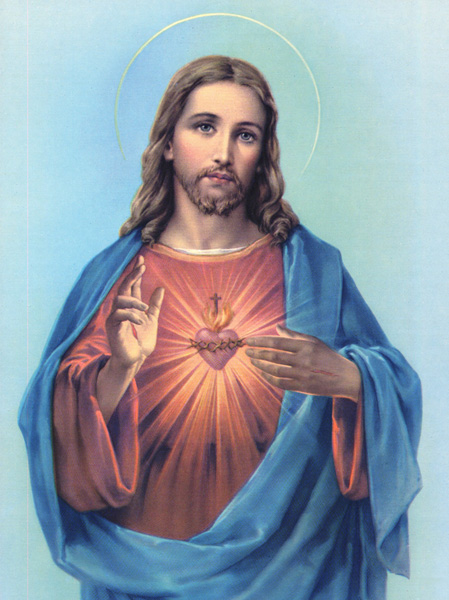
Sacred Hear of Jesus

Study:  Recall a time in life when you experienced God’s presence.  How did it give you strength and direction?

Pray:  Offer those needs in your life that need the Lord’s grace.

Serve:  How can you reach out right now to someone in need?  Who has God put in your life?

24th Sunday Readings

The readings this week explore the theme of salvation from a variety of different perspectives.  We discover God’s desire to reach out to us in the following ways:

First – Moses intervenes, God does not punish
Psalm – prayer for a clean heart, steady spirit
Second – Paul’s example of grace
Gospel – 3 parables of God’s desire to save us

The first reading shows Moses responding as mediator between God and the wayward actions of the people of Israel.  Moses pleads for the people, reminding God of the promises he made to Abraham, Isaac, and Jacob.  Because of Moses’ intervention the people are spared; this example of mediation foreshadows the saving work of Christ.

The psalm and response connect to both the first reading and Gospel.  Psalm 51 is a powerful penitential prayer which seeks to renew in the reader a contrite and humbled heart.  This psalm could have been the prayer of the people of Israel after they discovered Moses’ mediation!  The response is taken from the Gospel reading and links us to the parables of Jesus.

The second reading offers St. Paul’s example of grace as an invitation for ourselves.  In his own sin and weakness Paul experienced God’s mercy, and thus reminds us that Christ came to save sinners.  Here we discover the reason for the Lord’s mediation in our lives – to lead us out of sin and into life.

The Gospel this week is a series of three parables.  The first two are really “twins” which explore the same theme – God taking the initiative to seek out the lost.  The last parable (the Prodigal Son) addresses the various aspects of our reception of God’s grace.

In this last parable we see the Lord’s mercy and forgiveness (the Father); we recognize sin and penitence (the younger Son); and we discern animosity, anger, and a wounded sense of justice (the older Son).

Where do we fit in?  Where do we see the need for mercy in our lives?  Where do we recognize our own sin and temptations?  When have we felt wounded or betrayed by another?  God’s grace extends to us all – the Lord reaches out to us that we might have abundant life.


11th Sunday of the Year – Forgiveness

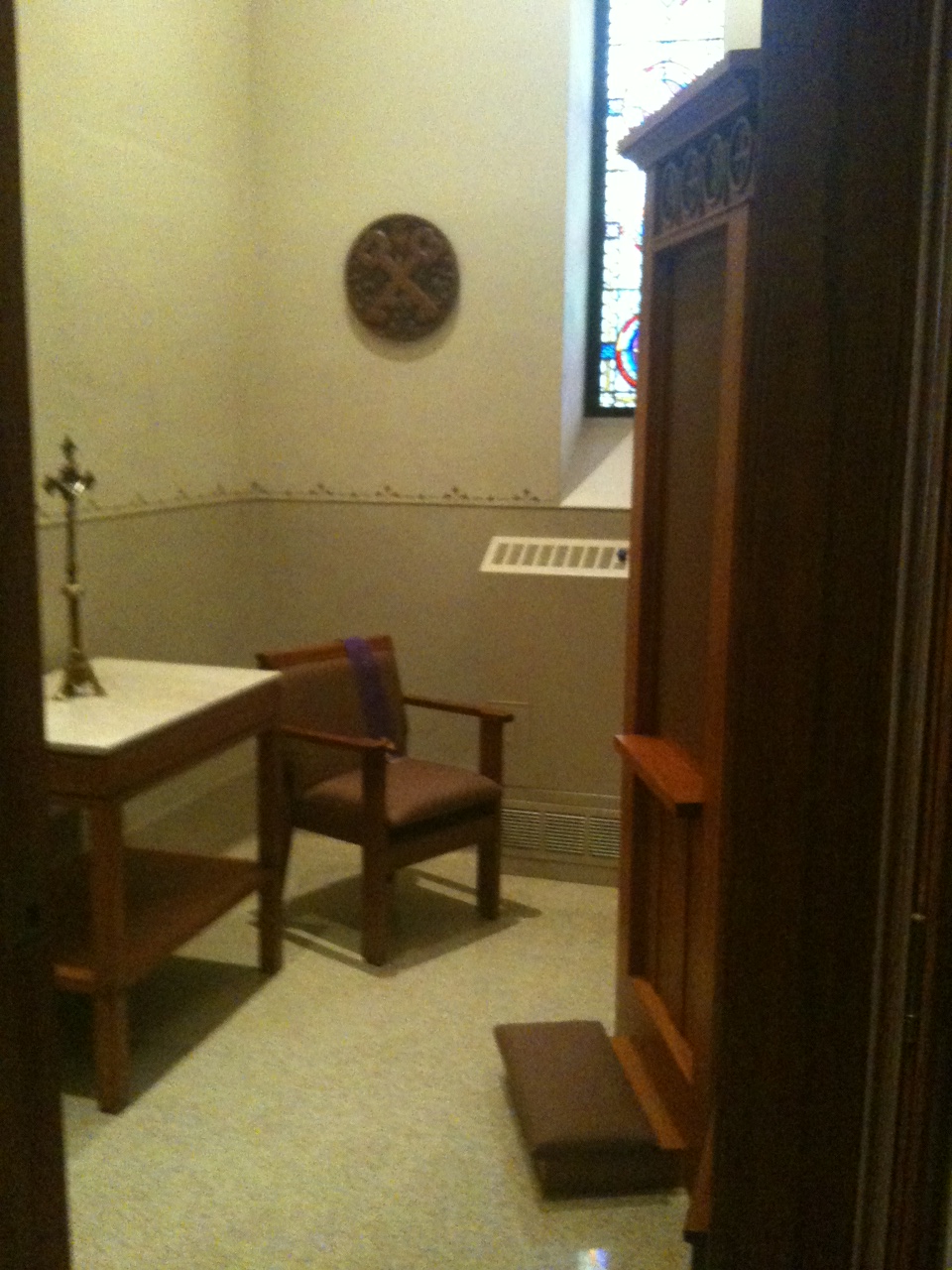
Confessional

Study:  Recall a moment when you have experienced forgiveness in your own life; how did it transform you?

Pray:  Is there something in your life that calls for forgiveness?  Pray for the grace and strength to do it.

Serve:  Is there someone you can help in the journey of forgiveness?  Is there something you can do that removes an obstacle and allows forgiveness to occur?

11th Sunday of the Year Readings

The Scriptures today reveal different examples of confronting our sins and receiving forgiveness.

The first reading from the Second Book of Samuel brings us into the latter part of the story of David and Bathsheba.  David: 1 – has sexual relations with this married woman;  2 – tries to cover up his sin by tricking and intoxicating Bathsheba’s husband Uriah;  3 – orders the brutal death of Uriah while he is fighting a battle for David.

The prophet Nathan has just told a parable to David, and when David promptly responds with the demand for justice, Nathan blasts him with the crimes he has committed.  At this point we step into the reading to discover three points:
God (very clearly) points out David’s sins
– David repents
– God forgives David’s sin

The psalm response today offers words that we might want to keep near us at all times:
“Lord, forgive the wrong I have done.”

The Gospel reading from Luke points out the reality of sin and the profound experience of grace that happens in forgiveness.  As Jesus receives the anointing of his feet, he instructs a Pharisee about the connection between mercy and love.

All three examples underscore the powerful impact of forgiveness in our lives.  In our moments of sin and temptation we encounter the darkest and most terrible parts of our hearts.  When we are honest with ourselves, we can be horrified by the potential for evil that lies within us.

Yet it is in these very experiences that we find Christ present.  The Lord will not permit us to cast a blind eye toward our sins; we are compelled to face the evil that we have done and name it.  What might otherwise fill us with shame becomes a moment of grace; Jesus Christ knows our sins (better than we do) and STILL LOVES US!  Completely!  Without limit!

Perhaps it’s time we recall the psalm response.  Perhaps it’s time that we stop for a moment and reflect on the mercy and grace that God freely grants us in our moments of weakness and sin.  Our choice to let go of sin and turn to Christ will open our hearts and fill us with a spirit of grace, hope, and peace.


10th Sunday of the Year – Arise!

Station - Jesus in the Tomb

Study:  Reflect on a time of grief and loss in your life.  Where did you find support and strength?

Pray:  Pause to consider those who are going through grief and hold them up in your daily prayers.

Serve:  Do you know someone who is struggling with grief right now?  Perhaps a visit or an act of kindness could make the day a little brighter.

Last October I was traveling through the Holy Land and I passed through the village where Jesus performed the miracle that is recounted in the Gospel today.  I find it easy to imagine the situation: a group of people walking in procession with a widow as  they carry her dead son out of the city.  There is grief, terrible loss, and the sense that the entire community is mourning with this woman.

Then an encounter with Jesus.  First he has pity, then he offers consolation, then a single word: arise!

In a moment everything changes.  The Lord gives the man back to his mother, the procession is filled with fear and wonder, and God is praised.

We all know that death is a part of life.  Like the seasons of the year, there are times for birth, growth, harvest, and death.  Yet there are also times when death happens outside this cycle – in moments of tragedy, unforeseen illness, and accident – and our lives are turned upside down in a heartbeat.

In these moments when we are filled with questions, doubts, and uncertainty.  And like the widow in today’s Gospel we can invite the Lord to draw near.  The same pity, consolation, and hope is ours – Christ meets us in our weakness and with tender compassion he touches our hearts.

His love is empowered through the victory of his death and resurrection.  His sacrifice on the Cross opens the gates of Heaven for us.  For at the hour of our death we long to look upon Jesus who will say “Arise!” to us and welcome us to eternal life.

Perhaps you are dealing with grief in your life, or perhaps you are walking with someone in the midst of grief.  The Gospel today gives us an opportunity to face death with the conviction of faith – this is not the end, but a new beginning with the Lord.  May the pity, consolation, and mercy of Jesus help us to be tender with others in their grief, and may it help us to face the hour of our own death with trust in the Lord’s love.


3rd Sunday of Easter – Do You Love Me?

Jesus Loves Me

Study: Think back on a time when you made a big mistake and instead of harshness you encountered mercy.

Pray: Ask the Lord to help you love – especially people you find challenging. Pray for strength and grace to love.

Serve: Is there someone in your life that would benefit from an act of kindness, mercy, or love? Who is in your life right now that the Lord is leading you to love?

3rd Sunday of Easter Readings:

When you think of the backdrop of today’s Gospel reading, you might consider what Peter was thinking about. He had betrayed Jesus. Three times. He was told he would, he boasted he would die for the Lord, and when it came to the test he failed – utterly.

Then beyond all hope and wonder Jesus stands before Peter in resurrection glory. He’s alive! Death and sin have been conquered once for all, and we have hope in eternal life.

What would Peter say to Jesus?

Was he afraid that the Lord would be upset or disappointed? Was he worried that his friend and Lord would reject him or cast him aside? Was he ashamed, or perhaps overwhelmed with feelings of guilt and inadequacy?

Yet Jesus does not respond in a negative way at all. Three times he asks one little question: Do you love me? Three times Peter will answer yes, and in the end he will admit that Jesus knows him completely – including all his failings and limitations. The point is simple. Jesus met Peter in his weakness and invited him to live a life of love.

This encounter between Jesus and Peter should give us all hope. We all make mistakes: we’ve failed, messed up, caused harm and disappointment. Yet when we turn back to the Lord we discover the mercy and forgiveness of Jesus who asks us the same simple question: Do you love me?

What will be our answer? We have the opportunity to let go of our past sins and return once again to the Lord who loves us and invites us to love in return. Rather than be shackled to sin, fear, and death – we may embrace new life with joy and hope. Jesus Christ comes with power to free us with his healing grace.

Like Peter, we stand before the Lord in our weakness. Like Peter, we will all be asked the same question. May our answer be YES to the Lord’s love.