Tag Archives: Eucharist

Our Lord Jesus Christ, the King of the Universe

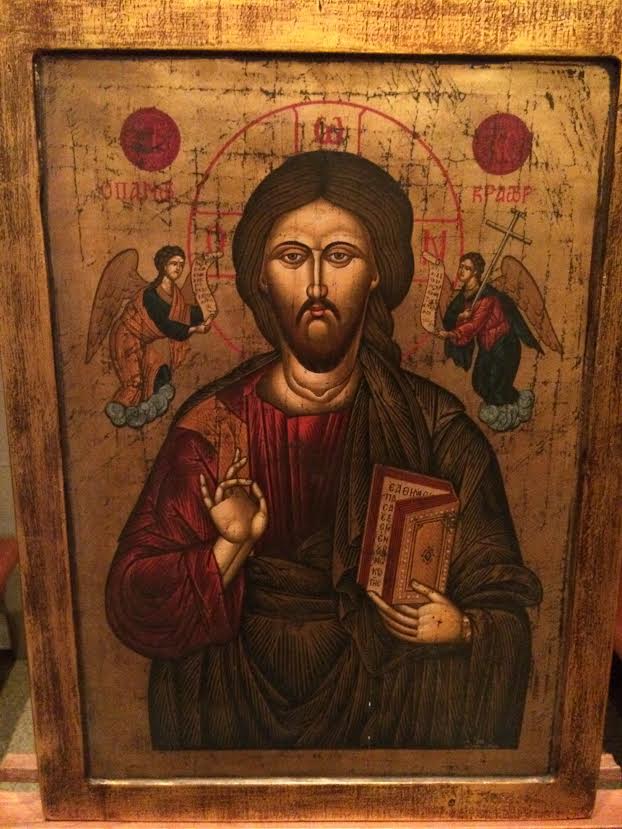
Pantocrator

Study:  Recall a time when you carried out a difficult command.  What gave you strength?

Pray:  Is there a difficult situation facing you right now?  Draw near to Christ in the Eucharist for wisdom and courage.

Serve:  Actions speak louder than words…so how can your actions today show others that Christ is your King?

Readings for the Feast of Our Lord Jesus Christ, the King of the Universe

Fr. Andrew’s Homily Podcast

We conclude the Church’s liturgical calendar with this Feast in honor of our Lord.  The title is one that speaks to a role that appears in history, literature, and culture:  the KING.

Here are some common key points to remember:

  • The King is recognized as ruler
  • The King’s power is acknowledged
  • The King’s decrees are to be obeyed

Sounds simple, right?  So how do we apply these concepts to Jesus?  Consider this:

  • If Christ is the ruler of my life, then all my words and actions must align with Him.
  • I turn to Christ for strength in my moments of powerlessness.
  • I act on Christ’s commands, obeying His teaching and precepts.

Practically, I suggest that we focus this week on three key commandments that Christ gave us:

  1. Forgive one another.  Reread chapter 18 in Matthew’s gospel for a review.
  2. Come to Mass. Check out chapter 6 in John’s gospel, or Mt. 26:26-28.
  3. Love one another.  Try John 15:12-17 for a refresher!

Remember: the King commands us to forgive, receive Him in the Eucharist, and love one another.  These are not suggestions, or helpful hints when we have free time!  These are commands…and as we acknowledge that Jesus is our King we also know that we can draw near to the Lord for the strength and wisdom we need to carry them out.

**********

This icon of Christ Pantocrator is on loan to the Cathedral of Christ the King from Fr. Andrew Ricci.  “Pantocrator” may be literally translated into “Ruler of All” or “Almighty” and it is an ancient way of depicting Jesus.


18th Sunday of the Year – The Bread of Life – Catholic Inspiration

Three Great Things

Fr. Andrew’s 18th Sunday of the Year Homily Podcast

Have you ever “wanted” something – thinking that if you only had this one thing you would be…happy, fulfilled, and free of care?  There are many good (and some not so good) things that we can want, but none of them will completely satisfy us.  We are left restless, longing for something at the center of our our hearts.  We know that nothing in this world will satisfy us for a simple reason:

Jesus said, “I am the Bread of Life.”

The Lord knows us, loves us, died and rose for us, and longs for us to be united in his Sacred Heart.  Christ comes to us – sharing his Body and Blood – that we might never hunger and thirst again.   When we draw near to the altar, may our “Amen” resound with a desire to unite our hearts to Jesus Christ – the one who knows our wants, but responds to our needs.


Corpus Christi – The Miracle of the Mass – Catholic Inspiration

Three Great Things

Fr. Andrew’s Corpus Christi Homily Podcast

The miracle of the Mass touches our lives in a number of crucial ways:  We hear the Word of God; we receive the Sacrament of Christ’s Body & Blood; we unite as the Lord’s disciples and pray together.  Below are three key words that can help us experience this miracle more fully:

  • Preparation
  • Focus
  • Engagement

What happens before, during and after each Mass can transform our hearts and change our lives.  May our communion with Jesus Christ nourish us for service in the world!


Corpus Christi – The Body and Blood of Christ

Última_Cena_-_Da_Vinci_5

Study:  Reflect on the Mass.  What parts do you find most helpful?

Pray:  Consider making a list of prayer needs for your use at Mass.  Keep this list near you for reference when you go to Church.

Serve:  Perhaps you know others who have been away from Mass for awhile.  Consider making the effort to invite them to join you at Mass.

The Body and Blood of Christ Readings

Fr. Andrew’s Homily Podcast

The celebration of the Eucharist is the highest form of Christian prayer.  Jesus defines the bread and wine and his body and blood, and then he commands his disciples to “take and eat…take and drink” in his memory.  Besides the readings we will hear at Mass, some other crucial Scripture passages testify to this essential element of our faith:

  • Matthew 26:26-29
  • Mark 14:22-26
  • Luke 22: 14-23
  • John 6:51-58
  • 1 Corinthians 11:23-26

What happens when we go to Mass?  What do we encounter when we open our hearts to this hour long prayer?  Here are few key points:

  • We hear a good selection of the Word of God
  • We receive Jesus Christ in Holy Communion
  • We unite in prayer with others
  • We pray for the sick, those who have died, and our special needs
  • We have a few moments for silence and reflection

Of course in our fast paced, entertain-me-so-I-won’t-be-bored world, we can look upon the central prayer of the Church and wonder why the Mass doesn’t “get modern.”  The reality is that the Mass continues to adapt to the culture and times.  The real question is this: Do I come to the Mass with an open heart to encounter the Lord and his disciples?  Do I come with a focus to offer my life to be renewed by Christ?

Here are seven ideas for getting the most out of Mass:

  1. Read the Sunday Scriptures ahead of time.  This way you can get a sense of the key themes and be better prepared to follow the homily.
  2. Come prepared to pray.  This seems obvious, but many people often don’t come with their “list” of intentions and needs.  Take some time before Mass to consider who or what in your life could use a prayer.
  3. Pray before Mass starts.  Sometimes we can rush into church, drop into a pew, and try to follow along with the Mass.  Give yourself 5-10 minutes to reflect on the past week, look to the next, and ask the Lord for guidance and strength.  It really helps!
  4. Receive Holy Communion with heightened awareness.  This is Jesus Christ who offered his life on a Cross for the salvation of our souls.  It’s his blood that was poured out for the forgiveness of our sins.  Make that moment of receiving Him intentional and reverent; let the “Amen” come from your heart!
  5. Pray after receiving Holy Communion.  You have just received the Lord Jesus into your body – you have become a living Tabernacle – there is no better time to offer the deepest, most important issues on your plate to the one who loves you.
  6. Consider one takeaway that you experienced from every Mass.  Name one thing (just one is perfectly fine) that struck you at every Mass.  Perhaps it was a point in the homily, a line from a hymn, someone you prayed for, something you experienced, or an insight that came to you in silence.  By naming one takeaway you actively participate in the prayer and engage your faith as you live your life.
  7. Use a resource to get the most out of Mass.  Some people like a devotional, missal, or prayer booklet – something that can be used both in and out of church.  Others prefer an online resource where they can follow up at a website, video, or podcast.  Still others favor their smartphones for handheld resources that they can take anywhere.  Find what works for you…the only true measure is the resource that helps you engage your faith each and every day.

Jesus Christ gives us the gift of himself in every Mass.  He defines what we do and commanded us to do it.  Every time we come to Mass we encounter the Lord and allow his grace to transform our lives.  May his Body strengthen our bodies; may his Blood flow through our veins.

After all, as his disciples, we have his work to do.

**********

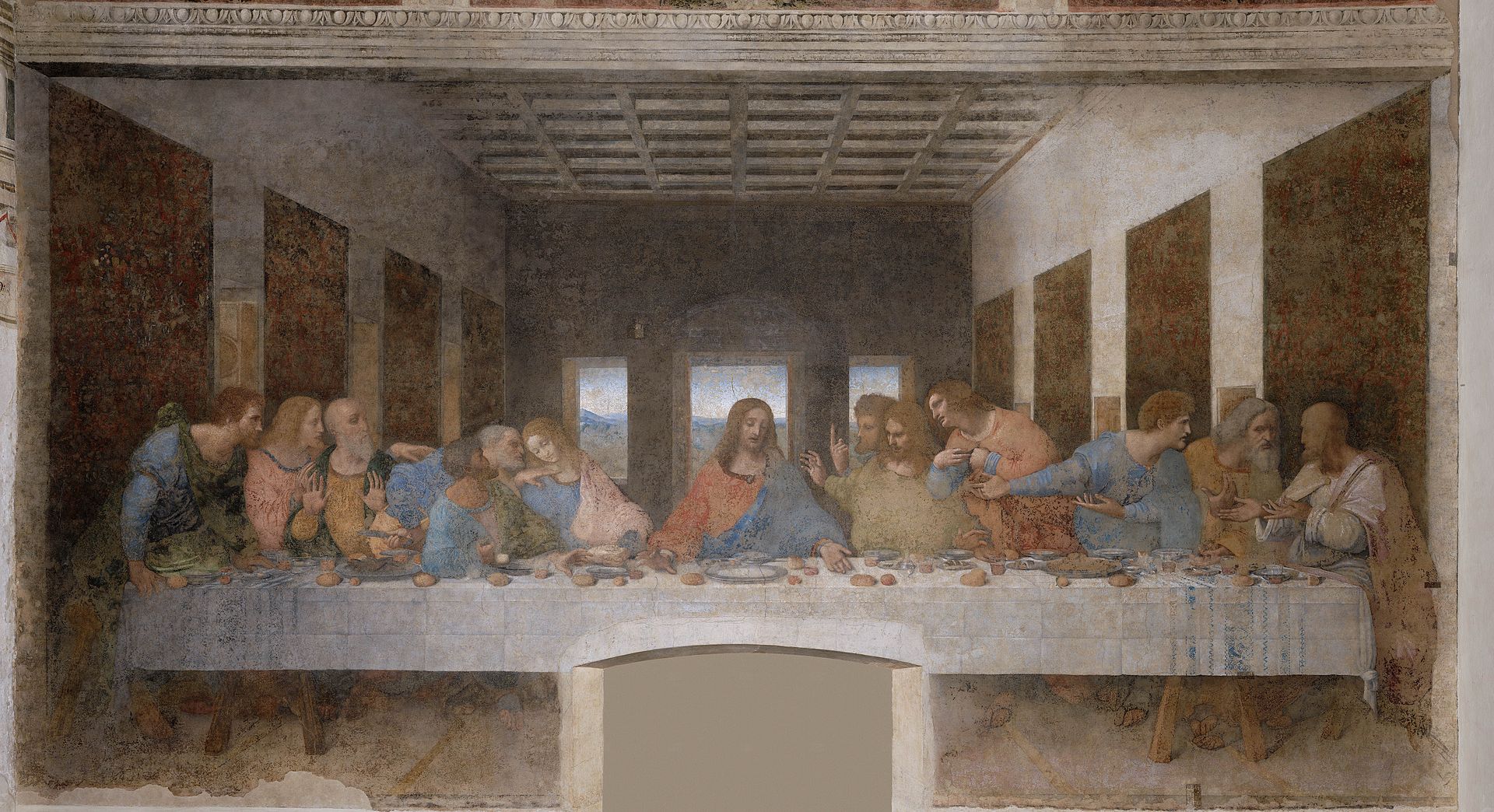
The Last Supper, Leonardo da Vinci; 1494-1499, tempera on gesso, pitch and mastic, 460 cm x 880 cm, Santa Maria delle Grazie, Milan, Italy.


Walking with the Lord in Holy Week – Holy Thursday – Catholic Inspiration

Three Great Things

This is the 2nd of four presentations given at a Parish Mission on March 9-12, 2015 for Our Lady of the Valley Catholic Church in Green Valley, Arizona.

Fr. Andrew’s Presentation Podcast #2 – Holy Thursday (33 minutes)

At the Last Supper on the night before he died, the Lord Jesus imparted two key commands that he gave to his disciples:

  • Service
  • Sacrament

In SERVICE the Lord taught with through his example of washing the disciples’ feet.  Found in John 13:1-15, Christ shows his disciples in a clear and direct way that following Jesus demands a call to serve one another.  Service is the path that invites us to give our lives, sharing the unique skills, resources, experiences, and talents we have for the good of others.

In SACRAMENT the Lord defined the bread and wine as his body and blood.  In addition to the Institution of the Eucharist found in Matthew, Mark, and Luke – St. Paul writes of this in 1st Corinthians 11:23-26.  Jesus teaches his disciples about his Body & Blood, and then commands his followers to eat and drink.  The Sacrament of the Eucharist is a crucial way in which we receive the Lord into our lives – providing us with the strength and grace we need to serve as his disciples.


Eucharist: Why We Do What We Do – Catholic Inspiration

Three Great Things

Would you like to learn a little more about the Eucharist?   Why we do what we do as Catholics?  How to get more out of Mass?  How to let the power of Eucharist shine through your life?  This Parish Mission was given at St. Dominic Church in Frederic, WI on March 8, 2014.

Eucharist Podcast #1 – “Why We Do What We Do”  (45 minutes)

Eucharist Podcast #2 – “Getting the Most out of Mass”  (49 minutes)

Eucharist Podcast #3 – “Eucharist as a Way of Life” (28 minutes)

The first talk draws on the Gospel story of Emmaus (Luke 24:1-35) and the writing of St. Justin Martyr.  It then outlines the teaching and command of Jesus to receive the Body of Christ so that we become the Body of Christ.

The second talk offers a series of practical points on how to prepare and participate in the Mass so that its power can direct our lives.

The third talk discusses how Eucharist and Adoration can nourish our spiritual lives and then goes on to connect with a reflection from Pope Francis (given on February 21, 2014) that shows three distinct ways that the Eucharist inspires a Catholic Way of Life.

Each talk stands alone.  While they are all interconnected you may listen to them as a group or individually.  Either way, may the Eucharist – the source and summit of our prayer life – renew our hearts with the grace of Jesus Christ!


28th Sunday of the Year – Banquet Invitation

Banquet

Study:  How do I respond to the Lord’s call to the Eucharist?

Pray:  Take time each day to listen to the Scripture readings for daily or weekly Mass – it is a powerful way to prepare for the Eucharist.

Serve:  Is there someone who you can bring to Mass?  Perhaps the fellowship or hospitality may help another to grow in faith.

28th Sunday of the Year Readings

Fr. Andrew’s Homily

Two themes surface in the readings today that require further reflection:
1. God prepares a banquet for us
2. God invites us to come to the feast

The imagery of the banquet feast is found in the readings from Isaiah, the Psalms, the Matthew’s gospel. There are several points of interest here:
* God does the cooking! (Not us!)
* The food is the finest quality (rich & choice)
* The banquet is an important event (you better show up)

The fact is, when God throws a feast it is lavish in every detail. The event is on a grand scale with the best food and drink. What’s more, the Lord is the host of the meal! God prepares a banquet in every respect – as Chef, Host, Servant, Substance, and Lord.

The “feast” has more than just one meaning. This banquet is first of all the great gathering at the end of time when we join the Lord in heaven. This “heavenly banquet” is the final celebration when all the saints unite in the glory of the risen Jesus; what a meal that will be!

Furthermore, since the resurrection of Jesus, Christians have gathered together for the Lord’s supper, where Christ himself feeds us with his Body and Blood. Here on Earth we are “saints in the making” who strive to follow the Lord through the struggles of life. This Eucharist is the feast that gives us the strength we need to face each day with faith, hope, and love.

Both of these banquets – one on heaven, the other on Earth – are presented by the Lord. We receive Christ’s body and blood so that we might follow the Lord through this world to the world that has no end.

Now the second point is this: Do we come and attend? If Christ has prepared a banquet for us in heaven and on earth, then do we respond to the Lord’s call by receiving his heavenly food on earth, and living on this earth as citizens of heaven?

Today the Lord calls us to the great banquet that will happen at the end of time. This feast is the final goal of our journey of faith. For this journey we need strength, and the Lord provides each week for the spiritual food we need to continue on our way.

May we come and receive with open hearts!


18th Sunday of the Year – a Miracle

fishes and loaves

Study:  Where in my life have I experienced God’s abundant grace?  Where and when have I encountered a miracle?

Pray:  Jesus met the people in their needs; perhaps we might come to the Lord with our concerns and fears.

Serve:  How might we be an instrument of grace for another today?  Has the Lord put someone in our life right now to serve?

18th Sunday of the Year Readings

Fr. Andrew’s Homily

The Gospel this week offers a familiar story that many of us have heard on numerous occasions.  The miracle of the fishes and loaves offers a rich opportunity to reflect on a variety of themes that are central to the Christian disciple.

In order to do this, let’s take a step-by-step review of this story:

1.  Jesus hears of the death of John the Baptist
2.  Jesus seeks solitude in a deserted place
3.  The crowds eagerly seek Jesus
4.  Jesus sees the crowds and pities them
5.  Jesus cures their sick
6.  The people are hungry and far from home
7.  The disciples tell Jesus to send the people away
8.  Jesus tells the disciples to feed the people
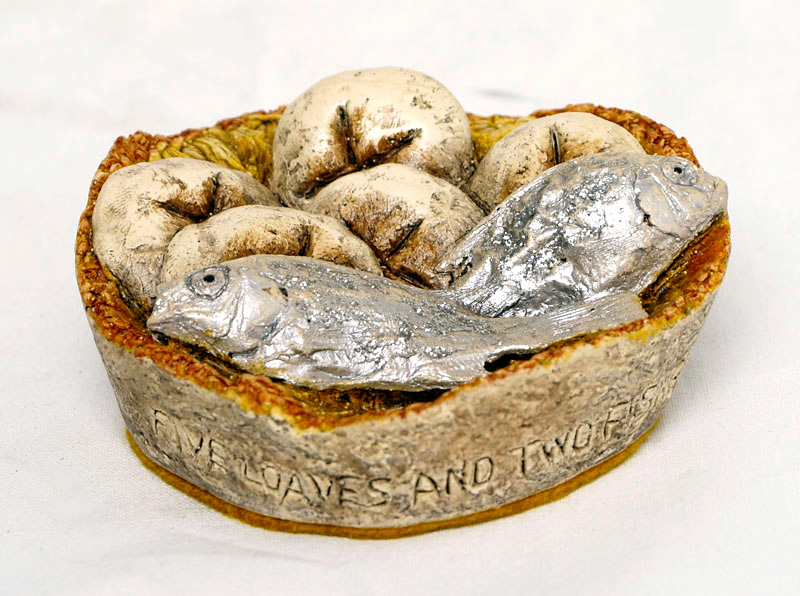
9.  The disciples say there is only 5 loaves & 2 fish
10.  Jesus TAKES, BLESSES, BREAKS, GIVES
11.  There is an abundance (leftovers of food!)

Here are a few observations:

1.  Jesus’ heart is moved with sorrow for the death of John the Baptist.  Perhaps he is considering his own approaching death, and he seeks some quiet personal time.  Yet when the crowds crush in upon him, the Lord pities and responds to their needs.  It is the generous and loving heart of Jesus that is worthy of reflection and observation here.

2.  Jesus observes that many people are sick, and the Lord takes the time to heal their bodies.

3.  The people have been with Jesus all day.  They are far from home, and they have not eaten.  While the disciples want the Lord to send them away, Jesus commands them to feed the people; when they use the limited food supply as their excuse, Jesus takes, blesses, breaks, and gives them an abundance.  Thus, Jesus cares for the people – body and soul in a way that is truly overwhelming.

4.  The same verbs of taking, blessing, breaking, and giving are used to describe the Lord at the Last Supper.  This feeding miracle is just another form of Eucharist!

Jesus moves beyond his own personal concerns to love, respond, and serve others.  The Lord cares for both the physical and spiritual needs of people in a generous way.  May we follow his example in our own lives of service and ministry.


Easter Vigil

Candlelight

Study:  How did you learn your Christian faith?  When did it become something you claimed for your own?

Pray:  This is a good time to count our blessings and draw near to the Lord in gratitude for the gift of life.

Serve:  Perhaps there is someone to whom you might want to say, “I love you.”  Perhaps this is a good time right now…

Easter Vigil Readings

This holy night finds the Church celebrating the profound mystery of Christ’s saving work.  The Easter Vigil recalls the great moments of salvation history, rejoices with those who enter into full communion with the sacramental life of the Church, and is nourished by Eucharist.  Here are the four key components:

  • The Liturgy of Light
  • The Liturgy of the Word
  • The Liturgy of Initiation
  • The Liturgy of the Eucharist

The Liturgy of Light (or Lucernarium) begins the Easter Vigil.  In the darkness the image of light is used to proclaim our hope in Christ.  Several things happen:

  • A new fire is blessed and from its flames the light of the paschal (Easter) candle is lit
  • This candle is processed into church where the faithful light their own candles from it.
  • By this sea of candlelight the great Easter proclamation of Christ our Light – the Exsultet – is offered.

The Liturgy of the Word recounts the epic story of salvation history through several Old Testament Scriptures:

  • Creation – Genesis 1:1-2.2 and Psalm 104 or 33
  • Abraham’s Sacrifice – Genesis 22:1-18 and Psalm 16
  • Passage through the Red Sea – Exodus 14: 15-15:1 and its Canticle (Exodus 15)
  • The New Jerusalem – Isaiah 54:5-14 and Psalm 30
  • Salvation Offered Freely to All – Isaiah 55:1-11 its Canticle (Isaiah 12)
  • The Fountain of Wisdom – Baruch 3:9-15 and Psalm 19
  • A New Heart and a New Spirit – Ezechiel 36:16-28 and Psalm 42-43

We then move from the Old t0 the New Testament:

  • The Gloria is sung
  • A reading from  Romans 6:3-11 – Christ, raised from the dead, dies no more!
  • The Alleluia is sung
  • The Gospel is read – Mt 28:1-10; Mk 16:1-7, Lk 24:1-12 (depending on the year)

The Liturgy of Initiation then follows where those who have been preparing to enter the Church now receive their sacraments.

  • The Litany of the Saints is sung
  • The Baptismal Font is blessed
  • The Sacrament of Baptism is celebrated
  • The Assembly renews their Baptismal Promises
  • The Sacrament of Confirmation is celebrated

Finally, the Liturgy of the Eucharist allows the entire community to draw near to the altar to receive Jesus Christ in the sacrament of his Body and Blood.  The newly baptized receive Holy Communion for the first time in the company of their fellow Catholics.  Like every Mass:

  • Bread and Wine are brought to the altar
  • The Priest prays the Eucharistic Prayer
  • The Lord’s Prayer is said, followed by the Sign of Peace
  • We receive the Lord Jesus in Holy Communion

The great promise of faith, founded upon God’s saving work through time in the history of salvation, is proclaimed on this holy night.  May Christians around the world renew their faith in Jesus Christ – sharing his love and light with one another.

Christ our Light!