Category Archives: Feasts & Solemnities

The Feast of All Souls

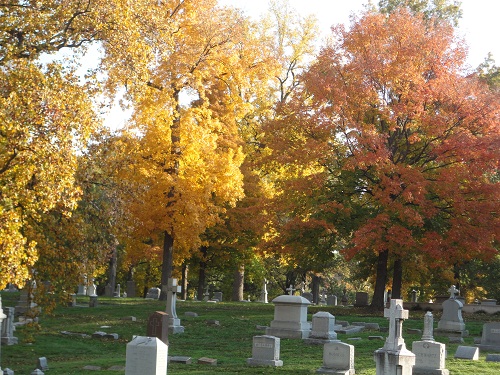
cemetery

Study:  Recall close family and friends who have died.  Reflect on how they blessed your life.

Pray:  Remember those who are grieving the loss of loved ones in your prayers.

Serve:  Is there an act of kindness you can to for someone grieving?  How can your support help them face the reality of death and the hope of the resurrection?

Readings for the Feast of All Souls

I would like to explain how we get this feast on the weekend. Normally, the feast of All Saints is a Holy Day of Obligation in the Church. However, when a Holy Day falls on a Saturday or a Monday it is “suppressed” so that the Sunday mass does not lose its importance. And when a feast (like All Souls) actually falls on a Sunday – then that is often the feast whose prayers and readings are used.

This is why I went to seminary for a decade….!

There are a number of possible readings to choose from for this feast. They should sound familiar; indeed, for anyone who frequently attends funerals they will echo with past memories.

The Feast of All Souls is a celebration where the whole Church remembers all who have died. On this day we offer prayers, hear readings, and recall the memories of our beloved dead.

Yet the way we do this is in the example and image of Jesus Christ. Think of Holy Week: we celebrate Good Friday (the day He died) and Easter Sunday (the day He rose).

During those days we recall the suffering and pain of Jesus in His last hours on earth. We recite the passion, process the Cross, and dwell upon His sorrow and anguish. Yet it also means that we celebrate with joy His resurrection from the tomb. We fill the church with flowers, sing alleluias, and rejoice that His death led to new life.

What’s true for Jesus is true for us. When we remember our beloved dead we must remember both our grief (because of death) and our hope (because of eternal life). As we offer our prayers this weekend, we then not only admit our sorrow at the loss of a loved one, but we cling to our belief that we will one day be together with the Lord in Heaven.

Therefore, to be genuine people of faith we both acknowledge the pain of death and affirm the hope of eternity. In this way we do not overly focus on one or the other, but recognize that both are a part of our lives as disciples of Christ here on Earth.

On this feast we remember our beloved dead. We hold fast in faith that their passing is not the end, but the beginning of a new life with Christ in Heaven. In this feast we are thus also reminded that we, too, will one day make this journey. May we trust that as others have traveled from death to life, we will follow in the Lord’s path as well.

The Triumph of the Cross

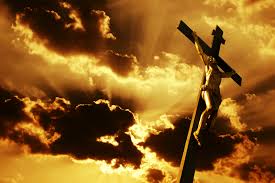
triumph of the Cross

Study:  Reflect on a moment when you encountered real suffering and loss.  Where did you find the strength to continue?

Pray:  Call upon the Lord for the guidance and wisdom to carry on, especially in the midst of difficulty.

Serve:  Perhaps you are called – like Simon of Cyrene – to carry a cross for another.  Who in your life right now could use your help?

Feast of the Triumph of the Cross Readings

How many times throughout our lives have we made the sign of the Cross?  Stop and think:  at Mass; meal prayers; morning & evening prayers; special gatherings; and moments of blessing and grace.  This simple action, which we teach to children at an early age, invokes a connection with the passion of Jesus.

We adorn our homes with the Cross.  A crucifix is a common gift to a new home; they are placed in bedrooms and common areas as a reminder that Jesus is the source of our help and strength.

We adorn ourselves with the Cross in many ways:  a crucifix on a chain; a cross in our pocket; earrings; rings; bracelets; and all the extra cards, bookmarks, figurines, and miscellaneous items that remind us that Jesus died on a Cross.

The Paschal Mystery – the death and resurrection of Christ – speaks to the heart of our  faith.  Out of love for us God sent Jesus, who gave his life on the Cross that we might have eternal life.  Through his suffering and death, we recognize that God has made a pathway possible that we might all journey through this life to the gates of Heaven.

The Cross teaches us many lessons:
* Life is difficult, and at times painful
* Weakness and sin are part of our experience
* God identifies with our pain
* God dies that we might have life

At the core of our teaching the Cross stands as the testament of God’s love for us.  On one hand the Cross is an embarrassment – after all, why would God (all powerful, all knowing, supreme) choose to be humiliated?  Does that not mean that God is weak?  Why could God not take away our sins in a way that showed majesty and splendor?

Yet on the other hand, the Cross is a statement that God meets us where we are in life.  In our weakness, in our humiliation, in our low moments of doubt and sin God comes to us.  Jesus, like us in every way but sin, understands our pain because through his Cross he shares in the suffering of the world.  He knows us, and loves us even more.

Every time we make the sign of the Cross may we recall what the Lord endured for us.  May the Cross be our strength as we trust in God’s love, and may we seek to follow that love as we journey through this life toward the world to come.


Saints Peter and Paul

Peter and Paul

Study:  What are the unique gifts that God has given me?  How might I be called to share my life with others?

Pray:  Ask the Lord for the guidance and direction you need.

Serve:  What needs are before you right now?  How can you help another with your life?

Saints Peter and Paul Vigil Mass Readings

Saints Peter and Paul Sunday Mass Readings

Every year on June 29th the Church celebrates two of its greatest figures – Saint Peter and Saint Paul.  Since this feast falls on a Sunday, we transfer the readings and prayers of this feast to all the weekend masses.

When you think about the influence that these saints have had through their leadership, writing, and example it is easy to see why the Church chooses a day to honor their memory.  Their lives are part of the very foundation of our faith; they were human instruments by which God was able to share the Good News of Jesus Christ.

Saint Peter, for all his human weaknesses and failings, offered his leadership for the early Church.  The very fact that he made mistakes, spoke out of misunderstanding, and sometimes let fear and doubt cloud his judgment is the very reason why many people respect him.  Rather than get frustrated or dejected, he kept getting up and following Christ.

Saint Paul, who formerly persecuted the Church, would become its greatest advocate through his immense number of letters, exhortations, and journeys.  At times misunderstood or openly attacked, he continued to proclaim the message of Christ.

Life was not easy for these men!  They were physically tortured, imprisoned, falsely accused, mocked, ridiculed, beaten, and at times abandoned.  They gave up their families, their careers, the stability of their lives – ALL FOR THE LOVE OF CHRIST.

In the end, this immense personal sacrifice would culminate with the greatest of all offerings: they would give their lives for their faith.  Peter would be crucified upside down (stating that he was unworthy to die in the same way as his Lord).  Paul would be beheaded.  Their deaths both took place in Rome, where they spent the last days of their lives, teaching and preaching in the name of Jesus.

These men were some of the very foundation stones of our faith.  Upon the example of their lives we have built our Church.  We are their living legacy; their example inspires us.

Yet they also remind us of our obligation to the next generation.  Just as Peter and Paul shared their faith, so too we are called to do the same.  We have the opportunity to continue their work, and thus be an example to future Christians of the love and faith that comes from Jesus Christ.


The Body and Blood of Christ

Holy Communion

Study:  Reflect on the last time you received Holy Communion.  Were you attentive to the great gift of Jesus Christ – body & blood, soul & divinity – that you received?

Pray:  The next time you are at Mass, take a moment to prepare yourself to receive the Lord with an open heart.

Serve: Communion gives us strength to do the Lord’s work; who in my life could use a helping hand today?

The Body and Blood of Christ Readings

I love pasta.  I love to cook it; I love to eat it; and I can spend hours talking with family members and friends in order to learn more about how different sauces and seasonings affect flavor and taste.

In addition, I enjoy the numerous shapes and styles of pasta.  Spaghetti is a timeless classic, but there is also vermicelli, cappelini, fettuccine, conchiglie, tagliarini, cappelletti, tortellini, ravioli, rigatoni, ziti, m0staccioli, farfalle, cannelloni, campanelle, lasagna, penne rigate…….!

The list goes on and on in an immense and diverse variety of forms.  Different sauces work better with particular shapes, and cooking styles differ from one pasta to another.

And yet with all of this variety, pasta is still a very simple food.  While it has a place of honor in Italian cooking (did I mention I am Italian?), it can be found in most cultures – each sporting unique ways to prepare this basic form.

Food is an essential need in all life.  We need food to survive physically, yet food is more than just sustenance. When people gather to eat, food often becomes the means to draw others into conversation, companionship, and celebration.  Thus, food can nourish the body and the soul.

Jesus knew this simple fact.  He fed people when they were hungry (Mt 14:13-21, Mk 6:30-44, Lk 9:10-17, Jn 6:1-15, Mt 15:32-39, Mk 8:1-10).  The Lord met this basic need repeatedly, helping people to be physically sustained by giving them bread to eat.

Yet Jesus makes an astonishing claim.  He says that he is the living bread (Jn 6:51).  Thus, Jesus not only gives the people food, but he tells them that he is the food they need for eternal life.  This claim is underscored in the Gospel today, and it is supported by the words of Jesus at the Last Supper (Mt 26:17-29, Mk 14:12-25, Lk 22:7-20, and 1 Cor 11:17-34).

Every time we gather for Mass we follow the Lord’s command to take bread and wine and in His name receive His Body and Blood.  The Lord becomes food for us that we might have life in this world and in the next.  As we receive Communion may we recognize that the Lord Jesus is near, offering us his very self that we might have the food of eternal life.


The Most Holy Trinity

Holy Trinity

Study:  When in your life have you experienced love without words?  How did you know that you were loved even when nothing was said?

Pray:  Ask the Lord for guidance – who am I called to love today?  How am I called to love?

Serve:  What random act of kindness can I offer today for another?  How can I let the Love of Christ shine through my efforts?

Holy Trinity Readings

Fr. Andrew’s Homily

In my travels I have found myself on occasion in the company of people who did not speak English.  Indeed, when I would try my limited Spanish or Italian (or even my Latin!), I found that we had no common foundation upon which to communicate.  I wanted to share my thoughts, but I did not possess the medium to make it happen.

As I was explaining this frustration to one of my professors, he shared with me a common language that affects us all.  It is a language that all of us can understand even though we use different words to explain it.  The language?  Mathematics.

Imagine the number five (“5”).  Around the world the number is essentially the same, yet the word to describe it is very different:
In English:    “five”
In Italian:    “cinque”
In Greek:    “pente”

You get the idea.  The number means the same, but is spoken in a different way in each language.

Through time and space God has come to humanity in many different ways.  God has communicated to us through different instruments (Prophets, Dreams, Visions, Saints, Nature…), and God has spoken in many different languages (Jesus spoke Aramaic, the New Testament is written in Greek, St. Augustine wrote in Latin…).

Yet God uses one word again and again among us – LOVE.  Indeed, we are told that God is love (1 John 4:8).  This love is seen most clearly in the mystery of the Trinity, where God comes to us in love to teach us how to love one another.

God the Father created us in love.  God the Son redeemed us out of love by his death and resurrection.  God the Holy Spirit sustains us in our lives to put this love into practice.

Jesus speaks of the love of the Father (John 15:9), and the Lord tells the disciples that out of love he will ask the Father to send the Spirit (John 14:16).  Love is the reason God made us, God saved us, and God strengthens us today.

If love is the language God shares with us, then we are invited to speak this language in our lives. Our call as Christians is to proclaim in our words and actions the love of God – Father, Son, and Holy Spirit.  For if our love is sincere, then it will communicate in a language that breaks all boundaries.


The Body and Blood of Christ

Bread

Study:  Read John 6; Matthew 26:26-29; Mark 14:22-25; Luke 22:15-20.  Note that Jesus defines what this is and commands us what to do.

Pray:  The next time you receive Holy Communion, take an extra moment to recognize Christ in the Eucharist and welcome Him into your life.

Serve:  We need food for physical strength and we require spiritual food for spiritual strength.  What tasks are before you right now that require God’s grace and help?

We all know people who love to cook and serve food.  They are the ones who always have something on hand for company, and they delight in offering a “little something” when visitors stop by.  Often in conversation sooner or later the question will be asked, “Are you hungry?  Would you like something to eat?”

Feeding people covers a variety of human needs.  Whether it is for our  hospitality, or gathering for a celebration, or simply nourishing our bodies, food is a central part of our existence.  It is one of our most basic and regular needs.

To ask someone, “Are you hungry?” not only recognizes this fundamental need, but it reveals our desire to serve another out of love.  Hunger is a universal experience, and our willingness to feed others shows our practical concern and our solidarity with those around us.

Experience teaches us that food is not the only nourishment we require.  Besides sustenance for our bodies we are also aware that we need spiritual strength as well.  Friendship, fellowship, prayers, and the support of a community and family are essential to our health and well being.

Jesus knew that people were hungry.  The Lord fed thousands with bread and fish.  He fed multitudes with hope and comfort through his teaching.  He fed the hearts of people in need of forgiveness and peace by his healing.  And on the night he was betrayed, he left his disciples with a way that they could be nourished through his body and blood for all time.

God knows our hunger.  In our need God comes to us with an abundance of life and goodness, inviting us to come and feast that we might have life.  In the Eucharist we proclaim that out of love the Lord Jesus is among us so that the community might receive the nourishment needed for our journey through life.

At Mass we proclaim this mystery.  Through the power of Christ, bread and wine become the Lord’s body and blood for our spiritual food.  As we receive communion the words “the body of Christ” state not only what we receive but what we become.  For as we receive the Lord in holy communion, we become the Body of Christ – empowered to share the Lord’s love in our world that others who hunger might be fed.


The Most Holy Trinity

iPhone 082

Study:  Recall a time when you had an experience of God.  Consider how you have changed because of this encounter.

Pray:  Is there something or someone in your life who is in need of an encounter with God?  Are you grateful for an encounter you have witnessed in your own life?  Take this to your prayer.

Serve:  How can you help others encounter God in their lives?  What can you do for others to remove obstacles and allow them to experience God’s grace?

Here in the North we are blessed with an abundance of natural resources.  Forests, lakes, rich farmland, beaches, trails, and countless other treasures comprise the bounty of our countryside.  Many of these resources are easy to take for granted, especially for those of us who live among them all year long.

Take water for example.  The lakes and rivers of Wisconsin inspire and relax people throughout the seasons.  From fishing to water skiing, the activities surrounding water are endless.  Indeed, when compared to other places around the world, our supply of fresh water is a priceless commodity.

Of course water does come in different forms.  As a solid, liquid, or gas water is both useful and easily recognizable.  The different forms help us to understand that one substance can be revealed in a variety of ways; something can be the same while appearing in a different or even contradictory fashion.

The Holy Trinity is one of the central mysteries of our faith.  At its heart lies our belief that there is one God who is revealed to us in three different ways:  the Father, the Son, and the Holy Spirit.  These three Persons, who we invoke every time we make the sign of the Cross, are part of the experience of faith which the followers of Jesus encountered.

As the disciples listened to the teaching of Christ, they understood that Jesus was the Father’s only Son.  They accepted the promise that Jesus, who rose from the dead and ascended into heaven, would ask the Father to send the Advocate – the Holy Spirit, to guide them and give them strength.  It is through our faith in Christ that we come to this knowledge, for God is revealed to us through these three Persons, who are in complete and inseparable unity.

Yet the Trinity is not only a mystery which teaches us about God; it is a mystery for our own lives as well.  Just as the Father sent the Son, and later the Holy Spirit – we, too, are sent to reach out to our sisters and brothers with the knowledge and hope that we have received.  We are invited to both live in unity with those around us, even as we work to bridge the divisions and hostilities which separate us.

The Trinity is a mystery that reveals to us the love of God – through the Father, Son, and Holy Spirit.  May we respond in a similar fashion, reflecting the love of God to those around us.