Author Archives: Fr. Andrew Ricci

About Fr. Andrew Ricci

Unknown's avatar
A Catholic priest since 1997, Fr. Andrew Ricci is currently the rector of the Cathedral of Christ the King in Superior, WI. His website "Three Great Things" can be found at studyprayserve.com and his podcasts can be found under "Catholic Inspiration" in the iTunes store.

11th Sunday of the Year – Forgiveness

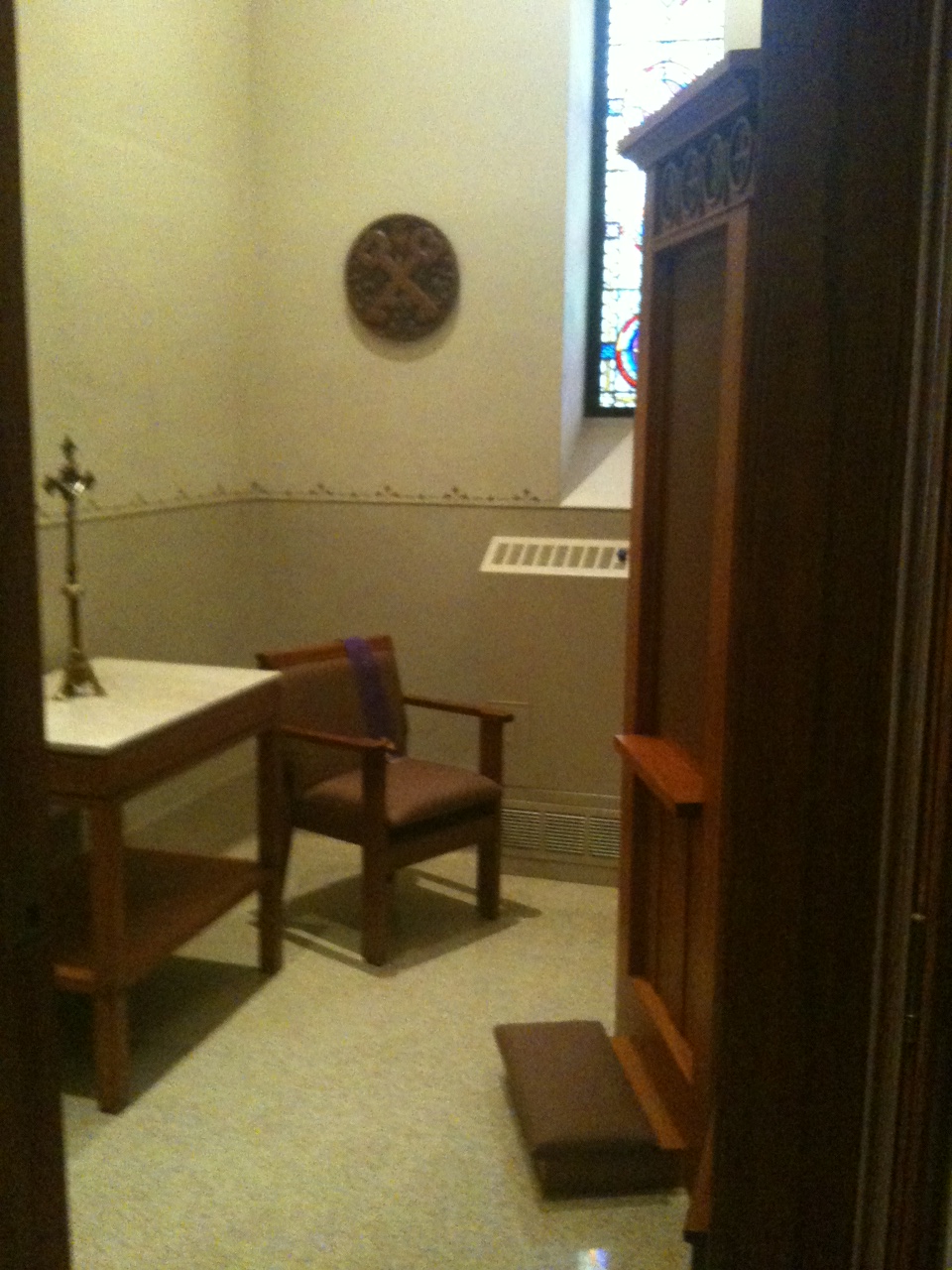
Confessional

Study:  Recall a moment when you have experienced forgiveness in your own life; how did it transform you?

Pray:  Is there something in your life that calls for forgiveness?  Pray for the grace and strength to do it.

Serve:  Is there someone you can help in the journey of forgiveness?  Is there something you can do that removes an obstacle and allows forgiveness to occur?

11th Sunday of the Year Readings

The Scriptures today reveal different examples of confronting our sins and receiving forgiveness.

The first reading from the Second Book of Samuel brings us into the latter part of the story of David and Bathsheba.  David: 1 – has sexual relations with this married woman;  2 – tries to cover up his sin by tricking and intoxicating Bathsheba’s husband Uriah;  3 – orders the brutal death of Uriah while he is fighting a battle for David.

The prophet Nathan has just told a parable to David, and when David promptly responds with the demand for justice, Nathan blasts him with the crimes he has committed.  At this point we step into the reading to discover three points:
– God (very clearly) points out David’s sins
– David repents
– God forgives David’s sin

The psalm response today offers words that we might want to keep near us at all times:
“Lord, forgive the wrong I have done.”

The Gospel reading from Luke points out the reality of sin and the profound experience of grace that happens in forgiveness.  As Jesus receives the anointing of his feet, he instructs a Pharisee about the connection between mercy and love.

All three examples underscore the powerful impact of forgiveness in our lives.  In our moments of sin and temptation we encounter the darkest and most terrible parts of our hearts.  When we are honest with ourselves, we can be horrified by the potential for evil that lies within us.

Yet it is in these very experiences that we find Christ present.  The Lord will not permit us to cast a blind eye toward our sins; we are compelled to face the evil that we have done and name it.  What might otherwise fill us with shame becomes a moment of grace; Jesus Christ knows our sins (better than we do) and STILL LOVES US!  Completely!  Without limit!

Perhaps it’s time we recall the psalm response.  Perhaps it’s time that we stop for a moment and reflect on the mercy and grace that God freely grants us in our moments of weakness and sin.  Our choice to let go of sin and turn to Christ will open our hearts and fill us with a spirit of grace, hope, and peace.


10th Sunday of the Year – Arise!

Station - Jesus in the Tomb

Study:  Reflect on a time of grief and loss in your life.  Where did you find support and strength?

Pray:  Pause to consider those who are going through grief and hold them up in your daily prayers.

Serve:  Do you know someone who is struggling with grief right now?  Perhaps a visit or an act of kindness could make the day a little brighter.

Last October I was traveling through the Holy Land and I passed through the village where Jesus performed the miracle that is recounted in the Gospel today.  I find it easy to imagine the situation: a group of people walking in procession with a widow as  they carry her dead son out of the city.  There is grief, terrible loss, and the sense that the entire community is mourning with this woman.

Then an encounter with Jesus.  First he has pity, then he offers consolation, then a single word: arise!

In a moment everything changes.  The Lord gives the man back to his mother, the procession is filled with fear and wonder, and God is praised.

We all know that death is a part of life.  Like the seasons of the year, there are times for birth, growth, harvest, and death.  Yet there are also times when death happens outside this cycle – in moments of tragedy, unforeseen illness, and accident – and our lives are turned upside down in a heartbeat.

In these moments when we are filled with questions, doubts, and uncertainty.  And like the widow in today’s Gospel we can invite the Lord to draw near.  The same pity, consolation, and hope is ours – Christ meets us in our weakness and with tender compassion he touches our hearts.

His love is empowered through the victory of his death and resurrection.  His sacrifice on the Cross opens the gates of Heaven for us.  For at the hour of our death we long to look upon Jesus who will say “Arise!” to us and welcome us to eternal life.

Perhaps you are dealing with grief in your life, or perhaps you are walking with someone in the midst of grief.  The Gospel today gives us an opportunity to face death with the conviction of faith – this is not the end, but a new beginning with the Lord.  May the pity, consolation, and mercy of Jesus help us to be tender with others in their grief, and may it help us to face the hour of our own death with trust in the Lord’s love.


The Body and Blood of Christ

Bread

Study:  Read John 6; Matthew 26:26-29; Mark 14:22-25; Luke 22:15-20.  Note that Jesus defines what this is and commands us what to do.

Pray:  The next time you receive Holy Communion, take an extra moment to recognize Christ in the Eucharist and welcome Him into your life.

Serve:  We need food for physical strength and we require spiritual food for spiritual strength.  What tasks are before you right now that require God’s grace and help?

We all know people who love to cook and serve food.  They are the ones who always have something on hand for company, and they delight in offering a “little something” when visitors stop by.  Often in conversation sooner or later the question will be asked, “Are you hungry?  Would you like something to eat?”

Feeding people covers a variety of human needs.  Whether it is for our  hospitality, or gathering for a celebration, or simply nourishing our bodies, food is a central part of our existence.  It is one of our most basic and regular needs.

To ask someone, “Are you hungry?” not only recognizes this fundamental need, but it reveals our desire to serve another out of love.  Hunger is a universal experience, and our willingness to feed others shows our practical concern and our solidarity with those around us.

Experience teaches us that food is not the only nourishment we require.  Besides sustenance for our bodies we are also aware that we need spiritual strength as well.  Friendship, fellowship, prayers, and the support of a community and family are essential to our health and well being.

Jesus knew that people were hungry.  The Lord fed thousands with bread and fish.  He fed multitudes with hope and comfort through his teaching.  He fed the hearts of people in need of forgiveness and peace by his healing.  And on the night he was betrayed, he left his disciples with a way that they could be nourished through his body and blood for all time.

God knows our hunger.  In our need God comes to us with an abundance of life and goodness, inviting us to come and feast that we might have life.  In the Eucharist we proclaim that out of love the Lord Jesus is among us so that the community might receive the nourishment needed for our journey through life.

At Mass we proclaim this mystery.  Through the power of Christ, bread and wine become the Lord’s body and blood for our spiritual food.  As we receive communion the words “the body of Christ” state not only what we receive but what we become.  For as we receive the Lord in holy communion, we become the Body of Christ – empowered to share the Lord’s love in our world that others who hunger might be fed.


The Most Holy Trinity

iPhone 082

Study:  Recall a time when you had an experience of God.  Consider how you have changed because of this encounter.

Pray:  Is there something or someone in your life who is in need of an encounter with God?  Are you grateful for an encounter you have witnessed in your own life?  Take this to your prayer.

Serve:  How can you help others encounter God in their lives?  What can you do for others to remove obstacles and allow them to experience God’s grace?

Here in the North we are blessed with an abundance of natural resources.  Forests, lakes, rich farmland, beaches, trails, and countless other treasures comprise the bounty of our countryside.  Many of these resources are easy to take for granted, especially for those of us who live among them all year long.

Take water for example.  The lakes and rivers of Wisconsin inspire and relax people throughout the seasons.  From fishing to water skiing, the activities surrounding water are endless.  Indeed, when compared to other places around the world, our supply of fresh water is a priceless commodity.

Of course water does come in different forms.  As a solid, liquid, or gas water is both useful and easily recognizable.  The different forms help us to understand that one substance can be revealed in a variety of ways; something can be the same while appearing in a different or even contradictory fashion.

The Holy Trinity is one of the central mysteries of our faith.  At its heart lies our belief that there is one God who is revealed to us in three different ways:  the Father, the Son, and the Holy Spirit.  These three Persons, who we invoke every time we make the sign of the Cross, are part of the experience of faith which the followers of Jesus encountered.

As the disciples listened to the teaching of Christ, they understood that Jesus was the Father’s only Son.  They accepted the promise that Jesus, who rose from the dead and ascended into heaven, would ask the Father to send the Advocate – the Holy Spirit, to guide them and give them strength.  It is through our faith in Christ that we come to this knowledge, for God is revealed to us through these three Persons, who are in complete and inseparable unity.

Yet the Trinity is not only a mystery which teaches us about God; it is a mystery for our own lives as well.  Just as the Father sent the Son, and later the Holy Spirit – we, too, are sent to reach out to our sisters and brothers with the knowledge and hope that we have received.  We are invited to both live in unity with those around us, even as we work to bridge the divisions and hostilities which separate us.

The Trinity is a mystery that reveals to us the love of God – through the Father, Son, and Holy Spirit.  May we respond in a similar fashion, reflecting the love of God to those around us.


Pentecost – Finding our Strength

Holy Spirit - St. Peter's

Study:  Reflect on a time when you felt God’s strength.  Was it with the help of others or in a particular situation?  How did God help you?

Pray:  We all need strength to face challenges in life.  Ask for the power of the Holy Spirit to face what lies ahead.

Serve:  How might the Holy Spirit be working through you to help another?  How might the Spirit call you to serve someone else?

Pentecost Readings:

Where do people find their strength?  As a priest I have had the privilege of walking with families during moments of trial and difficulty.  At times when pain and struggle seem too difficult to bear, I often witness people who face incredible obstacles through their faith, which sustains them in truly amazing ways.

Faith gives life, guidance, meaning, and strength.  Yet what makes our faith possible?  How does God empower our faith in the midst of the activity and demands of daily life?  The answer is simple:  The Holy Spirit.

The feast of Pentecost celebrates the coming of the Holy Spirit upon the Church after Jesus ascended into Heaven.  Through this coming the Apostles were transformed – their hearts were on fire, blazing with a desire to live as Christ taught, and sharing what they had received with others.

Pentecost was an amazing event!  Through the power of the Holy Spirit, the Church gained courage and strength that it had not previously experienced.  Disciples (who had formerly been afraid and doubtful) were now fearlessly proclaiming the Good News – facing even persecution and death.

Something happened.  Something powerful and life changing.  Something that could not be attributed to a human cause.  Through Pentecost God intervened in the lives of people, and from this moment the Church has been on fire.

Yet Pentecost was not a one-time event.  Indeed, the power of this feast continues through the whole Church.  The Holy Spirit, promised to us by Jesus, is sent by the Father so that this same strength is ours as well.  It is the Spirit which dwells within us, guiding and empowering us in our moments of need.

Every saint, every person of faith, every heroic and Christ-like act of goodness – is filled with the power of the Holy Spirit.  For whenever we open our hearts, asking the Spirit to dwell in our lives, God will send the Spirit to give us the strength we need.

This is our promise!  We stand in the same tradition as the Apostles, and we seek God to be with us.  Just as God sent the Spirit upon the early Church, so too will God send the Spirit upon the Church today.  What is needed is an invitation:
Come Holy Spirit!
    Kindle in our hearts the fire of your love! 


7th Sunday of Easter – Ascension

Sunset

Study:  Transitions are a time of uncertainty.  Consider a time when you experienced a transition: how did it feel?  How did you face it?

Pray:  When faced with the unknown we come to the Lord for direction.  Pray that the Holy Spirit will send both wisdom (to know what to do), and strength (so you can do it).

Serve:  Who in your life is alone right now.  How might you walk with another in a time of transition and uncertainty?

7th Sunday of Easter – Ascension Readings:

There are moments in life when it is difficult to say good-bye.  Whether it is a relocation through work, the completion of school, or the death of a loved one, we know that these events challenge us to move on with the transitions in life.

The Feast of the Ascension marks one of these transitions in the Church.  This feast demands that we ask the question, “Now what?” as the Lord is taken from our midst.  The disciples must now discover the new ways that God is at work in their lives – especially now that Jesus is no longer with them.

But unlike other transitions, where people pass out of our lives and are separated from us by physical distances or death, Jesus leaves his disciples in a different way.  By ascending into heaven he does not move out of our lives, but rather he comes into contact with all life.  Through his ascension the Holy Spirit comes upon all people, and Jesus touches our lives in a new and mysterious way.

The mystery of the Ascension is closely connected to the Resurrection of Jesus.  The early Church recognized that the saving work which God did through Jesus included both of these events.  We say in the Creed, “…he rose from the dead…(and) ascended into heaven…” in the same breath – for these two events show that the Lord’s work is unlike anything else ever done before.

Through his Resurrection, death and sin no longer have power over Jesus Christ; his sacrifice on the Cross offers hope for the whole world.  Through his Ascension, all people can know Jesus and the Spirit; taken up to heaven, the Lord is now present to all people regardless of time or space.

This feast reminds us that Christ does not abandon his people.  The Lord is near, and we enjoy his presence even though we cannot touch him as the disciples did.  We know that God walks with us, and we trust that the Lord will give us the strength to carry out the mission of the gospel through the transitions we face in this life.


6th Sunday of Easter – Peace I Leave With You

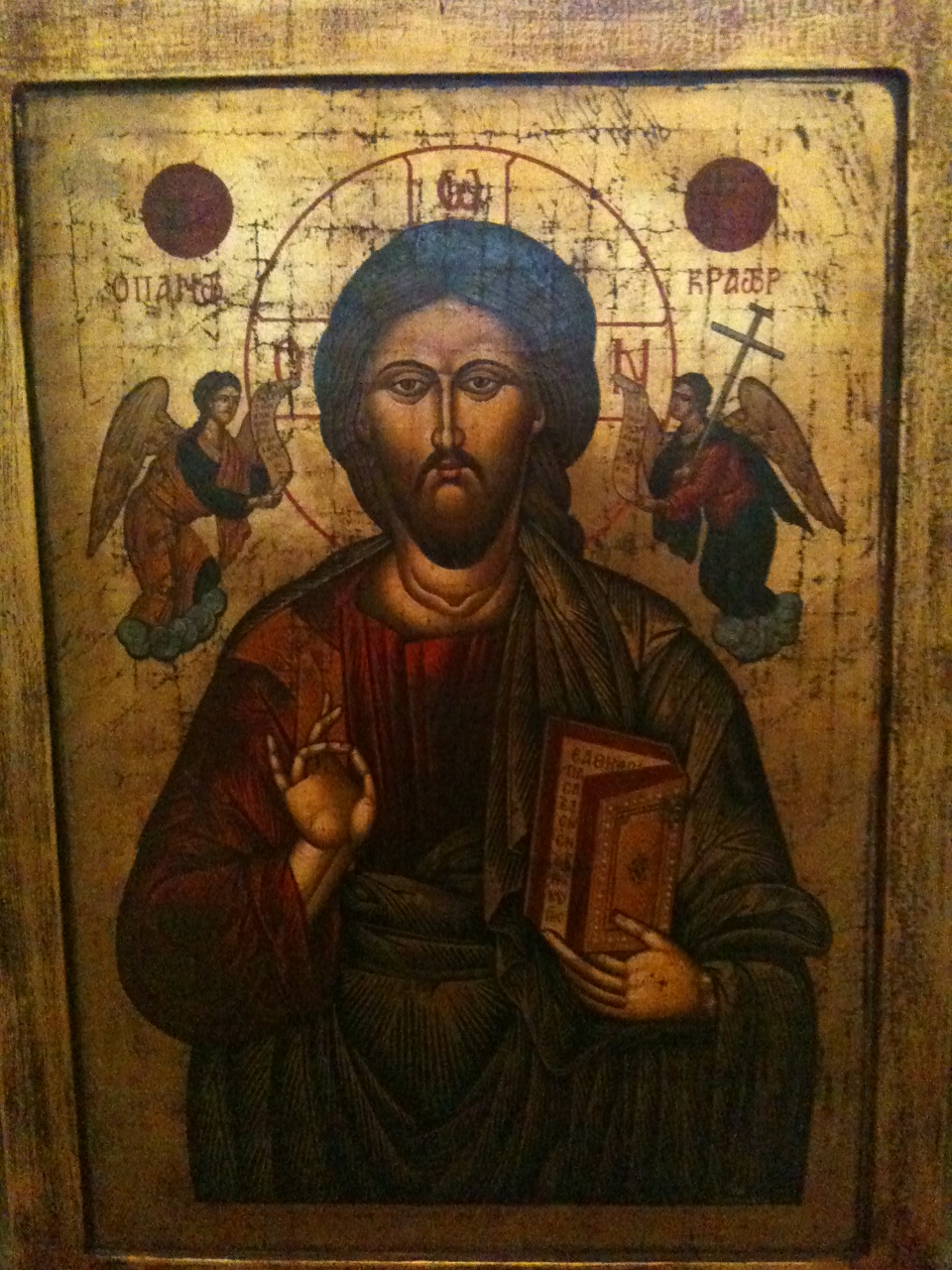
Icon of Christ

Study:  Think of someone you know who has faced a terrible fear.  Where did they find their peace and strength?

Pray:  Is there something that makes you afraid?  Bring it to your prayer and ask God to give you the grace to face it.

Serve:  How might you support someone in their fear right now?  Is there something you can do to offer comfort, assistance, or aid?  Perhaps it simply means being present to others to remind them that they are not alone.

6th Sunday of Easter Readings:

The phrase “do not be afraid” appears twenty-one times in the New Testament and over fifty times in the Old Testament.  These words are spoken by angels, prophets, and the Lord.  The repetition of this message in the Scriptures is for a simple reason – we often live in fear.

It is truly humbling to step back and reflect on the things in this life that keep us afraid:  aging, sickness, loss of ability, finances, relationships, war, terrorism, violence, self esteem………it goes on and on.  These fears are part of the world in which we live, and their power is often great in the human heart.

Fear has power because it preys on what we value, filling us with worry while we fret over what will happen if something we cherish is taken away.  That is why fear is a universal temptation; all of us have values, and when we fear the loss of something dear to us our anxiety can waste our time and energy.

We see this pattern of fear when people get stuck in a rut of thinking that leads them to wallow in a mental swamp, endlessly churning worry after worry without any positive, constructive, or helpful action.  It is a truly useless process.

Yet as people of faith we are told that fear is not the motivation of our lives.  There is something greater, something more powerful, that overcomes fear and worry, anxiety and doubt – Jesus Christ.  In the Lord we have a hope that is greater than all fear.

Through the death and resurrection of the Lord sin and death have been destroyed.  Christ is victorious and we follow the path that he has laid down for us.  This does not mean that the journey will be easy; rather it means that we can face the difficulties and struggles of life with the knowledge that we will be given what we need.

In our moments of fear (and trust me, there will be moments) we hear what the Lord provides for us – PEACE.  Peace in our hearts gives us the calming strength to face a difficult situation.  Peace in our lives allows us to look upon the world and gain a true perspective.  Peace in our soul allows us to see our fear and still act in a manner that is worthy of hope.

The Lord gives us peace.  When fear threatens to choke our hearts we turn to the one who gives us strength.  Only in the peace of Christ can we find the hope that sustains us to understand and overcome our fear, transforming our lives and our hearts.


5th Sunday of Easter – Love One Another

Heart

Study:  Consider the people in your life who are powerful examples of love.  What practical things do they do to live God’s commandment?

Pray:  Some people are hard to love.  Ask God for the grace to love, following the example of Jesus.

Serve:  Sometimes we say “I love you” through our actions.  Where might an act of kindness be appropriate, especially with someone who is hard to talk to?

5th Sunday of Easter Readings:

The commandment of Jesus today in the gospel reading is familiar to us all.  We have heard these words countless times, and their meaning remains essential to our faith.  When everything is said and done, there is one measure of our discipleship that counts above all others:  LOVE.

The beauty of this commandment is that Christ himself is our model.  Jesus lived the command of love perfectly; his thoughts, words, and actions are a template for us to follow in our everyday practice.  In our moments of weakness and struggle, we can recall the life of the Lord to remind us that love is possible even in times of difficulty.

Why are their situations when it is so hard to love others as Jesus did?  Here are a few thoughts:

1.  Love is a CHOICE.  Love cannot be forced from us, only freely given.  Only through a sincere desire can love be true and genuine.  And if we are not honestly intentional in our love, then it appears cheap and fake.

2.  Love can be rejected.  Once I freely choose to love another, there is no guarantee that it will be freely returned.  My outstretched hand may be slapped; the olive branch of goodwill may be rejected.  Since love requires a free will, then there is no way that I can force another to accept my love.  (This is one reason why love is so powerful – a sincere love occurs when two persons freely choose each other…)

3.  Love requires a risk.  Much is at stake when we step out and love – our sense of identity, self-worth, integrity, and value are all placed in a sensitive spot as we entrust our hopes to another.  Of course, sometimes we are afraid to risk – pulling back from others in order to protect ourselves from being hurt.

4.  Love demands honesty.  We cannot give what we do not have.  To love with sincerity requires that we are in touch with our own hearts.  We have to know ourselves (warts and all) to be sure that we are not using love as a cloak to cover our own fears and insecurities.  In this regard love asks us to grow in knowledge of ourselves, so that we might confront our own limitations and shortcomings.

And yet God commands us to love!  Indeed, this is the commandment by which everything else is measured.  Our life, our faith, and all our behaviors are measured by this defining guide:  the law of love.


4th Sunday of Easter – Joy, Hard Work, and Conviction

Fr. Ed

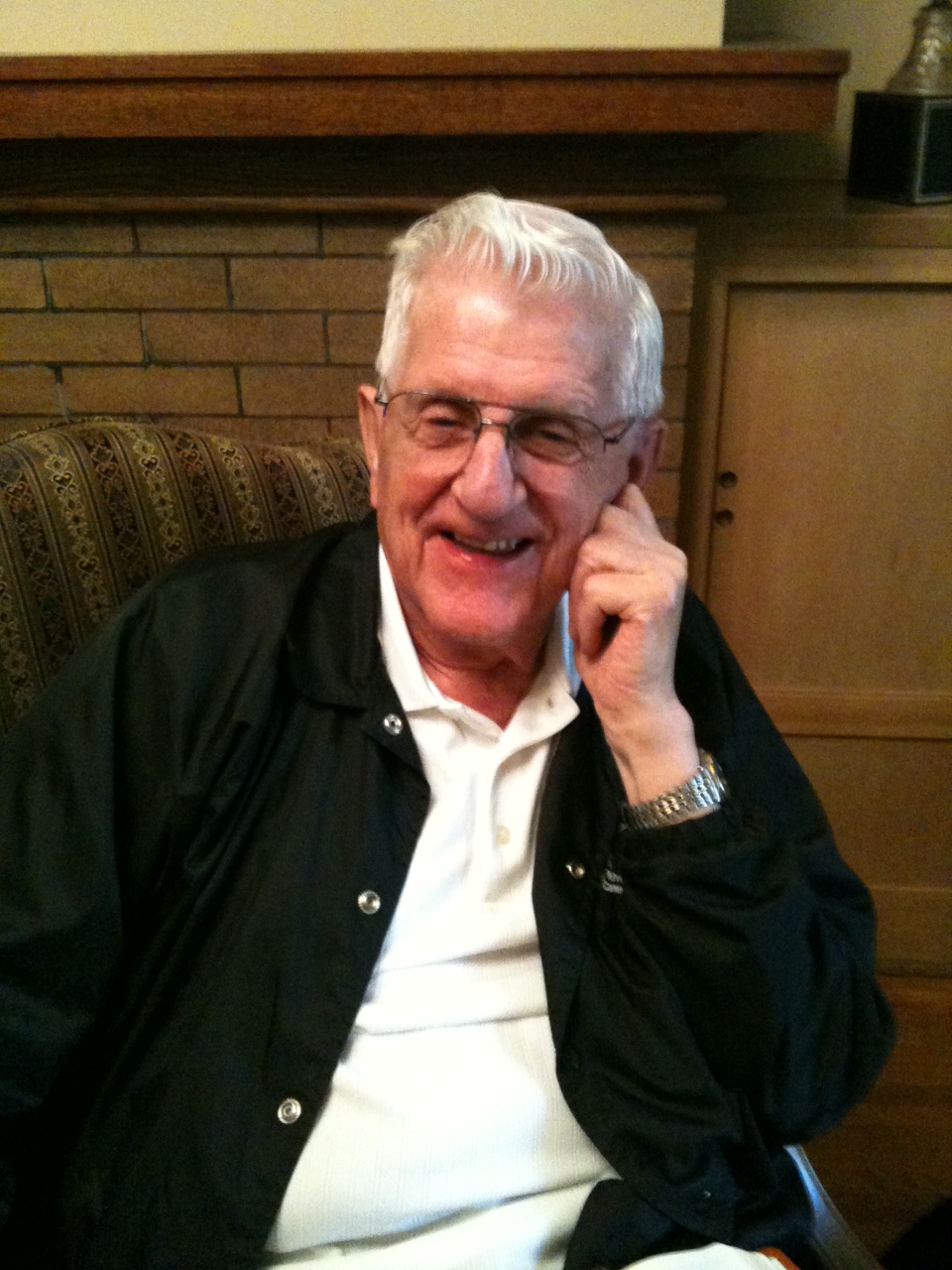
Msgr. Ed Meulemans – my friend and mentor

Study:  Who are your role models?  Who are the people in your life who work hard, live by their values, and are loyal in the face of difficulty?

Pray:  What do you need to ask God for strength for this week?  What is going on in your life that requires direction, guidance, and grace?

Serve:  Who is struggling in your life right now?  Can you help them or perhaps direct them to the assistance they need?

4th Sunday of Easter Readings:

Lit with the fire of the Holy Spirit, the Apostles Paul and Barnabas boldly proclaim the Good News of Jesus Christ in the first reading today.  They travel to the city of Antioch and their story follows a pattern that occurred frequently in their ministry:
1.  They speak about Christ
2.  Some heard their message and followed
3.  Some DID NOT
4.  Pressure mounted against them, forcing them to leave

We know that Paul had success as a preacher; yet it is easy to take for granted his efforts.  Each city was a challenge – telling the story of Jesus, setting an example of faith, working to provide enough money to live on, and dealing with opposition – and he endured this situation for years!

Clearly this ministry was difficult.  It required a lot of hard work.  Paul exerted enormous effort in his time and personal energy.  He was tested in body, mind and soul.  There were times when he felt alone and abandoned; there were times when he wondered if he was getting through to anyone.

We know, however, that Paul had a fire inside of him that could not be extinguished.  He had been transformed by the Lord on the road to Damascus.  He had been healed of his blindness, and he had experienced the witness of other disciples whose lives had been reshaped by the resurrection of Jesus.

Yet through all this hard work and conviction, many people did not accept the message of Christ.  They listened and walked away.  Some insulted Paul, others mocked him, and still others followed for a time and then went back to their old lifestyle.  Each time must have cost something to Paul; to work so hard and have to let people go….

What sustained him?  What gave him strength in his times of need?  We are told that the disciples were filled with joy; the love of Christ and the power of the Holy Spirit blessed them.

Like Paul, we are called to follow the Lord.  It is not always easy.  There are times when hard work appears to show no results.  At these moments we look to the example of the Apostles, who persevered with conviction and joy.  After all, the Good News needs to be proclaimed – yet each one of us must decide if we will listen and follow Christ.


3rd Sunday of Easter – Do You Love Me?

Jesus Loves Me

Study: Think back on a time when you made a big mistake and instead of harshness you encountered mercy.

Pray: Ask the Lord to help you love – especially people you find challenging. Pray for strength and grace to love.

Serve: Is there someone in your life that would benefit from an act of kindness, mercy, or love? Who is in your life right now that the Lord is leading you to love?

3rd Sunday of Easter Readings:

When you think of the backdrop of today’s Gospel reading, you might consider what Peter was thinking about. He had betrayed Jesus. Three times. He was told he would, he boasted he would die for the Lord, and when it came to the test he failed – utterly.

Then beyond all hope and wonder Jesus stands before Peter in resurrection glory. He’s alive! Death and sin have been conquered once for all, and we have hope in eternal life.

What would Peter say to Jesus?

Was he afraid that the Lord would be upset or disappointed? Was he worried that his friend and Lord would reject him or cast him aside? Was he ashamed, or perhaps overwhelmed with feelings of guilt and inadequacy?

Yet Jesus does not respond in a negative way at all. Three times he asks one little question: Do you love me? Three times Peter will answer yes, and in the end he will admit that Jesus knows him completely – including all his failings and limitations. The point is simple. Jesus met Peter in his weakness and invited him to live a life of love.

This encounter between Jesus and Peter should give us all hope. We all make mistakes: we’ve failed, messed up, caused harm and disappointment. Yet when we turn back to the Lord we discover the mercy and forgiveness of Jesus who asks us the same simple question: Do you love me?

What will be our answer? We have the opportunity to let go of our past sins and return once again to the Lord who loves us and invites us to love in return. Rather than be shackled to sin, fear, and death – we may embrace new life with joy and hope. Jesus Christ comes with power to free us with his healing grace.

Like Peter, we stand before the Lord in our weakness. Like Peter, we will all be asked the same question. May our answer be YES to the Lord’s love.