Tag Archives: spirituality

34th Sunday of the Year – Christ the King

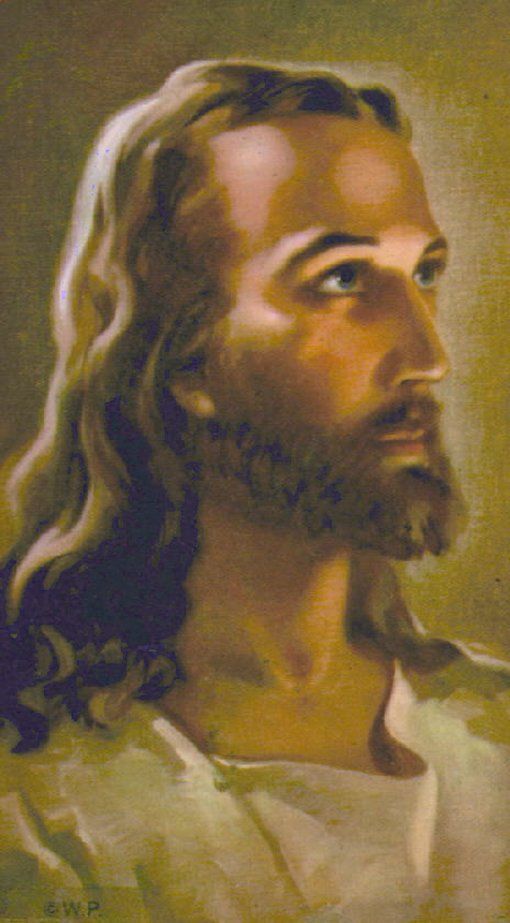
Jesus Christ

Study:  Consider people you know who have been good role models of leadership.  What qualities did they possess that you admired?

Pray:  Is there a major decision or choice in your life that requires guidance.  Ask the Lord for direction.

Serve:  Is there someone you know who is searching for meaning and purpose?  Is there some way that you can help them find their path in life?

34th Sunday Readings

The Feast of Christ the King brings the Church calendar year to a close.  Next week begins Advent, and we will start a new liturgical year with the cycle of “A” readings in the Lectionary for Mass.

Why do we end the year with the notion of Christ the King?  Why do we place this feast here?  What’s the point?

The feast has several levels of meaning.  By calling Christ our King we are making a statement that Jesus is the Lord of our lives.  It means that we place Christ first, and that we serve the Lord Jesus with the allegiance of our hearts, minds, and bodies.  We belong to Christ, who rules us.

In addition, to claim Christ as our King means that we are members of his kingdom.  Through our baptism we are called to the community of faith, the Church, and we possess an inheritance that is ultimately not of this world.  We are citizens who have a responsibility to work together – for this world and the world to come.

Furthermore, the King will come at the end of time to call His faithful people home to heaven.  We believe that the world will end on a future, unknown day (and once again, let me stress it is an UNKNOWN date…).  This feast reminds us that in the end we belong to one home or the other, one Lord or another.

Finally, to say that Christ is our King reminds us that all our power, strength, hope, and direction come from Him.  The skills and talents we possess are from the King (who made us).  The forgiveness we cherish is from the King (who died for us).  The life of the Holy Spirit which sustains us was sent by the King (who asked the Father on our behalf).

Therefore, to claim Christ as our King is to make a statement about who we are.  As followers of this King we offer our lives in service to the one who is our Lord.  We make this King our first priority in all things, and we look upon Jesus Christ as both the beginning and end of our existence.

This is a good time for us to search and prepare our hearts.  As this Church year comes to an end we begin to make ourselves ready for the Lord who comes to us, that he might find us alert and watchful for his arrival.  May we renew our allegiance to Christ our King so that he will rule us with mercy, grace, and love.


33rd Sunday of the Year – Life is difficult

Life is difficult

Study:  Reflect back on life – what have been some major obstacles that you faced?  How did you find the strength and wisdom to overcome them?

Pray:  What current obstacles are before you right now?  Bring these to prayer and ask the Lord for guidance and perseverance.

Serve:  Is there someone in your life who is facing a difficult time in life right now?  How might you be able to offer support?

33rd Sunday Readings

M. Scott Peck, author of the classic personal growth book The Road Less Traveled, begins his text with a simple statement:

Life is difficult.

If we assume this point – that there are times in our lives that are difficult – then we can gain a clear perspective on those moments which confront us with struggle.  We recognize that challenge is indeed a part of life, and how we respond to difficulty shapes and defines who we are.

Difficulty poses a common trap.  When life challenges us we may be tempted to avoid the situation altogether.  It may (falsely) appear that it is easier to stay away from the problem – to run away, hide, pretend it is not there, or direct our attention on something else.

When this happens we may choose an (apparently) easier path.  This is the direction of least resistance; we do not seem to experience the stress or unease we felt before.  Yet this feeling does not last for long.  Sooner or later, the problem we attempted to avoid returns, usually greater than before.

In the end we are confronted with two crucial steps.  First we must recognize the situation (life is difficult).  Second we face the struggle and choose an appropriate response.  Sounds like fun, right?

Wrong…

The Gospel today is clearly not what we call a “warm-fuzzy” sort of reading.  Luke makes it clear that a life of faith will be marked with difficulty.  Pain and suffering will confront us from a variety of perspectives throughout our lives.

The Cross of Christ is our model for this brutal truth.  We know that there is hope and resurrection awaiting us, but we also know that the path to eternal life may also demand steadfast patience and sacrifice.  Indeed, the Lord asks no less than our very lives.

Yet while this reading presents us with a sort of blunt honesty, it also provides us with a powerful hope.  God will not abandon us in our weakness to journey alone.  In our moments of struggle the Lord walks with us, offering strength and guidance to help us on the way…even when life is truly difficult.


32nd Sunday of the Year – What comes next?

Question Mark

Study:  Consider this – if my life ended today, would I be prepared?  Is there anything in my life that needs to be said or done, anything that requires attention?

Pray:  Do I need to ask the Lord for strength – especially to do something difficult or challenging?  Is there something that requires God’s grace to accomplish?

Serve:  Do I know someone who could use help to face an obstacle to Heaven?  How can I support them in their journey?

32nd Sunday Readings

I love to read mysteries.  I like the way they tease my brain with surprise facts, last minute insights, and clues (both helpful and misleading) which point to the solution.  Mysteries intrigue me, and I enjoy them largely because they keep me guessing until the end.

When I am in the middle of the book and no end is in sight, I begin to wonder, “What comes next?”  Sometimes my curiosity overcomes my patience and I am tempted to read the last couple of pages to find out the answers.  I want to know!  I might be rooting for the villain, or failing to give credit to the hero.

Mysteries often remind me that there is more to the story then first appears.  As new facts are added the truth becomes visible, but often in an entirely different way.  The end can be a complete surprise as information and insight shape the story.

“What comes next?” is not only true for mystery novels but applies to life as well.  Our faith in Jesus Christ holds at its center that there is life after death.  We believe that death is not the end; indeed, it is a gateway to an eternity where we may spend it either in union or isolation from God – otherwise know as Heaven or Hell.

We speak of the afterlife quite frequently in our prayers and common speech.  But what does it mean to profess that death is not the end of existence?  How does a belief in the afterlife shape our thinking and our actions?  Two thoughts surface.

First, a belief in life after death tells us that there is more to the story of our lives.  This world is not the end, and many of the beliefs and convictions that we think are important might not be as crucial after further reflection.

Second, if we acknowledge that there is more to life than just this world, then we are bound to consider how we wish to live as we prepare for the world to come.  Ideas such as power, wealth, and prestige just don’t seem to carry as much weight in Heaven.  (The power comes from God, wealth has no purpose, and everyone is loved and esteemed…)

When we think about “What comes next?” in our lives we our challenged to examine if we are living with the full end in sight.  The Scriptures today invite us to consider that if we take our future afterlife seriously, then we may rethink how we live today.


31st Sunday of the Year – How do we respond?

Response

Study:  Look back on some recent responses to others.  Have these responses been guided by Jesus Christ?

Pray:  Are there any major decisions or challenges in my life?  Take these to prayer and ask the Lord for direction.

Serve:  How can I help someone to make the right decision?  How can I help them make a holy response to their circumstances?

31st Sunday Readings

A man had two twin sons.  One son was an optimist, the other was a pessimist.  On their birthday their father brought them to the barn.  Two stalls were marked, one with each boy’s name, and in the middle of each stall was a small pile of manure.

The pessimist immediately began to complain of the smell, wondering why he had to clean up the mess of an animal.  The optimist immediately began to search through the barn.  When his grinning father asked him what he was looking for, the boy replied, “I want to see my new horse!”

Life often offers us situations that contain both good and bad elements.  At such times we have the opportunity to make choices that illustrate our priorities and values.  In others words, our responses reveal what is going on in our hearts.

The Gospel today offers two powerful responses.  Jesus and Zacchaeus both respond to the situations in which they are placed, and their actions reveal their sincerity and conviction.

Jesus encounters Zacchaeus on his journey through Jericho.  We are informed that Zacchaeus is a chief tax collector – despised by the local population as a greedy man who supports the Roman Empire.  He is a “sinner” to the people, and their grumbling shows that they believed he had no business with Jesus.

Yet the Lord makes no distinction in his greeting to Zacchaeus.  He calmly speaks to the man, informing him that he will dine at his house that day.  The response of Jesus is simple:  he reaches out to a person in need of conversion and healing, regardless of past history.

Zacchaeus also displays an amazing response.  The fact that he climbed a tree to see the Lord indicates that he wanted to make a change in his own life.  When Jesus offers him an invitation, Zacchaeus immediately accepts; furthermore, he boldly states a change of heart in his financial practice!

These two responses serve as an invitation for us as well.  Like Jesus, we may examine those situations where we are called to reach out to others.  Like Zacchaeus, we may study those moments when we wish to accept the mercy and help of another.  In both cases, our responses will reveal what is going on in our hearts.  May the Lord help us to choose wisely, as we respond to the world around us.


30th Sunday of the Year – Prayer: Seeing Clearly

Praying

Study:  What parts of my life are not consistent with the Gospel?  Do I say one thing and do another?  Is there a part of my life that needs to be changed?

Prayer:  Do I take the time to bring my fragile weaknesses to God?  Do I honestly admit to the Lord that I need help and strength?

Serve:  How can I be a living “mirror” to help others see more clearly?  How can I do this with love and gentleness?

30th Sunday Readings

I once spent a day with a friend of mine who works on old homes.  He upgrades the efficiency and safety of the building, while preserving the original materials and style.  He showed me a home he was just starting so I could see how the process evolved.

He brought me to a beautiful home.  It had an elegant garden, a well cared-for appearance, and a fresh coat of paint.  I looked at him and said, “What’s wrong?  The house looks great!”

He replied by taking out of his van an infrared camera, pointed it toward the house, and said, “Now look at the house through this.  What do you see?”  As I gazed through the camera I noticed that the house was one large orangish-red haze, with bright red spots everywhere.

He looked at me and said, “The red you see is from the escaping heat.  The house is beautiful, but it is bleeding energy.  Sometimes you have to look with a different lens if you want to see clearly.”

Looking at houses taught me that there is often more to something then first meets the eye.  In the Gospel today, Luke shows two men who go to the temple area to pray.  The first man, a Pharisee relates to God the many good things he is doing, speaking as an upright citizen who fasts and tithes.

The second man is a tax collector, a person often despised by the community for greedy and dishonest practices.  The tax collector makes no boast of his good deeds – he has none.  All he asks is for God’s mercy upon his sinful life.

Normally, people would point to the Pharisee and say he is a good person while the tax collector is wicked.  Yet Jesus points out that only one man’s prayers were heard.  The tax collector went home justified, not because of his actions, but because he recognized that without God’s help he was beyond mercy and hope.

The Pharisee’s actions were acceptable and correct, but because he trusted that the efforts were enough, he failed to realize that he too was a sinner in need of God’s grace.  While his actions were right his trust was misplaced; he believed that by himself he could gain God’s favor.

Life teaches us that not everything is as it seems.  May we open our eyes in our prayer to acknowledge those times when we have fallen short of God’s mercy, recognizing our need for the Lord in our lives.  And may we do the same for those who – in their weakness – cross our path each day.


29th Sunday of the Year – Sacred Scripture

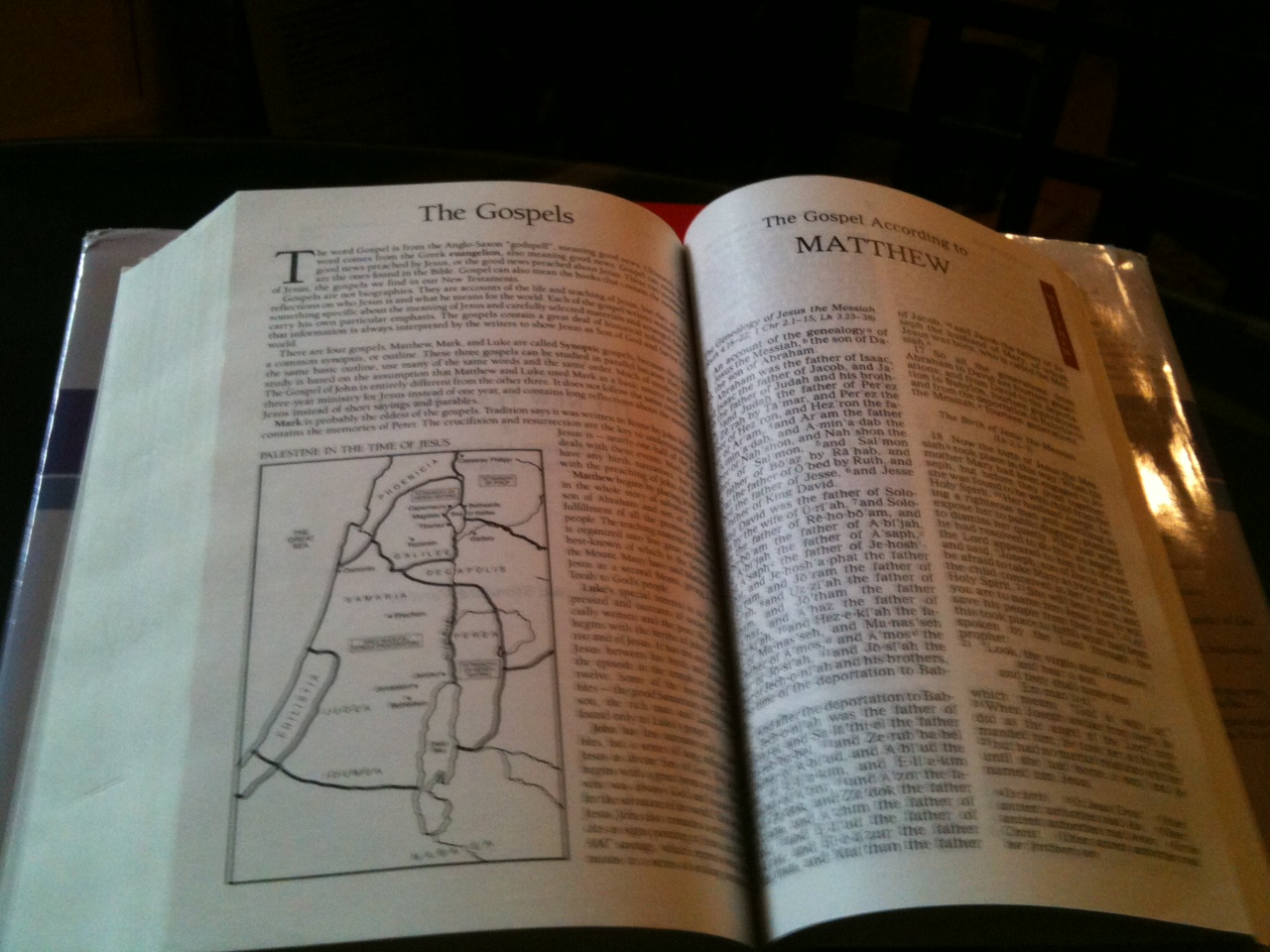
Bible

Study:  Do I have an opportunity to read from the Bible every day?  Can I make a few minutes free to read a little Scripture and pause to reflect on what God’s Word says to me?

Pray:  In my daily prayer, do I take a moment to consider how Sacred Scripture can lead me closer to the Lord and others?

Serve:  How might I put what I discover into practice?  How can I live out my faith today?  Where is the Lord calling me to put my life into action for Christ?

29th Sunday Readings

The second reading today reminds us of the power of the Scriptures.  In particular, two verses stand out:

“All Scripture is inspired by God
and is useful for teaching,
for refutation, for correction,
and for training in righteousness,
so that one who belongs to God
may be competent,
equipped for every good work.”
(2 Timothy 3:16-17)

In light of these words there are several points that surface.  First, do we realize the richness and depth of the Bible?  Do we recognize that this text has guided and directed the Church for two thousand years, offering wisdom and insight for daily life?  Let’s face it, sometimes we can take the Scriptures for granted, and thus miss out on the Lord’s revelation for our world.

But if we do acknowledge the importance of God’s Word, do we actually take time each day to listen?  This is the second point – knowing the Bible is important is not enough – we need to read it!  The Lord invites us and calls us to know Him; through a steady diet of Scripture we open our hearts to the grace of God.

Third, (and this is the hard part) do we let this Word move us?  As we listen to the teaching and wisdom of our faith, do we change our lives accordingly?  The Scriptures teach us about the Lord, our faith, and our life.  Do we put what we receive into practice?

Now let’s be clear.  Parts of the Bible require careful interpretation and study.  Parts of the Scriptures are written through a particular cultural perspective.  Sometimes the message demands skilled and trained responses through the insight and teaching of the Church.  Fortunately our Catholic tradition provides vast resources for learning and understanding God’s Word.

I would invite all of us to take a little time each day to reflect on the Scriptures.  Start with Luke’s gospel.  Read a little every day and think about the message.  Ask questions.  Pray about what is read.  After all, it is the Lord’s good news – given to us for strength and life!


28th Sunday of the Year – Healing, Mercy, & Gratitude

Touch of God

Study:  When in my life have I been wounded, separated, or isolated?  How did I experience healing and mercy?

Pray:  Gratitude is a spiritual cure for many things.  What blessings should I consider with gratitude in my prayer?

Serve:  Is there someone in my life that I can connect with right now?  Is there an opportunity for healing that I can foster through the gift of my life today?

28th Sunday Readings

The Gospel today offers a number of insights for us.  The healing of the ten lepers shows the power and love of Jesus in several ways:
1.  Jesus physically healed their leprosy
2.  Jesus restored them to their relationships
3.  Jesus’ message included foreigners
4.  Jesus received gratitude from only one!

Leprosy was considered a terrible affliction in the ancient world.  The name was used (sometimes inappropriately) for a variety of skin diseases, but it certainly did refer to the virulent condition where the skin was covered with festering sores that were beyond recovery.

Because of this condition, lepers would be banished from society.  Cast off from family and friendship, they would be forced into a lonely isolation or consigned to a leper colony where their only interaction would be with other lepers.  No family.  No friends.  No physical contact.  They were completely and entirely cut off.

Begging for mercy from a distance, ten lepers come upon Jesus and are healed.  This healing is not only physical; with renewed bodies they are now restored to their loved ones.  They can go home!  Their suffering and pain (both physical and emotional) is now transformed.

One of these lepers was a foreigner.  He was not an Israelite; he did not know the Law, the Prophets, (indeed, he might not even have believed in God).  Yet he was healed, too.  The mercy, healing, and love of Jesus extended beyond the bounds of his own people – it included all people!

And it turns out that this same outsider, who knew nothing of the heritage of Israel, is the only one to say thank you.  Now that he is healed he can approach Jesus directly, falling at his feet with gratitude.  He has his life back, and his first thought is to acknowledge the giver of so great a gift.

Do we see ourselves in this Gospel today?  Do we recognize our need for healing – to be restored in body or soul, to be renewed in our relationships with family or friends?  Have we reached out beyond our imposed boundaries to people of a different race, creed, or color?  Are we grateful for what we have been given, and do we thank the Lord for our blessings?  We can learn a lot from the leper.


27th Sunday of the Year – A Good Servant

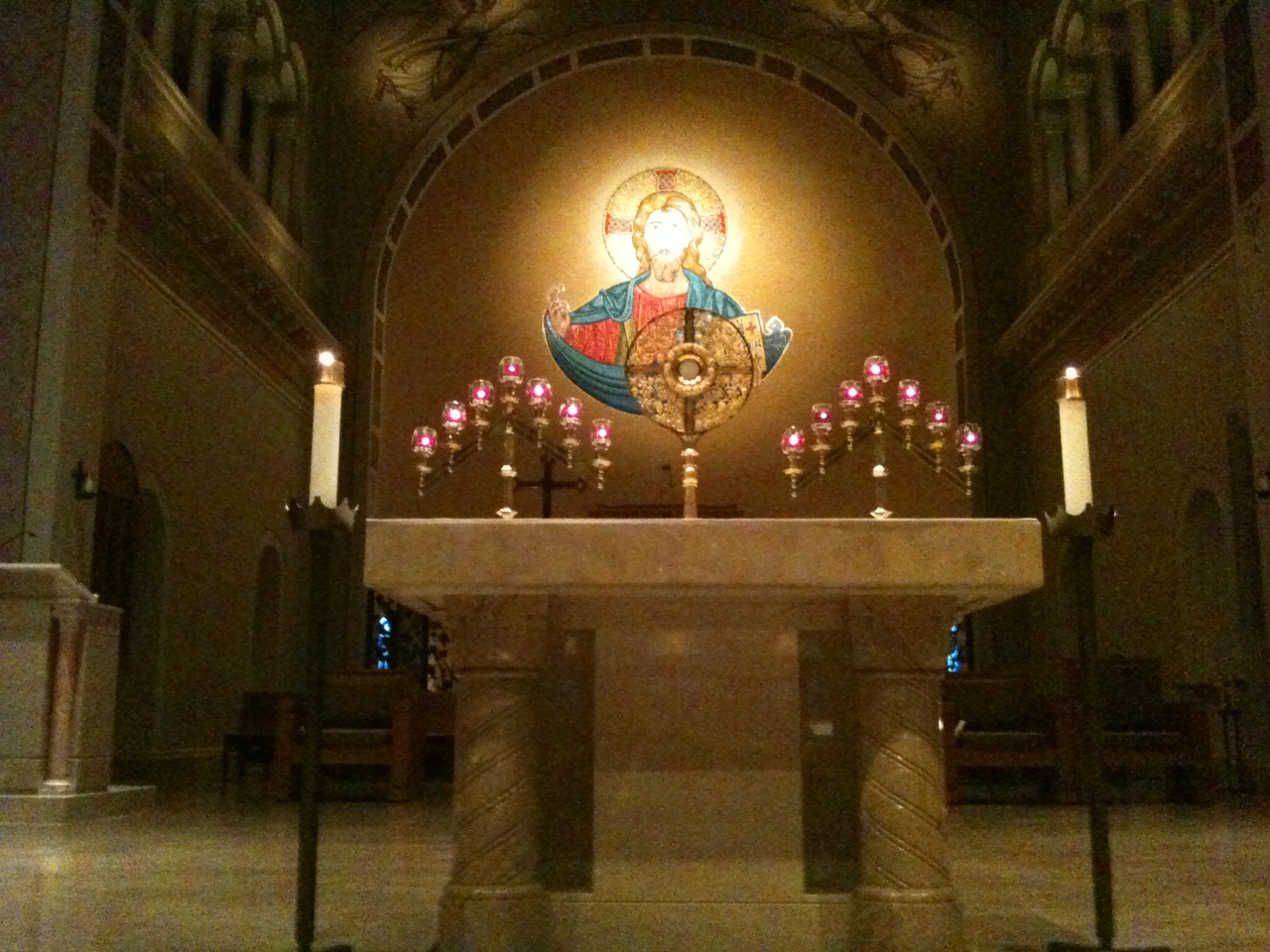
Adoration

Study:  How can I share the time, talents, and treasure that God has given me?

Pray:  Where do I hear the Lord’s voice calling me today?

Serve:  Who has the Lord put in my life?  Who can I help today?

27th Sunday Readings

What does it mean to be a good servant?  The Gospel parable offers a simple illustration for our reflection today.  Each of us has work to do; our vocation (whatever it is) leads us to particular tasks and duties.  Let’s break it down:

* What does it mean to be a good person?
* How am I called to live in the world?
* How does my faith direct me to live?
* Who are the people I care for in my life?
* What tasks are set before me to do?

The fact is, we all have a part to play in this life.  We all have people to serve, work to do, and examples to offer to those around us.  These tasks may vary with our age, gender, education, and resources – but they are all part of God’s call to proclaim the Good News of Jesus Christ.

The point of the parable is that we should not think that the work we do has special merit.  Just because the Lord blesses us with unique resources or gifts does not entitle us to privilege.  We are called to do our work, mindful that it is our part in God’s plan.

This means that we do our work with care, attention, and purpose.  We do this not because we seek special treatment, but because the Lord invites us to share our talents for the greater good of all.  It is not enough to go through the motions; we offer the best of our lives that we might make a difference!

As servants of Jesus Christ we are commanded to follow the Lord throughout this life until we are called home.  And when we stand before the Lord we will discover both what we did with our lives and what we failed to do.  In all this we live that we might be good servants – willing to carry out the task at hand.

We turn to our faith in our moments of need.  We pray that God will assist us in our times of trial, that we will offer the best we have in our service.  We look to the Lord for guidance and strength.  We trust that the Christ will never leave us.

It is this faith that sustains us when doubt and fear surface in our hearts.  It is this faith that supports us when we feel alone.  And it is this faith that becomes the bedrock for our service – that we might be good servants, following the Master’s call.


26th Sunday of the Year – Road Signs

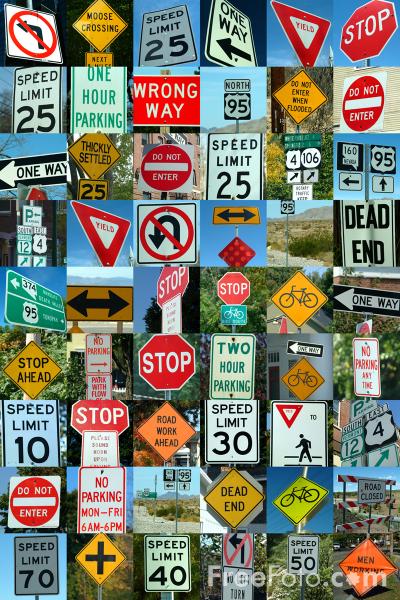
Road Signs

Study:  In your personal life, what have been some of the best “signs” that have pointed you in the right direction?  Is it a person, an experience, or perhaps an activity?

Pray:  Ask the Lord for the spiritual sight to recognize God’s signs within our daily lives.

Serve:  How might you be a source of direction and guidance for another?  How might your life point the way for another to follow?

26th Sunday Readings

I often am traveling in unfamiliar places.  Unsure of my directions, I am extra careful when it comes to reading the road signs; all it takes is one wrong turn to cause a delay or even greater confusion.

Road signs are important for travel.  They guide us, remind us of our distance and time, reassure us about our direction, and help us reach our destination safely.  These signs make certain that the trip will result in our timely and secure arrival.

We use signs in other parts of our lives as well.  We look for cues from one another in our relationships to show us if we are on good terms with others.  We have progress reports to help us assess how our work is going.  And we often ask for evaluations after programs to determine if the presentation was helpful.  All of these examples show us that signs aid us in living our lives in a healthy and happy fashion.

In the Gospel we hear the familiar story of the rich man and Lazarus.  It is a classic tale about the reversal of fortunes between this world and the next.  Yet the twist in this parable happens when the rich man, from the midst of his suffering, wants to go back and warn his brothers about their impending fate.  Abraham reminds him, “If they will not listen to Moses and the prophets, neither will they be persuaded if someone should rise from the dead.”

This sobering statement reminds us that our choices result in consequences that hold us accountable.  Our words and actions make a difference, for good or evil, and the great power of our choices affects ourselves and others in many ways.

Yet Abraham’s reply can also fill us with hope.  We possess the Scriptures; we know the commandments God offers us.  With these signs we can journey through life aware of our opportunities and responsibilities.  God has given us everything we need to face our joys and sorrows in this world, and with these “road signs” we trust that we will be united with God completely in the eternal world to come.


25th Sunday of the Year – The Church in the World

Helping Hands

Study:  Do I use my resources justly and prudently?  Am I a good steward of what I have received?

Pray:  Ask the Lord for guidance to use the things of this world wisely.

Serve:  Is someone in need that you can help right now?  Is there a way you can make a difference in the life of another today?

25th Sunday Readings

The readings this week all have some bearing on the relationship between the Church and society.  This includes elements of social justice, politics, and wealth.  Here is a quick overview:

First – condemns those who cheat the poor
Psalm – God cares for the poor and lowly
Second – pray for civic leaders
Gospel – the unjust steward; the use of wealth

In the first reading the prophet Amos preaches against those who would take advantage of the poor.  Buying and selling are their concerns, even if it causes pain and suffering.  Amos reminds the people that God will judge!

The psalm shows both the glory of the Lord and his care for the poor.  God knows the needs of the oppressed, and the Lord will raise them up on the day of vindication.

The second reading exhorts the people to pray for all leaders, regardless of their beliefs.  Christians are commanded to pray for the good of the world, that peace and tranquility may exist here on earth.  We also pray that the world will come to know the Lord (and that begins with our hearts!).

Finally, in the Gospel we have two elements.  First we hear about an unjust steward, who has cheated and betrayed his master.  When told he will be dismissed, he takes matters into his own hands in order to insure that other people will welcome him.

Second, there follows a string of sayings on the right use of wealth.  These sayings point out that faith, integrity, and common sense will quickly be apparent, especially for those who practice good stewardship in their lives.

The fact is, we cannot cut ourselves off from the world; indeed, we profess that much of life is filled with blessings and gifts that are precious, holy, and wonderful.  HOW WE USE THIS WORLD is the challenge!

We are commanded to protect the poor and vulnerable.  We are called to pray for our leaders and work for a world of justice and peace.  We are challenged to be good stewards of all that we receive, mindful that the Lord gave it to us, and one day the Lord will take it back.