Tag Archives: Hope

Easter Vigil

Candlelight

Study:  How did you learn your Christian faith?  When did it become something you claimed for your own?

Pray:  This is a good time to count our blessings and draw near to the Lord in gratitude for the gift of life.

Serve:  Perhaps there is someone to whom you might want to say, “I love you.”  Perhaps this is a good time right now…

Easter Vigil Readings

This holy night finds the Church celebrating the profound mystery of Christ’s saving work.  The Easter Vigil recalls the great moments of salvation history, rejoices with those who enter into full communion with the sacramental life of the Church, and is nourished by Eucharist.  Here are the four key components:

  • The Liturgy of Light
  • The Liturgy of the Word
  • The Liturgy of Initiation
  • The Liturgy of the Eucharist

The Liturgy of Light (or Lucernarium) begins the Easter Vigil.  In the darkness the image of light is used to proclaim our hope in Christ.  Several things happen:

  • A new fire is blessed and from its flames the light of the paschal (Easter) candle is lit
  • This candle is processed into church where the faithful light their own candles from it.
  • By this sea of candlelight the great Easter proclamation of Christ our Light – the Exsultet – is offered.

The Liturgy of the Word recounts the epic story of salvation history through several Old Testament Scriptures:

  • Creation – Genesis 1:1-2.2 and Psalm 104 or 33
  • Abraham’s Sacrifice – Genesis 22:1-18 and Psalm 16
  • Passage through the Red Sea – Exodus 14: 15-15:1 and its Canticle (Exodus 15)
  • The New Jerusalem – Isaiah 54:5-14 and Psalm 30
  • Salvation Offered Freely to All – Isaiah 55:1-11 its Canticle (Isaiah 12)
  • The Fountain of Wisdom – Baruch 3:9-15 and Psalm 19
  • A New Heart and a New Spirit – Ezechiel 36:16-28 and Psalm 42-43

We then move from the Old t0 the New Testament:

  • The Gloria is sung
  • A reading from  Romans 6:3-11 – Christ, raised from the dead, dies no more!
  • The Alleluia is sung
  • The Gospel is read – Mt 28:1-10; Mk 16:1-7, Lk 24:1-12 (depending on the year)

The Liturgy of Initiation then follows where those who have been preparing to enter the Church now receive their sacraments.

  • The Litany of the Saints is sung
  • The Baptismal Font is blessed
  • The Sacrament of Baptism is celebrated
  • The Assembly renews their Baptismal Promises
  • The Sacrament of Confirmation is celebrated

Finally, the Liturgy of the Eucharist allows the entire community to draw near to the altar to receive Jesus Christ in the sacrament of his Body and Blood.  The newly baptized receive Holy Communion for the first time in the company of their fellow Catholics.  Like every Mass:

  • Bread and Wine are brought to the altar
  • The Priest prays the Eucharistic Prayer
  • The Lord’s Prayer is said, followed by the Sign of Peace
  • We receive the Lord Jesus in Holy Communion

The great promise of faith, founded upon God’s saving work through time in the history of salvation, is proclaimed on this holy night.  May Christians around the world renew their faith in Jesus Christ – sharing his love and light with one another.

Christ our Light!


Holy Week

Holy Week

Study:  Recall a time in your life when you experienced death and new life.  Where did you find the strength?  Who helped you through this time?

Pray:  Spend some time reflecting on the death and resurrection of Jesus this week.  Read Mark 14-16; Matthew 26-28; Luke 22-24; and John 18-21.  Take in as many prayer opportunities as possible in your parish.

Serve:  Who in your life is dealing with life and death issues right now?  How might you be present to them to offer help, comfort, or strength?

Holy Week audio retreats from the US Bishops

We enter into the heart of the Christian mystery: Holy Week offers us a time to pause, reflect, and pray as the Church ponders on the life, death, and resurrection of Jesus Christ.

This mystery, often called the Paschal Mystery, recalls us to the saving work of the Lord.  His death frees of from the burdens of sin and death, and his resurrection opens for us the path to eternal life.  This mystery is profoundly experienced over the Triduum – the 3 Great Days:

  • Holy Thursday – the Mass of the Lord’s Supper
  • Good Friday – the Passion of the Christ
  • Easter (Vigil/Day) – the Resurrection of the Lord

On Holy Thursday we find ourselves in Jerusalem, eating with the disciples at the Lord’s Supper and feeling awkward as he washes their feet – wondering how we would react if he did that for us.  We might identify with Peter or Judas – especially when we consider the times we have willingly betrayed or turned our back on the Lord.

On Good Friday we experience the physical pain, emotional abandonment, and personal humiliation on the path to Calvary (also called Golgotha or Skull Place) and look on with horror at the cruel death of Jesus.  We might also consider the times we have helped others – as Simon did when he was forced to carry the Cross of Christ.    And then we stand in profound sorrow with Mary, the Mother of Jesus, helpless as the innocent suffer injustice.

On Easter we wait in vigil and rise early in the morning with Mary Magdalen, only to find to our wonder and joy that the tomb is empty:  Christ is alive!  Our world, like that of the apostles, is changed forever as we experience new hope and life.

A word to the wise – we get out of Holy Week what we put into it.  Here are some simple ways for an incredible experience.

  • Make church services a top priority – Holy Thursday, Good Friday, and Easter (Vigil or Day).
  • Take time to read and reflect on the scriptures (see at the top under “Pray”).
  • Make Holy Thursday an opportunity to offer a special act of service or kindness to another.
  • Make Good Friday fasting extra special with a gift to a particular charity that helps the poor.
  • Make Easter a time of gratitude – take a quiet moment to count our blessings and thank the Lord.
  • Find some time throughout this week to tell the people in our lives how much we love them.

May this be a time for all of us to grow closer to the Lord and one another.


Palm Sunday – The Cross

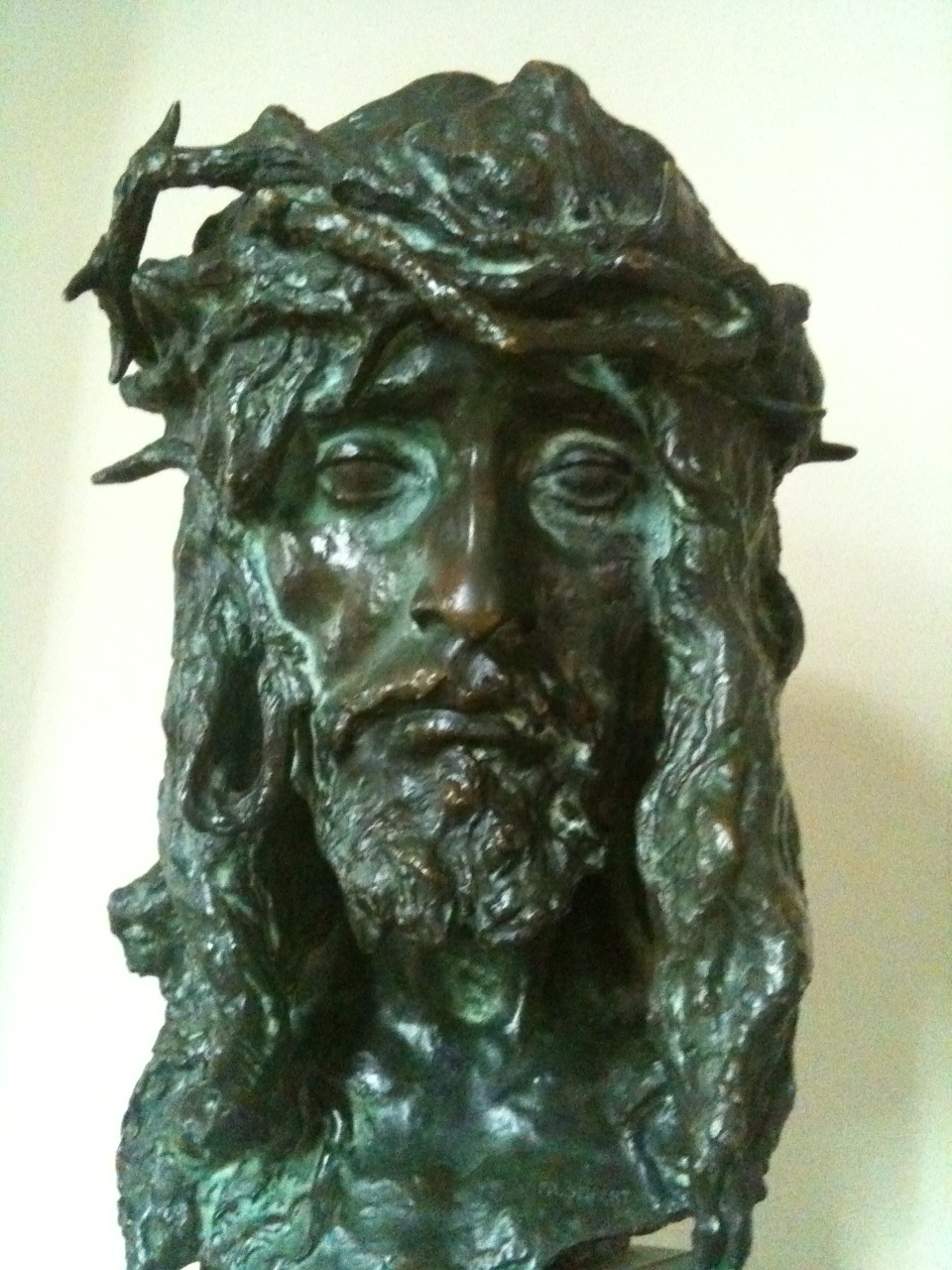
The Face of Christ

Study:  Reflect on a time you experienced weakness and suffering.  Where did you find the strength to continue?

Pray:  Gaze upon a crucifix and offer to Christ any struggles you are facing right now.  Bring the needs of your loved ones to the foot of the Cross as well.

Serve:  Is there someone in your life who is carrying a heavy cross right now?  How can you offer comfort and assistance?

Palm Sunday Readings (with Year A reading for the Procession with Palms)

Fr. Andrew’s Homily Podcast

How many times throughout our lives have we made the sign of the Cross?  Stop and think:  at Mass; meal prayers; morning & evening prayers; special gatherings; and moments of blessing and grace.  This simple action, which we teach to children at an early age, invokes a connection with the passion of Jesus.

We adorn our homes with the Cross.  A crucifix is a common gift to a new home; crosses are placed in bedrooms and common areas as a reminder that Jesus is the source of our help and strength.

We adorn ourselves with the Cross as well:  a crucifix on a chain; a cross in our pocket; earrings; rings; bracelets; and all the extra cards, bookmarks, figurines, and miscellaneous items that remind us that Jesus died on a Cross.

The passion we read every year on this day focuses our attention on the central mystery of our faith.  Out of love for us God sent His Son, Jesus, who gave his life on the Cross that we might have eternal life.  Through his suffering and death, we recognize that God has made a pathway possible that we might all journey through this life to the gates of Heaven.

The Cross teaches us many lessons:

  • Life is difficult, and at times painful
  • Weakness and sin are part of our experience
  • God identifies with our pain
  • God dies that we might have life

At the core of our teaching the Cross stands as the testament of God’s love for us.  Yet the Cross appears to be an embarrassment – after all, why would God (all powerful, all knowing, supreme) choose to be humiliated?  Does that not mean that God is weak?  Why could God not take away our sins in a way that showed majesty and splendor?

In reality, the weakness revealed in the Cross uncovers our frailty, not God’s.  Jesus endured the Cross because of our broken, wounded nature.  He carried the Cross because we were unable to – as St. Paul writes “The wages of sin is death” in Romans 6:23 – and he bore the suffering, pain, and grief that are the natural result of our sinfulness.  God is not weak, rather God takes on our weakness so that we can be made whole.

The Cross proclaims the truth that God meets us where we are in life.  In our weakness, in our humiliation, in our low moments of doubt and sin God comes to us.  Jesus, like us in every way but sin, understands our pain because through his Cross he shares in the suffering of the world.  He knows us, loves us, and saves us through his Cross.

Every time we make the sign of the Cross may we recall what the Lord endured for us.  Through the Cross we discover our strength as we trust in God’s love and  seek to follow that love as we journey through this life toward the world to come.

We adore you, O Christ, and we praise you.  Because by your Holy Cross you have redeemed the world!


5th Sunday of Lent – A Second Chance


Second Chance

Study:  Reflect on a time when you were given a second chance.  How did you feel?  How did you respond?

Pray:  Is there something in your past that has held you back from growing?  Ask the Lord for the grace to begin again.

Serve:  Is there someone you know who could use a second chance?  How can you help them to start over?

5th Sunday of Lent Readings

Fr. Andrew’s Homily Podcast

Anyone who plays games knows about second chances.  They happen in board games when we get to “roll again”, and they happen in sporting events when one team gets a break through a change in the action.  They are part of the game, and they usually bring plenty of excitement and interest.

A second chance usually gives the player new opportunities and hope.  When a second chance is offered, it provides for the possibility to correct past mistakes.  Second chances can revitalize a player’s efforts.  Simply put, they can breathe new life into the game.

In the Gospel today we hear how Jesus calls Lazarus back from the dead.  Lazarus, who had been in the tomb four days, was loved by family and friends alike.  This love is witnessed in Jesus, whose tears reveal the depth of his concern.

I have always wondered how the story of Lazarus continued after this miracle.  What did people say every time they saw him?  Did people point to him as an example of the power of Jesus?  Did he wake up each day thanking God for another opportunity to love the people around him?

This miracle shows us a fundamental truth about God:  the Lord grants us second chances. Through the miracle of Jesus, Lazarus has been given back the gift of life.  This miracle provides the possibility for him to look back on the past and make a break with it.  In other words, his new life is an opportunity to begin again.

The story of Lazarus inspires us with hope.  God gives us second chances, too!  There are times when we may reflect on our lives, and we know that there is something that needs to change.  We need to let it “die” so that God can call us back to life.

Perhaps we have acted or spoken in a way that has been harmful to another.  Perhaps we have abused our bodies or put ourselves or others at risk through unwise choices.  Or maybe an event or decision in the past has kept us from living our lives in the present.

Whatever it is, God gives us a second chance.  Through his journey from Good Friday to Easter Sunday, Jesus makes it possible for us to break from sin and live in the light of God’s grace.  We can start again, living with the faith, hope, and love that can only come from Jesus Christ.


3rd Sunday of Lent – Thirsty for Water

Living Water

Study:  When have you been in need for water?  When have you been in need of God’s grace?

Pray:  Is there something in your life that is parched and dry?  Ask the Lord for the Living Water that refreshes our souls.

Serve:  Is there someone you know who is withered and weak?  How can you bring them new strength and assistance?

3rd Sunday of Lent Readings

Fr. Andrew’s Homily Podcast

Imagine a tall glass of water.  You are tired and hot, and you hold the cool glass and start to drink.  Immediately, relief spreads through your throat and body, and as you set down the glass you say, “Ahhh!” and smile.

We all have experiences of being thirsty.  Maybe it is after a few slices of pizza or some extra salty snacks; perhaps it’s before an operation or medical checkup, when we are told that we cannot eat or drink anything from midnight on; it could be that we have just had a lot of exercise and are dehydrated.  Yet no matter what the situation is, we know the feeling when we are thirsty for water.

Our bodies need water.  Some studies tell us we  should be drinking a minimum of eight glasses a day.  This dependence on water is found in our survival; a person can live for weeks without food, but only a couple of days without water.

Our critical need for water becomes the source of the images found in the first reading and Gospel today.  Water is the subject for both Moses and Jesus.  Under God’s direction and guidance, Moses strikes the rock and provides water for the people in the desert.  Jesus, through his discussion with the woman at the well, reveals that he is the water that gives eternal life.

These readings remind us that God brings the Living Water to us.  In our need the Lord quenches our thirst as he did for the people in Meribah.  In our need the Lord comes to us as he did for the woman at the well.  For just as we need water to sustain our bodies, so too do we need Jesus Christ to give us life in this world and in the world to come.

Are you spiritually thirsty?  Is there something missing that you long for in your soul?  Is it love, joy, peace, patience, kindness, goodness, faithfulness, gentleness, or self-control?  Just as our bodies respond to water with renewed strength, so also our thirst for “living water” reminds us that God offers us refreshment for our souls.  Lent is a perfect time to recognize our need for the Lord and ask for the grace and strength to face the challenges of today.

It is with water that we welcome new members into the Christian family through baptism.  It is with Holy Water that we sign ourselves with the Cross of Jesus Christ.  During the Easter season we will celebrate the sprinkling rite as we renew our own baptismal promises.  In all these cases, water becomes the medium to remind us of God’s presence.

Every time we pick up a glass of water we have the chance to remember how dependent we are on this simple substance.  May this reminder lead us more deeply into the mystery of God’s love for us and our need to recognize the Lord each day in the world around us.  May we drink deeply from the living water of Jesus Christ.


3rd Sunday of the Year – Step into the Light

In the Light

Study:  Are there parts of my life that are in the dark?  Is there anything that needs to brought into the light of Jesus?

Pray:  Ask the Lord for light to see insight and out – both in your heart and in your relationships.  Pray for the strength to face what you see.

Serve:  Is there someone in your life struggling to face God’s light?  How can you help them see clearly?

3rd Sunday Readings

Most of us use our sense of sight more than any other.  We are visually oriented – in our reading, electronic media, use of film, and interaction with one another.

But sight requires light to see clearly.  We stumble in the dark, get disoriented easily when we cannot see, and can lose our way without our gift of sight.

This is not just true in the physical world, but in the spiritual as well.  Our lives are defined by the choices we make, the words we speak, and the actions we perform.  They are all evidence of what’s really going on in our heart.  In the spiritual light of faith we understand who we are; we can examine our lives by the light of Jesus and discover ourselves.

Furthermore, in the light we can be truthful with one another.  We tend to hide our sins and weaknesses in the dark – to cover up our failures and avoid exposing our messes to the light where others can see them clearly.  Yet we also know that those who love us most truly know us the best, warts and all.  They love us not because we are perfect, but because their love (which sees us clearly) is greater than our weaknesses.

The readings today give us a lot of thoughts about light:

  • Light shines on us in our darkness (1st)
  • The Lord is our light (Psalm)
  • Light leads to repentance (Gospel)
  • In the light Jesus calls us to follow (Gospel)

Is there a darkness in our lives today?  Have we been stumbling in the dark and lost our way to God and one another?  Jesus Christ brings light which will not only reveal our lives on the inside but also on the outside.  God’s light uncovers who we truly are and how we relate to others.  In the light we can be honest, sincere, and real.  In the light we can acknowledge our failures and return to the one who forgives us.

The invitation: come into the light!  We do not need to be afraid – God knows us better than we know ourselves.  Stepping into the light helps us to recognize where we can grow, so we can be transformed by the grace of Jesus and live in His light.

  • On the inside – we fearlessly look at the darkness in our hearts.
  • On the outside – we face the darkness in our relationships.

Once the light of Jesus helps us to see clearly we can make the changes we need to live authentically as his disciples.  By His light we can receive the grace, guidance, wisdom, and strength we need.  Let there be light!


Epiphany – Responding to the Light

Fireworks Galaxy - ngc6946

Study:  When did you experience a moment of profound insight that led you to action?

Pray:  Are there any major decisions or challenges in your life right now?  Pray for the light to see your way, and the courage to carry it out!

Serve:  Is there someone in your life in need of light?  Can you help them understand or give them strength to support their actions?

Epiphany Readings

Think for a moment about all the different ways we respond to light:
* Christmas lights
* Stop and Go lights
* Night lights
* Flashlights
* Candlelight
* Lantern light
* Key chain & Pocket lights
* Car lights
* and many, many, more!

All these lights surround us and help us navigate our everyday activities.  They bring guidance, comfort, joy, understanding, and security to our lives.  Indeed, light is a precious gift that brings meaning and purpose to our world.

Yet it is not enough for light to simply shine upon us; light is the beginning – but it evokes and calls forth a response from us.

Look at it this way.  A stop-and-go traffic light cannot simply be seen; it must be followed and acted upon (or else you are likely to get rear-ended).  Failure to respond to the light leads to difficulty, while those who are guided by the light and act accordingly find their way.

We hear about light in the Gospel today.  The Magi observed the light, and they followed and searched until they understood what it meant.  The light was the beginning; only through their journey and response did they discover the precious gift of Jesus – the Light of the World.

Many saw the light.  It was there in the sky for all to see.  Yet only a few responded and recognized that the starlight was a sign from God.  Thus, it was not enough just to see; for indeed we celebrate those who both saw and acted upon the light.

It is our belief that God continues to shine upon us today.  The Light of Christ burns brightly – in the Scriptures, the Sacraments, moral teachings, our conscience, our prayer, and the comfort and support of family and friends.

Yet even as God is revealed to our world the light alone is not enough.  We, too, are invited to act as the Magi and respond to the light.  May we open our eyes and our hearts this day, recognizing the Lord and responding to His Light.


3rd Advent – Music & Hope!

Christmas Carol

Study:  Reflect on moments when you have been inspired.  What was the source of your inspiration?  Where do you find inspiration now?

Pray:  Is there something or someone in your life in need of hope?  Pray for God’s grace to touch and bless this need, in whatever way God chooses.

Serve:  How can you bring hope to others?  How can your life offer inspiration, healing, and the grace of Christ to our world?

3rd Advent Readings

There seems like no better time of the year then the days before Christmas for familiar music melodies.  On the radio or the street corner, in stores and homes, these tunes strike a sweet spot in many hearts.  Here are just a few examples:
* O Come, All Ye Faithful
* Joy to the World
* Silent Night, Holy Night
* Away in a Manger
* Angels We Have Heard on High
* O Little Town of Bethlehem
* It Came upon the Midnight Clear
* God Rest You Merry, Gentlemen
And many, many more!

In these days of preparation, people are often found humming or whistling a favorite tune.  In fact, people who seldom (if ever) sing are most likely to do so at this time of year – caroling with friends, in church, (or when no when is looking…..!).

Music has the power to inspire us.  It uplifts our hearts, evokes strong emotions, and puts us in touch with memories and feelings that we might forget or ignore.  In many respects, music is one of our most human qualities.

When we allow ourselves to be touched by music, we discover that its message moves through us.  We hear and understand information in a different way, and in turn are able to express these insights to others.  We are able to proclaim good news.

In the Scriptures we hear messages of hope.  Isaiah offers a prophecy of a renewed world; James offers an invitation to steadfast patience; and Matthew reveals the power of Jesus at work with the coming of the Kingdom of Heaven.

These are incredible words!  We listen to them, as we have often listened in the past, yet we are invited to let their meaning touch us and strengthen us for our daily needs.  At these moments music becomes a powerful aid, helping us to put into song the comfort and joy that come through our hope in Christ.

During these short days before Christmas, take a moment to hear the music around us.  Listen to the words, hear the melodies, and hey, sing them!  Their power moves our hearts, helping us to proclaim the Good News of God in our midst.  Be inspired by the gift of music to bring Christ’s hope to our hearts!


33rd Sunday of the Year – Life is difficult

Life is difficult

Study:  Reflect back on life – what have been some major obstacles that you faced?  How did you find the strength and wisdom to overcome them?

Pray:  What current obstacles are before you right now?  Bring these to prayer and ask the Lord for guidance and perseverance.

Serve:  Is there someone in your life who is facing a difficult time in life right now?  How might you be able to offer support?

33rd Sunday Readings

M. Scott Peck, author of the classic personal growth book The Road Less Traveled, begins his text with a simple statement:

Life is difficult.

If we assume this point – that there are times in our lives that are difficult – then we can gain a clear perspective on those moments which confront us with struggle.  We recognize that challenge is indeed a part of life, and how we respond to difficulty shapes and defines who we are.

Difficulty poses a common trap.  When life challenges us we may be tempted to avoid the situation altogether.  It may (falsely) appear that it is easier to stay away from the problem – to run away, hide, pretend it is not there, or direct our attention on something else.

When this happens we may choose an (apparently) easier path.  This is the direction of least resistance; we do not seem to experience the stress or unease we felt before.  Yet this feeling does not last for long.  Sooner or later, the problem we attempted to avoid returns, usually greater than before.

In the end we are confronted with two crucial steps.  First we must recognize the situation (life is difficult).  Second we face the struggle and choose an appropriate response.  Sounds like fun, right?

Wrong…

The Gospel today is clearly not what we call a “warm-fuzzy” sort of reading.  Luke makes it clear that a life of faith will be marked with difficulty.  Pain and suffering will confront us from a variety of perspectives throughout our lives.

The Cross of Christ is our model for this brutal truth.  We know that there is hope and resurrection awaiting us, but we also know that the path to eternal life may also demand steadfast patience and sacrifice.  Indeed, the Lord asks no less than our very lives.

Yet while this reading presents us with a sort of blunt honesty, it also provides us with a powerful hope.  God will not abandon us in our weakness to journey alone.  In our moments of struggle the Lord walks with us, offering strength and guidance to help us on the way…even when life is truly difficult.


32nd Sunday of the Year – What comes next?

Question Mark

Study:  Consider this – if my life ended today, would I be prepared?  Is there anything in my life that needs to be said or done, anything that requires attention?

Pray:  Do I need to ask the Lord for strength – especially to do something difficult or challenging?  Is there something that requires God’s grace to accomplish?

Serve:  Do I know someone who could use help to face an obstacle to Heaven?  How can I support them in their journey?

32nd Sunday Readings

I love to read mysteries.  I like the way they tease my brain with surprise facts, last minute insights, and clues (both helpful and misleading) which point to the solution.  Mysteries intrigue me, and I enjoy them largely because they keep me guessing until the end.

When I am in the middle of the book and no end is in sight, I begin to wonder, “What comes next?”  Sometimes my curiosity overcomes my patience and I am tempted to read the last couple of pages to find out the answers.  I want to know!  I might be rooting for the villain, or failing to give credit to the hero.

Mysteries often remind me that there is more to the story then first appears.  As new facts are added the truth becomes visible, but often in an entirely different way.  The end can be a complete surprise as information and insight shape the story.

“What comes next?” is not only true for mystery novels but applies to life as well.  Our faith in Jesus Christ holds at its center that there is life after death.  We believe that death is not the end; indeed, it is a gateway to an eternity where we may spend it either in union or isolation from God – otherwise know as Heaven or Hell.

We speak of the afterlife quite frequently in our prayers and common speech.  But what does it mean to profess that death is not the end of existence?  How does a belief in the afterlife shape our thinking and our actions?  Two thoughts surface.

First, a belief in life after death tells us that there is more to the story of our lives.  This world is not the end, and many of the beliefs and convictions that we think are important might not be as crucial after further reflection.

Second, if we acknowledge that there is more to life than just this world, then we are bound to consider how we wish to live as we prepare for the world to come.  Ideas such as power, wealth, and prestige just don’t seem to carry as much weight in Heaven.  (The power comes from God, wealth has no purpose, and everyone is loved and esteemed…)

When we think about “What comes next?” in our lives we our challenged to examine if we are living with the full end in sight.  The Scriptures today invite us to consider that if we take our future afterlife seriously, then we may rethink how we live today.