Tag Archives: Forgiveness

Reconciliation – Catholic Inspiration

Three Great Things

The Sacrament of Reconciliation, which also goes by the names of Confession or Penance, is a powerful treasure.  Yet there are many misconceptions, many fears, and many questions that surround this great gift to the Church.  Sometimes I think that folks would rather have a dental root canal than walk into a confessional…

If it has been some time since you have gone to Confession, do not fear!  This incredible Sacrament continues to transform hearts and change lives; the following presentation dispels some of the myths and answers many of the common questions that are frequently asked.

This sacrament has four components:

  • Contrition – sometimes called repentance, shows we are sorry
  • Confession – where we admit what we have done
  • Reparation – where we undertake a penance as an outward sign we want to make things right
  • Absolution – where the priest, speaking on God’s behalf, extends God’s grace and forgiveness

This sacrament will touch our hearts and change our lives!  Confession is not only an experience of forgiveness, but it is a direct encounter with God’s grace – a profound and intense path that leads to the love of Jesus Christ.

This 45 minute presentation was given to the RCIA class on March 16, 2014.  These remarks address a wide range of practical issues that are frequently asked and are meant to help us all understand how to embrace the great sacrament of Confession, especially if we are a little hazy about the last time we stepped into a confessional.

Fr. Andrew’s Reconciliation Podcast


3rd Sunday of the Year – Repent, and Believe in the Gospel

repentance

Study:  Recall a time when you made a serious mistake.  What steps did you take to make it right?  Do you have any unfinished work that needs to be done?

Pray:  Saying “I’m sorry” and “I forgive you” can be very difficult; don’t try it alone!  Ask the Lord for the grace and strength.

Serve:  How can you help another on the path to repentance?  How might you encourage people to seek healing and forgiveness?

3rd Sunday of the Year Readings

Fr. Andrew’s Homily Podcast

Remember back in elementary school when we all learned long division?  Perhaps you remember some of those really long problems that took a whole sheet of paper to write?  I recall the excitement when I found the answers at the end of the book, only to have my hopes crushed when the dreaded words “show your work” were part of the instructions…

To demonstrate the exercise our 4th grade teacher, Mrs. Tempesta, would put a problem on the chalk board and demonstrate line by line, showing the work and how the process repeats until you made your way through the entire problem.  At the end you would have the answer, with all the work to prove it.

I remember asking Mrs. Tempesta what would happen if you made a mistake early on in the process.  She smiled and repeated the problem along side the original – with one tiny mistake.  The wrong answer at the end of the work glared at our class; when we asked what do you do if your answer doesn’t match the solution in the book, she replied, “You have to start at the beginning, find your mistake, and rework a new solution.”

Welcome to repentance.

We all make mistakes: we say things we can’t take back; do things we regret; allow things to happen that we’d give anything to erase.  And while we can’t change the past our faith tells us that we have a process that can bring healing and restore relationships.  Like long division, we find our mistakes, REPENT, and rework a solution that follows a new path of behavior.

The words “I’m sorry” and “I forgive you” are some of the most powerful in any language.  The first reading and the Gospel today are especially adamant that we take them to heart – repenting of our sins and choosing a Godly path that brings healing to our lives.  Remember: God never gives up on us!  The process looks like this:

  • We run through our own personal examination of conscience
  • We admit it – perhaps directly or in the Sacrament of Confession
  • We are sorry for the hurt we have done, acknowledging our sins/mistakes
  • We do our part to make it right – doing what we can to fix and heal
  • We call upon God’s healing grace and strength

Perhaps it’s been awhile since we stepped into a confessional.  Perhaps it’s been awhile since we have honestly looked into our hearts.  Today we can take a moment to look inside, see what doesn’t belong, and make the move to repent of our sins and turn to the Lord.  May we see in the example of Jonah and Jesus today that we have hope; God keeps calling – inviting us to turn away from sin and embrace the Good News.

And if you are looking for some help in checking out your heart, try these options for an Examination of Conscience.


Advent Service: Reconciliation

Three Great Things

Study:  When was the last time you went to Confession?

Pray:  Ask the Lord for the guidance and strength to make an examination of conscience

Serve: Is there anything in my life that is keeping me from genuninely helping others?

Fr. Andrew’s Homily

This homily was given at a communal penance service at the Cathedral on December 13, 2014 prior to the opportunity for individual confessions.  The theme “Taking out the Trash” was used to convey that just as we need to remove the garbage from the kitchen (before it starts to stink), we also need to look into our hearts and remove what does not belong.  The encounter with grace offers us the courage to look honestly and trust that the Lord will give us the strength we need to turn to him and experience his mercy, forgiveness, and love.


5th Sunday of Lent – A Second Chance


Second Chance

Study:  Reflect on a time when you were given a second chance.  How did you feel?  How did you respond?

Pray:  Is there something in your past that has held you back from growing?  Ask the Lord for the grace to begin again.

Serve:  Is there someone you know who could use a second chance?  How can you help them to start over?

5th Sunday of Lent Readings

Fr. Andrew’s Homily Podcast

Anyone who plays games knows about second chances.  They happen in board games when we get to “roll again”, and they happen in sporting events when one team gets a break through a change in the action.  They are part of the game, and they usually bring plenty of excitement and interest.

A second chance usually gives the player new opportunities and hope.  When a second chance is offered, it provides for the possibility to correct past mistakes.  Second chances can revitalize a player’s efforts.  Simply put, they can breathe new life into the game.

In the Gospel today we hear how Jesus calls Lazarus back from the dead.  Lazarus, who had been in the tomb four days, was loved by family and friends alike.  This love is witnessed in Jesus, whose tears reveal the depth of his concern.

I have always wondered how the story of Lazarus continued after this miracle.  What did people say every time they saw him?  Did people point to him as an example of the power of Jesus?  Did he wake up each day thanking God for another opportunity to love the people around him?

This miracle shows us a fundamental truth about God:  the Lord grants us second chances. Through the miracle of Jesus, Lazarus has been given back the gift of life.  This miracle provides the possibility for him to look back on the past and make a break with it.  In other words, his new life is an opportunity to begin again.

The story of Lazarus inspires us with hope.  God gives us second chances, too!  There are times when we may reflect on our lives, and we know that there is something that needs to change.  We need to let it “die” so that God can call us back to life.

Perhaps we have acted or spoken in a way that has been harmful to another.  Perhaps we have abused our bodies or put ourselves or others at risk through unwise choices.  Or maybe an event or decision in the past has kept us from living our lives in the present.

Whatever it is, God gives us a second chance.  Through his journey from Good Friday to Easter Sunday, Jesus makes it possible for us to break from sin and live in the light of God’s grace.  We can start again, living with the faith, hope, and love that can only come from Jesus Christ.


1st Sunday of Lent – Testing & Temptation

Desert Test

Study:  Where in my life have I fallen short and failed?  What lessons (however painful) have I learned?

Pray:  Ask the Lord for the grace and strength to face temptations.  Do not be afraid!  This is an opportunity to trust in the mercy and love of Jesus.

Serve:  Is there someone in your life who is struggling right now?  How can you help them through this time of testing?

1st Sunday of Lent Readings

Fr. Andrew’s Homily Podcast

Recall back to your school days.  No matter what grade or level of studies, all of us received tests as part of our education.

I remember once sitting in a class where some students were grumbling to the professor about an upcoming exam (I was angelically studying in a corner…).  The professor stopped the class to say, “Look, there are lots of reasons for exams, but there are two things that are important to me:  First, I need to know the limits of your knowledge.  Second, I want to see how you can apply what you have learned to other areas of study.”

Those two ideas stayed with me, for what is true for tests applies equally to life.  We experience tests all the time, and through these moments we discover amazing insights into our hearts.  Being tested (or tempted) reveals the limits of our strength, courage, patience, and trust; it also shows how we apply what we know (such as our faith in Christ) with what we encounter (trials, disturbances, disease, fear).

The Scriptures today offer two examples of testing which result in very different outcomes.  In the first reading, we see the weakness of Adam & Eve before the temptation of the serpent.  Their choices resulted in separation from God and one another.

In the Gospel we hear the encounter between Jesus and Satan in the desert.  The Devil tempts Jesus through three classic fears:  the fear of physical weakness, the fear of being powerless, and the fear of death.  These fears, which the Lord will ultimately face at his crucifixion, are rejected each time through Scripture and faith in God’s presence.

The lesson for us is clear.  Like Adam & Eve, we have all sinned and fallen short of God’s grace.  Yet in our moments of weakness, doubt, and fear we can look to the life of Jesus for strength and new hope.  We, too, can trust that just as the Lord overcame his testing, we can also find guidance and direction through our faith in Christ in our time of need.

Once we trust that the Lord will be with us, we can face our testings and temptations with a new perspective.  These tests show us where we need to ask the Lord for help, revealing our limitations and teaching us to see our blind spots.  In this way our temptations are simply one more opportunity for us to recognize the Lord’s grace at work in our hearts.


24th Sunday of the Year – Christ came to save sinners

Sacred Hear of Jesus

Study:  Recall a time in life when you experienced God’s presence.  How did it give you strength and direction?

Pray:  Offer those needs in your life that need the Lord’s grace.

Serve:  How can you reach out right now to someone in need?  Who has God put in your life?

24th Sunday Readings

The readings this week explore the theme of salvation from a variety of different perspectives.  We discover God’s desire to reach out to us in the following ways:

First – Moses intervenes, God does not punish
Psalm – prayer for a clean heart, steady spirit
Second – Paul’s example of grace
Gospel – 3 parables of God’s desire to save us

The first reading shows Moses responding as mediator between God and the wayward actions of the people of Israel.  Moses pleads for the people, reminding God of the promises he made to Abraham, Isaac, and Jacob.  Because of Moses’ intervention the people are spared; this example of mediation foreshadows the saving work of Christ.

The psalm and response connect to both the first reading and Gospel.  Psalm 51 is a powerful penitential prayer which seeks to renew in the reader a contrite and humbled heart.  This psalm could have been the prayer of the people of Israel after they discovered Moses’ mediation!  The response is taken from the Gospel reading and links us to the parables of Jesus.

The second reading offers St. Paul’s example of grace as an invitation for ourselves.  In his own sin and weakness Paul experienced God’s mercy, and thus reminds us that Christ came to save sinners.  Here we discover the reason for the Lord’s mediation in our lives – to lead us out of sin and into life.

The Gospel this week is a series of three parables.  The first two are really “twins” which explore the same theme – God taking the initiative to seek out the lost.  The last parable (the Prodigal Son) addresses the various aspects of our reception of God’s grace.

In this last parable we see the Lord’s mercy and forgiveness (the Father); we recognize sin and penitence (the younger Son); and we discern animosity, anger, and a wounded sense of justice (the older Son).

Where do we fit in?  Where do we see the need for mercy in our lives?  Where do we recognize our own sin and temptations?  When have we felt wounded or betrayed by another?  God’s grace extends to us all – the Lord reaches out to us that we might have abundant life.


11th Sunday of the Year – Forgiveness

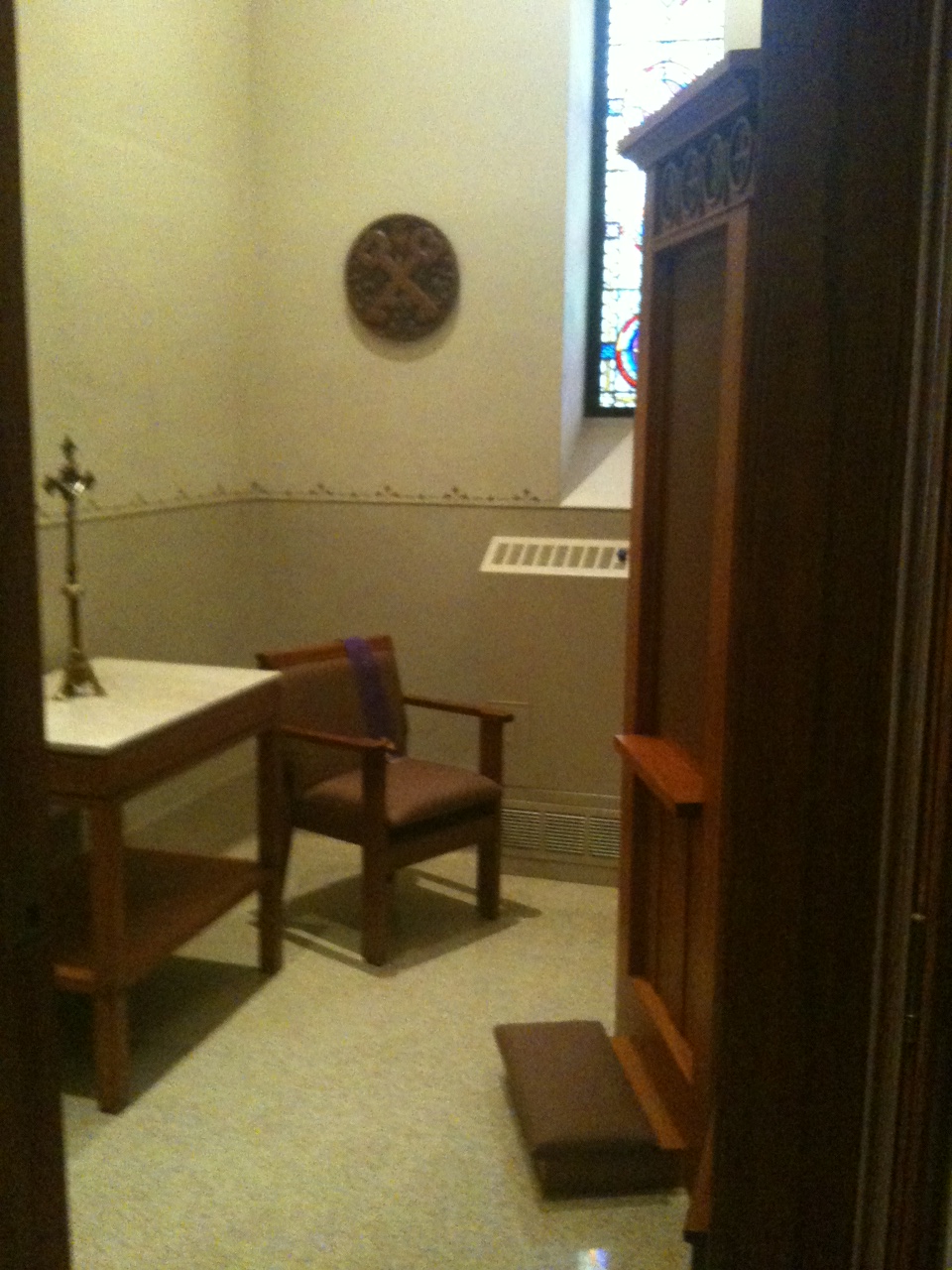
Confessional

Study:  Recall a moment when you have experienced forgiveness in your own life; how did it transform you?

Pray:  Is there something in your life that calls for forgiveness?  Pray for the grace and strength to do it.

Serve:  Is there someone you can help in the journey of forgiveness?  Is there something you can do that removes an obstacle and allows forgiveness to occur?

11th Sunday of the Year Readings

The Scriptures today reveal different examples of confronting our sins and receiving forgiveness.

The first reading from the Second Book of Samuel brings us into the latter part of the story of David and Bathsheba.  David: 1 – has sexual relations with this married woman;  2 – tries to cover up his sin by tricking and intoxicating Bathsheba’s husband Uriah;  3 – orders the brutal death of Uriah while he is fighting a battle for David.

The prophet Nathan has just told a parable to David, and when David promptly responds with the demand for justice, Nathan blasts him with the crimes he has committed.  At this point we step into the reading to discover three points:
God (very clearly) points out David’s sins
– David repents
– God forgives David’s sin

The psalm response today offers words that we might want to keep near us at all times:
“Lord, forgive the wrong I have done.”

The Gospel reading from Luke points out the reality of sin and the profound experience of grace that happens in forgiveness.  As Jesus receives the anointing of his feet, he instructs a Pharisee about the connection between mercy and love.

All three examples underscore the powerful impact of forgiveness in our lives.  In our moments of sin and temptation we encounter the darkest and most terrible parts of our hearts.  When we are honest with ourselves, we can be horrified by the potential for evil that lies within us.

Yet it is in these very experiences that we find Christ present.  The Lord will not permit us to cast a blind eye toward our sins; we are compelled to face the evil that we have done and name it.  What might otherwise fill us with shame becomes a moment of grace; Jesus Christ knows our sins (better than we do) and STILL LOVES US!  Completely!  Without limit!

Perhaps it’s time we recall the psalm response.  Perhaps it’s time that we stop for a moment and reflect on the mercy and grace that God freely grants us in our moments of weakness and sin.  Our choice to let go of sin and turn to Christ will open our hearts and fill us with a spirit of grace, hope, and peace.


3rd Sunday of Easter – Do You Love Me?

Jesus Loves Me

Study: Think back on a time when you made a big mistake and instead of harshness you encountered mercy.

Pray: Ask the Lord to help you love – especially people you find challenging. Pray for strength and grace to love.

Serve: Is there someone in your life that would benefit from an act of kindness, mercy, or love? Who is in your life right now that the Lord is leading you to love?

3rd Sunday of Easter Readings:

When you think of the backdrop of today’s Gospel reading, you might consider what Peter was thinking about. He had betrayed Jesus. Three times. He was told he would, he boasted he would die for the Lord, and when it came to the test he failed – utterly.

Then beyond all hope and wonder Jesus stands before Peter in resurrection glory. He’s alive! Death and sin have been conquered once for all, and we have hope in eternal life.

What would Peter say to Jesus?

Was he afraid that the Lord would be upset or disappointed? Was he worried that his friend and Lord would reject him or cast him aside? Was he ashamed, or perhaps overwhelmed with feelings of guilt and inadequacy?

Yet Jesus does not respond in a negative way at all. Three times he asks one little question: Do you love me? Three times Peter will answer yes, and in the end he will admit that Jesus knows him completely – including all his failings and limitations. The point is simple. Jesus met Peter in his weakness and invited him to live a life of love.

This encounter between Jesus and Peter should give us all hope. We all make mistakes: we’ve failed, messed up, caused harm and disappointment. Yet when we turn back to the Lord we discover the mercy and forgiveness of Jesus who asks us the same simple question: Do you love me?

What will be our answer? We have the opportunity to let go of our past sins and return once again to the Lord who loves us and invites us to love in return. Rather than be shackled to sin, fear, and death – we may embrace new life with joy and hope. Jesus Christ comes with power to free us with his healing grace.

Like Peter, we stand before the Lord in our weakness. Like Peter, we will all be asked the same question. May our answer be YES to the Lord’s love.


5th Sunday of Lent – Justice & Mercy

Flower

Study:  When have I truly experienced mercy from another person?  When have I been clearly in the wrong yet encountered understanding and compassion?

Pray:  Is there something in my life that needs God’s mercy?  Is there something or someone that I need God’s help to face?

Serve:  How can I practice mercy right now with someone in my life?

5th Sunday of Lent Readings

Teaching in the temple area, Jesus is confronted by the scribes and Pharisees with a woman (where is the man?) caught in adultery.  We are told that their intention is not justice, but to trap Jesus – so he can be arrested and silenced.

Here is the overview of John 8:1-11.
1           Jesus at the Mount of Olives
2          Jesus teaching in the temple area
3-6      Woman is brought to Jesus; Law is stated
7          Jesus writing on the ground
8          “Let the one without sin cast the first stone”
9          Everyone leaves; Jesus & the Woman alone
10        “Has no one condemned you?”
11        “No one, sir.”
“Neither do I…Go, and sin no more.”

Note that in this passage the Lord addresses two different groups.  The first group is composed of sinners.  His words to the scribes and Pharisees are profound:  “Let the one among you who is without sin be the first to throw a stone at her.”  Obviously, they must drop their stones; reflection and experience bring back numerous reminders of their sins.

Yet there is someone present who is without sin – JESUS!  His words to the crowd are about himself; he has the right and the authority to judge.

When the crowd finally disperses, he has the opportunity to speak to the woman.  “Neither do I condemn you.  Go, and from now on do not sin any more.”  Two crucial points surface from these words.

First, Jesus tells the truth; the behavior in question is a sin.  He does not ignore the fact, nor does he try to defend or explain it away.  He says it simply and directly.  His word is justice.

Second, the compassion of Jesus is evident in his gentle forgiveness.  He has the right to judge her, and he chooses mercy.

With the scribes and Pharisees Jesus reminds us “Do not judge, and you will not be judged.” (Matthew 7:1).  With the woman Jesus reminds us that in our sin and weakness we come to the Lord who longs to heal and restore us.

Which response speaks to us today?  We know that sin is real.  We know that all of us have failed and fallen through temptation and evil.  Do we need to ask forgiveness – for ourselves, or for presuming to judge others?  The Lord waits for us!


4th Sunday of Lent – The Prodigal Son

A man & two sons

Study:  Which one am I in the parable – the son in need of forgiveness or the son who needs to forgive?

Pray:  How does God’s forgiveness touch my heart – at Mass, Confession, or private devotion?

Serve: How can I be like the father in the parable, reaching out to those in need of the grace of repentance and forgiveness?

4th Sunday of Lent Readings

This Gospel reading is very familiar.  Let’s take a moment to break it down into its basic parts:

The Younger Son – selfish & foolish
The Older Son – hardworking & unforgiving
The Father – eager to reach out to both sons

In our reading today, we discover both the context and reason for Jesus offering this parable, as well as the central points within it.  These verses are part of Luke – chapter 15.

1-3          Jesus with sinners, the Pharisees complain
4-7         Parable of the Lost Sheep (not heard today)
8-10       Parable of the Lost Drachma (not heard today)
11-32     Prodigal Son
11-12     Younger son wants his share
13           Younger son leaves father, squanders money
14-16    Younger son penniless, works as a slave
17-19    Younger son “comes to his senses”
20a        Younger son returns to his father
20b        The father sees the son, runs to meet him
21           The younger son repents to his father
22-24    The father celebrates – his son is back to life
25-27    The older son hears about his brother
28-30    The older son is angry – speaks to his father
31-32     The father’s response to the older son

What are some of the lessons of this parable?

1.  God comes to us.
2.  God longs for our life and health.
3.  God does not force us to repent.
4.  We must “come to our senses” first.
5.  Repentance & forgiveness challenge us.

Remember, Jesus was with “sinners” at the beginning of this reading.  He was reaching out to people who had made choices in the past that had led them away from God and other people.  The parable is a way to show that God is constantly inviting us back to a relationship.

The same is true for us.  Whether we stand in need of forgiveness, or need to let go of our bitterness and anger – the Lord searches for us and invites us to celebrate whenever repentance is present and life & hope are restored.