Tag Archives: Eucharist

28th Sunday of the Year – Banquet Invitation

Banquet

Study:  How do I respond to the Lord’s call to the Eucharist?

Pray:  Take time each day to listen to the Scripture readings for daily or weekly Mass – it is a powerful way to prepare for the Eucharist.

Serve:  Is there someone who you can bring to Mass?  Perhaps the fellowship or hospitality may help another to grow in faith.

28th Sunday of the Year Readings

Fr. Andrew’s Homily

Two themes surface in the readings today that require further reflection:
1. God prepares a banquet for us
2. God invites us to come to the feast

The imagery of the banquet feast is found in the readings from Isaiah, the Psalms, the Matthew’s gospel. There are several points of interest here:
* God does the cooking! (Not us!)
* The food is the finest quality (rich & choice)
* The banquet is an important event (you better show up)

The fact is, when God throws a feast it is lavish in every detail. The event is on a grand scale with the best food and drink. What’s more, the Lord is the host of the meal! God prepares a banquet in every respect – as Chef, Host, Servant, Substance, and Lord.

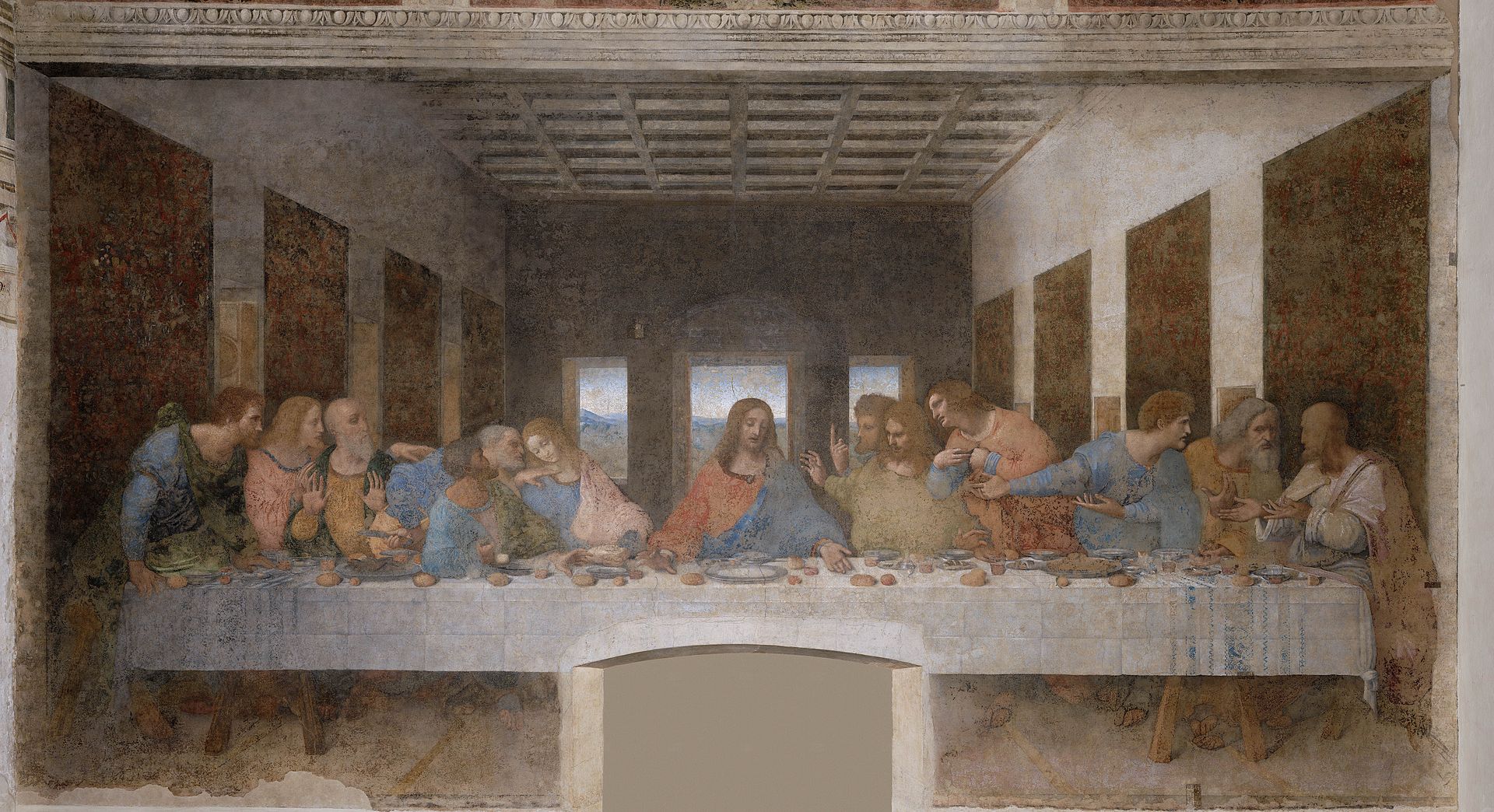
The “feast” has more than just one meaning. This banquet is first of all the great gathering at the end of time when we join the Lord in heaven. This “heavenly banquet” is the final celebration when all the saints unite in the glory of the risen Jesus; what a meal that will be!

Furthermore, since the resurrection of Jesus, Christians have gathered together for the Lord’s supper, where Christ himself feeds us with his Body and Blood. Here on Earth we are “saints in the making” who strive to follow the Lord through the struggles of life. This Eucharist is the feast that gives us the strength we need to face each day with faith, hope, and love.

Both of these banquets – one on heaven, the other on Earth – are presented by the Lord. We receive Christ’s body and blood so that we might follow the Lord through this world to the world that has no end.

Now the second point is this: Do we come and attend? If Christ has prepared a banquet for us in heaven and on earth, then do we respond to the Lord’s call by receiving his heavenly food on earth, and living on this earth as citizens of heaven?

Today the Lord calls us to the great banquet that will happen at the end of time. This feast is the final goal of our journey of faith. For this journey we need strength, and the Lord provides each week for the spiritual food we need to continue on our way.

May we come and receive with open hearts!


18th Sunday of the Year – a Miracle

fishes and loaves

Study:  Where in my life have I experienced God’s abundant grace?  Where and when have I encountered a miracle?

Pray:  Jesus met the people in their needs; perhaps we might come to the Lord with our concerns and fears.

Serve:  How might we be an instrument of grace for another today?  Has the Lord put someone in our life right now to serve?

18th Sunday of the Year Readings

Fr. Andrew’s Homily

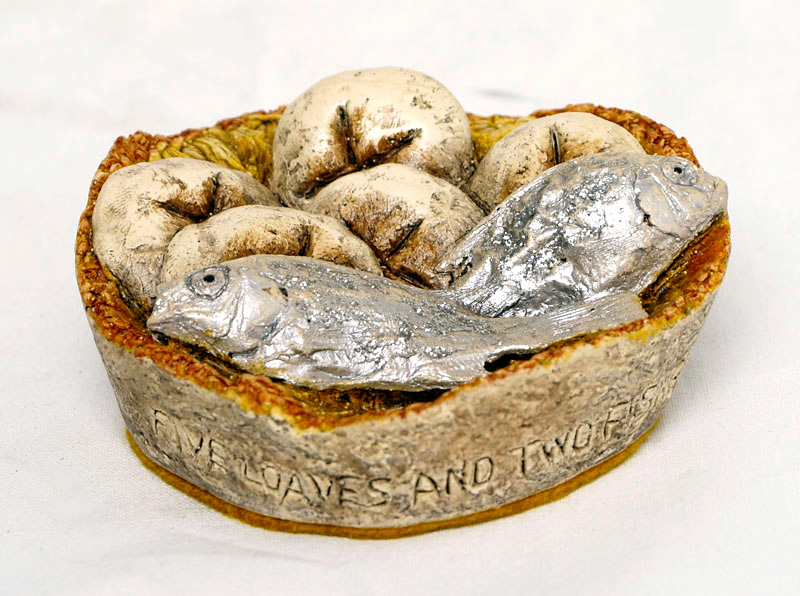
The Gospel this week offers a familiar story that many of us have heard on numerous occasions.  The miracle of the fishes and loaves offers a rich opportunity to reflect on a variety of themes that are central to the Christian disciple.

In order to do this, let’s take a step-by-step review of this story:

1.  Jesus hears of the death of John the Baptist
2.  Jesus seeks solitude in a deserted place
3.  The crowds eagerly seek Jesus
4.  Jesus sees the crowds and pities them
5.  Jesus cures their sick
6.  The people are hungry and far from home
7.  The disciples tell Jesus to send the people away
8.  Jesus tells the disciples to feed the people
9.  The disciples say there is only 5 loaves & 2 fish
10.  Jesus TAKES, BLESSES, BREAKS, GIVES
11.  There is an abundance (leftovers of food!)

Here are a few observations:

1.  Jesus’ heart is moved with sorrow for the death of John the Baptist.  Perhaps he is considering his own approaching death, and he seeks some quiet personal time.  Yet when the crowds crush in upon him, the Lord pities and responds to their needs.  It is the generous and loving heart of Jesus that is worthy of reflection and observation here.

2.  Jesus observes that many people are sick, and the Lord takes the time to heal their bodies.

3.  The people have been with Jesus all day.  They are far from home, and they have not eaten.  While the disciples want the Lord to send them away, Jesus commands them to feed the people; when they use the limited food supply as their excuse, Jesus takes, blesses, breaks, and gives them an abundance.  Thus, Jesus cares for the people – body and soul in a way that is truly overwhelming.

4.  The same verbs of taking, blessing, breaking, and giving are used to describe the Lord at the Last Supper.  This feeding miracle is just another form of Eucharist!

Jesus moves beyond his own personal concerns to love, respond, and serve others.  The Lord cares for both the physical and spiritual needs of people in a generous way.  May we follow his example in our own lives of service and ministry.


Easter Vigil

Candlelight

Study:  How did you learn your Christian faith?  When did it become something you claimed for your own?

Pray:  This is a good time to count our blessings and draw near to the Lord in gratitude for the gift of life.

Serve:  Perhaps there is someone to whom you might want to say, “I love you.”  Perhaps this is a good time right now…

Easter Vigil Readings

This holy night finds the Church celebrating the profound mystery of Christ’s saving work.  The Easter Vigil recalls the great moments of salvation history, rejoices with those who enter into full communion with the sacramental life of the Church, and is nourished by Eucharist.  Here are the four key components:

  • The Liturgy of Light
  • The Liturgy of the Word
  • The Liturgy of Initiation
  • The Liturgy of the Eucharist

The Liturgy of Light (or Lucernarium) begins the Easter Vigil.  In the darkness the image of light is used to proclaim our hope in Christ.  Several things happen:

  • A new fire is blessed and from its flames the light of the paschal (Easter) candle is lit
  • This candle is processed into church where the faithful light their own candles from it.
  • By this sea of candlelight the great Easter proclamation of Christ our Light – the Exsultet – is offered.

The Liturgy of the Word recounts the epic story of salvation history through several Old Testament Scriptures:

  • Creation – Genesis 1:1-2.2 and Psalm 104 or 33
  • Abraham’s Sacrifice – Genesis 22:1-18 and Psalm 16
  • Passage through the Red Sea – Exodus 14: 15-15:1 and its Canticle (Exodus 15)
  • The New Jerusalem – Isaiah 54:5-14 and Psalm 30
  • Salvation Offered Freely to All – Isaiah 55:1-11 its Canticle (Isaiah 12)
  • The Fountain of Wisdom – Baruch 3:9-15 and Psalm 19
  • A New Heart and a New Spirit – Ezechiel 36:16-28 and Psalm 42-43

We then move from the Old t0 the New Testament:

  • The Gloria is sung
  • A reading from  Romans 6:3-11 – Christ, raised from the dead, dies no more!
  • The Alleluia is sung
  • The Gospel is read – Mt 28:1-10; Mk 16:1-7, Lk 24:1-12 (depending on the year)

The Liturgy of Initiation then follows where those who have been preparing to enter the Church now receive their sacraments.

  • The Litany of the Saints is sung
  • The Baptismal Font is blessed
  • The Sacrament of Baptism is celebrated
  • The Assembly renews their Baptismal Promises
  • The Sacrament of Confirmation is celebrated

Finally, the Liturgy of the Eucharist allows the entire community to draw near to the altar to receive Jesus Christ in the sacrament of his Body and Blood.  The newly baptized receive Holy Communion for the first time in the company of their fellow Catholics.  Like every Mass:

  • Bread and Wine are brought to the altar
  • The Priest prays the Eucharistic Prayer
  • The Lord’s Prayer is said, followed by the Sign of Peace
  • We receive the Lord Jesus in Holy Communion

The great promise of faith, founded upon God’s saving work through time in the history of salvation, is proclaimed on this holy night.  May Christians around the world renew their faith in Jesus Christ – sharing his love and light with one another.

Christ our Light!