Tag Archives: Trust

2nd Sunday of Lent – Promises

Sunrise Promise

Study:  Consider moments when you have made and kept a truly important promise.  How did that promise inspire and help you grow?

Pray:  Ask the Lord for the gift to trust in His promises.  Pray for guidance to follow Christ – even when it is difficult.

Serve:  How can you help someone who is striving to keep their promise of faith?

2nd Sunday of Lent Readings

Growing up, I earned money by baby sitting.  I watched a number of kids (that is, until I got a driver’s license…), and I learned several valuable lessons.  One of the things I discovered was not to promise to do something unless I was absolutely certain I could carry it out.  If something went wrong and I had to change plans, the kids would shout, “You PROMISED!!!!”

Promises have tremendous power.  A promise can inspire us, offering strength and hope in our moments of weakness.  Promises are a sign of our trust in the word of another.  We accept a promise when we believe that another person will live up to an agreement or contract.

There are two crucial elements about promises:  making them and keeping them.  Making a promise means that we invite another into a relationship of trust.  Keeping a promise means that we fulfill our agreement through our words and deeds.

Both of these elements are necessary.  If we only make promises (without fulfilling them) then our word is meaningless, and people are unable to count on us in a time of need.  Yet if our fear of action holds us back from making promises, then we will never be considered by others as approachable or accessible; we become distant and separated from other people.

In the Scriptures today we see God’s promises extended to Abram and Jesus.  Abram is promised God’s blessing and prosperity upon himself and his descendants.  Jesus, revealed through his transfiguration, is promised the glory that will be fulfilled through his death and resurrection.

For Abram and Jesus, life will not be easy.  Difficulties and sorrows will accompany their path through life.  Yet the promises revealed in these readings show that they will be sustained in their trials.  God’s promises will give both hope and life.

These promises belong to us as well.  Like Abram and Jesus, we know the struggle and challenge that can occur in life.  There are moments when we look to God’s promises to be made and kept, that we might persevere in our desire to live a good and holy life.  May we accept the Lord’s promise of strength and guidance, trusting that as we live according to our faith in Christ, we are confident that the Lord is near.

34th Sunday of the Year – Christ the King

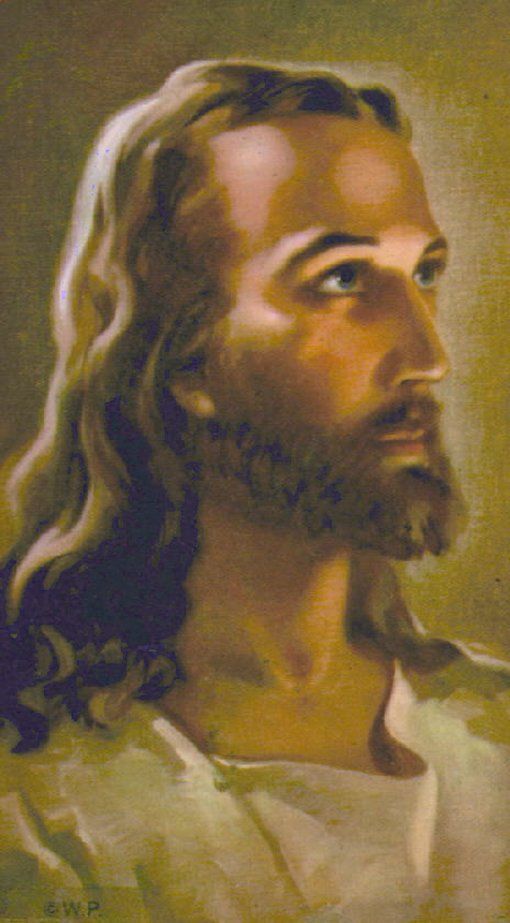
Jesus Christ

Study:  Consider people you know who have been good role models of leadership.  What qualities did they possess that you admired?

Pray:  Is there a major decision or choice in your life that requires guidance.  Ask the Lord for direction.

Serve:  Is there someone you know who is searching for meaning and purpose?  Is there some way that you can help them find their path in life?

34th Sunday Readings

The Feast of Christ the King brings the Church calendar year to a close.  Next week begins Advent, and we will start a new liturgical year with the cycle of “A” readings in the Lectionary for Mass.

Why do we end the year with the notion of Christ the King?  Why do we place this feast here?  What’s the point?

The feast has several levels of meaning.  By calling Christ our King we are making a statement that Jesus is the Lord of our lives.  It means that we place Christ first, and that we serve the Lord Jesus with the allegiance of our hearts, minds, and bodies.  We belong to Christ, who rules us.

In addition, to claim Christ as our King means that we are members of his kingdom.  Through our baptism we are called to the community of faith, the Church, and we possess an inheritance that is ultimately not of this world.  We are citizens who have a responsibility to work together – for this world and the world to come.

Furthermore, the King will come at the end of time to call His faithful people home to heaven.  We believe that the world will end on a future, unknown day (and once again, let me stress it is an UNKNOWN date…).  This feast reminds us that in the end we belong to one home or the other, one Lord or another.

Finally, to say that Christ is our King reminds us that all our power, strength, hope, and direction come from Him.  The skills and talents we possess are from the King (who made us).  The forgiveness we cherish is from the King (who died for us).  The life of the Holy Spirit which sustains us was sent by the King (who asked the Father on our behalf).

Therefore, to claim Christ as our King is to make a statement about who we are.  As followers of this King we offer our lives in service to the one who is our Lord.  We make this King our first priority in all things, and we look upon Jesus Christ as both the beginning and end of our existence.

This is a good time for us to search and prepare our hearts.  As this Church year comes to an end we begin to make ourselves ready for the Lord who comes to us, that he might find us alert and watchful for his arrival.  May we renew our allegiance to Christ our King so that he will rule us with mercy, grace, and love.


33rd Sunday of the Year – Life is difficult

Life is difficult

Study:  Reflect back on life – what have been some major obstacles that you faced?  How did you find the strength and wisdom to overcome them?

Pray:  What current obstacles are before you right now?  Bring these to prayer and ask the Lord for guidance and perseverance.

Serve:  Is there someone in your life who is facing a difficult time in life right now?  How might you be able to offer support?

33rd Sunday Readings

M. Scott Peck, author of the classic personal growth book The Road Less Traveled, begins his text with a simple statement:

Life is difficult.

If we assume this point – that there are times in our lives that are difficult – then we can gain a clear perspective on those moments which confront us with struggle.  We recognize that challenge is indeed a part of life, and how we respond to difficulty shapes and defines who we are.

Difficulty poses a common trap.  When life challenges us we may be tempted to avoid the situation altogether.  It may (falsely) appear that it is easier to stay away from the problem – to run away, hide, pretend it is not there, or direct our attention on something else.

When this happens we may choose an (apparently) easier path.  This is the direction of least resistance; we do not seem to experience the stress or unease we felt before.  Yet this feeling does not last for long.  Sooner or later, the problem we attempted to avoid returns, usually greater than before.

In the end we are confronted with two crucial steps.  First we must recognize the situation (life is difficult).  Second we face the struggle and choose an appropriate response.  Sounds like fun, right?

Wrong…

The Gospel today is clearly not what we call a “warm-fuzzy” sort of reading.  Luke makes it clear that a life of faith will be marked with difficulty.  Pain and suffering will confront us from a variety of perspectives throughout our lives.

The Cross of Christ is our model for this brutal truth.  We know that there is hope and resurrection awaiting us, but we also know that the path to eternal life may also demand steadfast patience and sacrifice.  Indeed, the Lord asks no less than our very lives.

Yet while this reading presents us with a sort of blunt honesty, it also provides us with a powerful hope.  God will not abandon us in our weakness to journey alone.  In our moments of struggle the Lord walks with us, offering strength and guidance to help us on the way…even when life is truly difficult.


19th Sunday of the Year – Wisdom for the Journey

Modern Pilgrims

Study:  What do you do to prepare for an upcoming event?  What steps do you take to be ready?

Pray:  What challenges do you face right now?  What do you need to ask from the Lord to be prepared?

Serve:  Is there anyone in your life who could use support at this time?  Perhaps you are being called to be a companion on their journey…

19th Sunday Readings

The readings this week offer insight regarding life as a pilgrimage.  As we journey through this life, with its challenges and blessings, we can look to these readings for guidance:

* The courage to trust in God’s promises [1st]
* God calls us to be his own people [psalm]
* Abraham’s example of faith [2nd]
* Be prepared!  Stay alert and awake! [gospel]

The first reading reminds us that our ancestors put their trust in God’s promises.  As they were led out of Egypt to the Promised Land, the Lord guided and directed them through faith.

The Psalm expresses thanksgiving for the Lord who chooses us to be his own people.  Here it is God who delivers us from death and protects us in times of great danger and crisis.

In the Letter to the Hebrews we see how Abraham’s example of faith is a model for us.  He did not know where God would lead him, nor was he aware that the Lord would raise up a vast number of descendants who claim him as their father in faith.  Indeed, even his son, Isaac, would be a test!

Finally, the Gospel surfaces the themes of preparation and readiness.  The parable of the good servant is a reminder of some basic expectations we carry in this life:

1.  What is my purpose?  (Values & Priorities)
2.  What are my gifts? (Skill, Resources, etc.)
3.  Do I use what I have been given?

It is crucial to note that until we know what is important in life, we cannot adequately prepare for it.  Until we know what are the resources, talents, and gifts we possess, we cannot properly use them with purpose.

If life is indeed a journey, then like Abraham we must travel through times of uncertainty and difficulty – but always with the hope that God is with us.  Our conviction that God will strengthen us for the journey is no guarantee that life will be easy, but it does remind us that we will be given what we need to continue.

The challenge occurs when we reflect on what we truly have been given.  When we recognize just how blessed we are, we are humbled by the expectation of our faith.  For much will be required of the person entrusted with much.


17th Sunday of the Year – Persistence

baby-learning-to-walk

Study:  Reflect on a moment when you were able to keep going when life was difficult.  What helped you through it?

Pray:  What is difficult in your life right now?  Ask God for the strength to persist.

Serve:  Who in your life needs help right now?  How might your life help someone else keep going?

17th Sunday Readings

Have you ever watched a baby learn to walk?  It is an amazing experience to see a little one gain the confidence and coordination to move across a room for the first time.  To watch such an event is to observe the miracle of persistence.

At one end of the room is a person who is supporting the child, at the other end is someone who plays cheerleader.  As the child travels across the room there are shouts of encouragement and smiles.

Then the baby falls.  Not hard, but with enough force to remind the little one that this is not going to be an easy task.  A few rug burns, some minor bumps, and a lot of hard work occur with every attempt.

Then once the child learns to walk it is amazing at how such little feet can move so fast.  The tiny steps, applied with determination, can get a child into more places (and trouble) than many a parent can imagine (at least at first!).

The persistence of a child learning to walk reminds us that the challenges of life require our determination, attention, and effort.  The Scriptures today give us two examples of persistence as it is experienced by people of faith.

First, Abraham’s conversation with God shows his determination to save the innocent people who are still living in Sodom and Gomorrah.  His perseverance is great; he asks God six times to spare the city, each time pushing the limit a little farther.

Second, Matthew’s Gospel shows how persistence is revealed through the example of the unrelenting friend who knocks at a door.  Sooner or later persistence is rewarded, and “everyone who asks, receives; who seeks, finds; and who knocks, the door will be opened.”

Every day we experience moments that demand our persistent application.  Life is difficult; and our determination to encounter the struggles of life will be rewarded through time and effort.  Christ teaches his disciples that God will give us what we need, but we need to ask – seeking God at every moment for help and guidance.

May the persistence of a child learning to walk remind us that the difficulties of life are overcome with steadfast effort and tiny steps.  As we journey in our faith we trust that God will walk with us, supporting us and providing for our needs.


13th Sunday of the Year – Called to Follow the Lord

Blue hills

Study:  What keeps you from trusting others?  What keeps you from trusting God?

Pray:  Is there something in your life that is holding you back from God?  Take it to prayer.

Serve:  Is there someone in your life right now who can use your help following the Lord?  What can you do?

13th Sunday Readings

The scenario looks like this:  a group of people are assembled together on a project and one of the leaders comes up and says, “I need someone to help me.  Any volunteers?”

Several possible responses may occur:

1.  No one says a word but looks at the floor and tries to disappear.

2.  Many people speak up, but they want to know what the task is before they will commit.

3.  One or two raise their hands, but they say that they have other things to do first.

4.  Many people raise their hands, and say, “Yes.  What do you need?”

While we might hope that we are always generous with our time, we know that there are moments when we are guarded and skeptical when someone makes a blind request.  We want to know some basic facts.  What is the task?  How much time will it take?  How much effort or skill?  Who will be working with me?

These questions are reasonable; in our day to day efforts they are the foundation of common sense relationships.  We ask these questions to insure that we are not going to commit ourselves to something that is distasteful, beyond our ability, or overly time consuming.

Yet there are times when we say “Yes!” without a moment’s hesitation.  We agree to a task sight unseen, not knowing the cost.  We are willing to offer ourselves, trusting that we will be able to carry out what we are asked to do.

The key to a willing volunteer is trust.  Trust implies that the one who follows believes in the one who leads.  When we trust another we do not necessarily need to know all the details; we know that the one we follow will not subject us to something that is beyond our scope or destructive to our lives.

In the Gospel today Jesus invites people to follow him, yet he receives many different responses.  Some gave excuses, some misunderstood him, and some turned away – yet the Lord continued to invite them to follow.

This invitation is ours as well.  Christ calls us to follow him, yet he does not tell us the cost.  May our faith help us to trust, that we might have the strength to volunteer all that we have in our journey through life.


6th Sunday of Easter – Peace I Leave With You

Icon of Christ

Study:  Think of someone you know who has faced a terrible fear.  Where did they find their peace and strength?

Pray:  Is there something that makes you afraid?  Bring it to your prayer and ask God to give you the grace to face it.

Serve:  How might you support someone in their fear right now?  Is there something you can do to offer comfort, assistance, or aid?  Perhaps it simply means being present to others to remind them that they are not alone.

6th Sunday of Easter Readings:

The phrase “do not be afraid” appears twenty-one times in the New Testament and over fifty times in the Old Testament.  These words are spoken by angels, prophets, and the Lord.  The repetition of this message in the Scriptures is for a simple reason – we often live in fear.

It is truly humbling to step back and reflect on the things in this life that keep us afraid:  aging, sickness, loss of ability, finances, relationships, war, terrorism, violence, self esteem………it goes on and on.  These fears are part of the world in which we live, and their power is often great in the human heart.

Fear has power because it preys on what we value, filling us with worry while we fret over what will happen if something we cherish is taken away.  That is why fear is a universal temptation; all of us have values, and when we fear the loss of something dear to us our anxiety can waste our time and energy.

We see this pattern of fear when people get stuck in a rut of thinking that leads them to wallow in a mental swamp, endlessly churning worry after worry without any positive, constructive, or helpful action.  It is a truly useless process.

Yet as people of faith we are told that fear is not the motivation of our lives.  There is something greater, something more powerful, that overcomes fear and worry, anxiety and doubt – Jesus Christ.  In the Lord we have a hope that is greater than all fear.

Through the death and resurrection of the Lord sin and death have been destroyed.  Christ is victorious and we follow the path that he has laid down for us.  This does not mean that the journey will be easy; rather it means that we can face the difficulties and struggles of life with the knowledge that we will be given what we need.

In our moments of fear (and trust me, there will be moments) we hear what the Lord provides for us – PEACE.  Peace in our hearts gives us the calming strength to face a difficult situation.  Peace in our lives allows us to look upon the world and gain a true perspective.  Peace in our soul allows us to see our fear and still act in a manner that is worthy of hope.

The Lord gives us peace.  When fear threatens to choke our hearts we turn to the one who gives us strength.  Only in the peace of Christ can we find the hope that sustains us to understand and overcome our fear, transforming our lives and our hearts.


2nd Sunday of Easter – Doubting Thomas

blessings

Study:  Reflect back on a time when you experience real doubt and disbelief; was it about good or bad news?  How did you work through your doubt to grow in trust and hope?

Pray:  Take time this week to pray for faith and trust, especially about situations in your life or in the lives of others that confront doubt.

Serve:  Reach out with comfort and support to those who struggle with doubt, particularly in regards to their faith in God.  Perhaps you may be the instrument through whom the Holy Spirit will draw others nearer to Jesus Christ.

2nd Sunday of Easter Readings:

I am often fascinated by the ways that people handle good news.  In particular, I am amazed at those moments when individuals are informed or confronted by a situation that is truly delightful.

Some folks begin to stammer and stutter; others cannot speak at all.  Some giggle; others cry; and still others start to babble in sounds that have never been formulated before on this planet.

Yet while some people embrace their good news, others react differently.  These are the skeptics; they are looking for the “real side” of the story.  They do not trust the situation, but are trying to find out what is really behind all the smoke and mirrors.  They refuse to accept what they have seen.

The response is natural and often happens.  Confronted by good news, there are times when people hesitate to believe.  Experience or cynicism has left them with doubt – closing them from the possibility that fortune has blessed them.

This scenario is found in the Gospel today.  Thomas, who is not present when Jesus first appears to the disciples, scoffs at their claim that they have seen the Lord.  He makes his well known statement:

“Unless I see the mark of the nails in his hands
and put my finger into the nailmarks
and put my hand into his side, I will not believe.”

His doubt is strong:  until he SEES and TOUCHES the Lord, he will not accept the news about Jesus.  He will not believe.

Yet Jesus comes back a second time, inviting Thomas to see and touch and believe.  The Lord’s appearance moves Thomas to make his claim of faith calling Jesus both Lord and God.  While he is no longer doubtful, Jesus gently chides him that he needed sight to confirm his belief.

We journey through this life with the good news of Jesus Christ, whose resurrection gives us all the hope of eternal life.  Yet there are times when we can become like Thomas, doubting the truth of our faith and asking for signs of God’s presence.

May we see in Thomas an example of the Lord’s unrelenting love.  Just as Jesus responded to his doubt, may we come to the Lord in our weakness and seek hope and faith in our need.  May we trust that the Lord will renew us with the faith of Thomas.