Tag Archives: Bread of Life

19th Sunday of the Year – Dependence on God – Catholic Inspiration

Three Great Things

19th Sunday of the Year Homily Podcast

Every breath we take is sustained by the will of God.  Our dependence upon the Almighty can help us in two key ways:

  1. Recognize our challenges, and ask the Lord for the help we need.
  2. Count our blessings, turning to Christ with grateful hearts.

In our need we draw strength from the Bread of Life – who gives us what we need to face each day!


19th Sunday of the Year – Dependence upon God

MannaSlides01

Study:  What are some of your regular chores?  Which ones do you find boring, dreary, dull, or difficult?

Pray:  Take a moment to count your blessings.  Consider the many ways you have been blessed by God.

Serve:  How can you help someone with a difficult chore?  How can you assist another with a challenging task?

19th Sunday of the Year Readings

Fr. Andrew’s Homily Podcast

Every summer my sister and I had a standard routine during school vacation.  We would get up, have some breakfast, and face the dreaded work list.  Our mother was the master of list making – with her perfect penmanship, she would write out the chores that needed to be done before Amy and I could go down to the beach for some fun.  We would groan and complain,”This is SO HARD!” while mom just smiled and reminded us that we all have work to do to keep the house running.

One time when I was feeling particularly oppressed, I had the gall to ask, “What did you do?” and I discovered that my folks:

  • Paid all the bills
  • Kept up on all the maintenance of the house
  • Provided for all our food and clothing
  • Handled mysterious things like “insurance” and “taxes”

In other words, I quickly discovered that my life – even with my terrible chores – depended completely on them.

Both Elijah and the crowds in the Gospel discover a similar lesson today.  Elijah was grumbling and the people were murmuring, but God fed them (both physically and spiritually) with food for this life and the next.

The point is simple: our lives are completely and entirely dependent upon God.  While it is true and important to note that we all have work to do, it is crucial to remember that we have this work because God allows it.  Our lives are supported every moment by the grace of the Almighty; the Lord sustains our lives so that we might offer them in our work…the “chores” that we get to do.  What’s more, God nourishes us so that we can do these chores with strength, courage, and wisdom.

For several weeks now we have heard how God feeds us with heavenly bread; perhaps today we might take a moment in gratitude to thank the Lord for what we have received, so that we can do today’s work with an open mind and a willing heart.  May our chores remind us that they are part of life – a gift which we have received from God.


18th Sunday of the Year – The Bread of Life – Catholic Inspiration

Three Great Things

Fr. Andrew’s 18th Sunday of the Year Homily Podcast

Have you ever “wanted” something – thinking that if you only had this one thing you would be…happy, fulfilled, and free of care?  There are many good (and some not so good) things that we can want, but none of them will completely satisfy us.  We are left restless, longing for something at the center of our our hearts.  We know that nothing in this world will satisfy us for a simple reason:

Jesus said, “I am the Bread of Life.”

The Lord knows us, loves us, died and rose for us, and longs for us to be united in his Sacred Heart.  Christ comes to us – sharing his Body and Blood – that we might never hunger and thirst again.   When we draw near to the altar, may our “Amen” resound with a desire to unite our hearts to Jesus Christ – the one who knows our wants, but responds to our needs.


18th Sunday of the Year – Bread from Heaven

HarringtonWed_335

Study:  Reflect on a time at Mass that profoundly spoke to your heart.  What stood out?

Pray:  Prepare your heart for your next Holy Communion.  What do you need to bring to Jesus Christ?

Serve:  Is there someone who you can encourage to return to Mass?  Can you help them draw near to the table of the Lord?

18th Sunday of the Year Readings

Fr. Andrew’s Homily Podcast

Jesus said to them,
“I am the bread of life;
whoever comes to me will never hunger,
and whoever believes in me will never thirst.”   John 6:35

We know that our bodies need food to sustain life; what we discover today is that our souls need spiritual food to sustain eternal life.  Where do we find this bread from Heaven?  Jesus Christ!

Have you ever experienced that feeling when you are exhausted?  Out of gas?  Wrung out?  It is often a sign that we require rest and nourishment; we come to the table to be fed.

The same is true with our souls.  There are times when we are intellectually drained, feeling lost and confused, doubting ourselves and uncertain about our next decision.  We can feel crushed, worn out by the demands of life and overwhelmed by the challenges that confront us.

What we require is a different type of nourishment – we look to a Person who loves us, understands us, and provides us with the grace and strength, the peace and perspective, to be renewed for the next step on our journey.  Christ feeds us with his Body & Blood, so that we might become more fully his disciples; we come to the altar to be fed.

What are you hungry for today?  What challenges do you face?  May we draw near to the Lord in Holy Communion and allow his love to transform our lives – for this world and for the world to come.


3rd Sunday of Easter – In the Breaking of the Bread

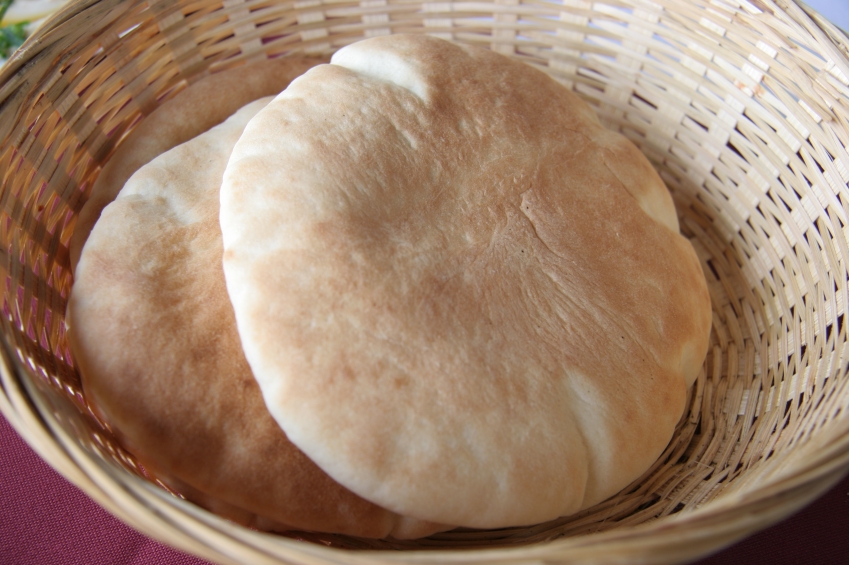
Pita Break

Study:  Recall profound moments of Holy Communion in your life – your First Communion; Communion at a major event; Communion when you faced a particular need.

Pray:  The next time you receive the Body of Christ, open your heart to the grace and power of the Lord.

Serve:  Perhaps you know someone who is not able to get to Mass; consider ways to bring Communion, have a visit, or arrange a way to get to Mass.

3rd Sunday of Easter Readings

They were two disciples.  They had followed Jesus, believed in Jesus, and now were on the road to Emmaus after the death of the Lord.  While we do not know what they were saying to each other, I can only imagine their doubt, fear, and confusion.  They had placed their hope in Jesus, and he had died.

They meet a stranger.  We know he is Jesus, but we are told that “their eyes were prevented from recognizing him.”  The stranger begins talking with them, listening to them, and then he begins to teach and explain.

On the road we learn that the stranger shows all the prophecies and messages within the Scriptures.  He tells them that it was necessary that the messiah would suffer death and then enter into glory.  He talked for most of the seven mile walk about Moses and all the prophets, and when they reached Emmaus he looked like he was going farther.

Still they did not recognize him.  Yet he spoke with such fire and insight the disciples begged him to stay with them.  At the meal he:

  • took bread,
  • said the blessing,
  • broke it,
  • and gave it to them.  (Luke 24:30)

And their “eyes were opened” and they knew that it was the Lord.  In the breaking of the bread the disciples recognized Jesus in their midst.  He had taught them through the Scriptures, and he was revealed to them through the meal.

This is what we do at every Mass.  First, we open our hearts to the Scriptures, that like the disciples we might hear how God continues to speak to us today.  Then we put into practice the command of Jesus to take bread and wine which we:

  • Take
  • Bless
  • Break
  • Give

in his name that we might receive the Body and Blood of Jesus himself (this is in Mt. 26:26-29; Mk. 14:22-25; Lk. 22:19-20;  Jn. 6:51-58; 1 Cor. 11:23-24).

This weekend we welcome our 2nd grade children at the Cathedral to join us as we follow the command of Jesus Christ.  We pray that these children and their families will continue to grow closer to the Lord through their communion.  And we pray that all of us will continue to recognize the Lord in our midst, through the breaking of the bread.


The Body and Blood of Christ

Bread

Study:  Read John 6; Matthew 26:26-29; Mark 14:22-25; Luke 22:15-20.  Note that Jesus defines what this is and commands us what to do.

Pray:  The next time you receive Holy Communion, take an extra moment to recognize Christ in the Eucharist and welcome Him into your life.

Serve:  We need food for physical strength and we require spiritual food for spiritual strength.  What tasks are before you right now that require God’s grace and help?

We all know people who love to cook and serve food.  They are the ones who always have something on hand for company, and they delight in offering a “little something” when visitors stop by.  Often in conversation sooner or later the question will be asked, “Are you hungry?  Would you like something to eat?”

Feeding people covers a variety of human needs.  Whether it is for our  hospitality, or gathering for a celebration, or simply nourishing our bodies, food is a central part of our existence.  It is one of our most basic and regular needs.

To ask someone, “Are you hungry?” not only recognizes this fundamental need, but it reveals our desire to serve another out of love.  Hunger is a universal experience, and our willingness to feed others shows our practical concern and our solidarity with those around us.

Experience teaches us that food is not the only nourishment we require.  Besides sustenance for our bodies we are also aware that we need spiritual strength as well.  Friendship, fellowship, prayers, and the support of a community and family are essential to our health and well being.

Jesus knew that people were hungry.  The Lord fed thousands with bread and fish.  He fed multitudes with hope and comfort through his teaching.  He fed the hearts of people in need of forgiveness and peace by his healing.  And on the night he was betrayed, he left his disciples with a way that they could be nourished through his body and blood for all time.

God knows our hunger.  In our need God comes to us with an abundance of life and goodness, inviting us to come and feast that we might have life.  In the Eucharist we proclaim that out of love the Lord Jesus is among us so that the community might receive the nourishment needed for our journey through life.

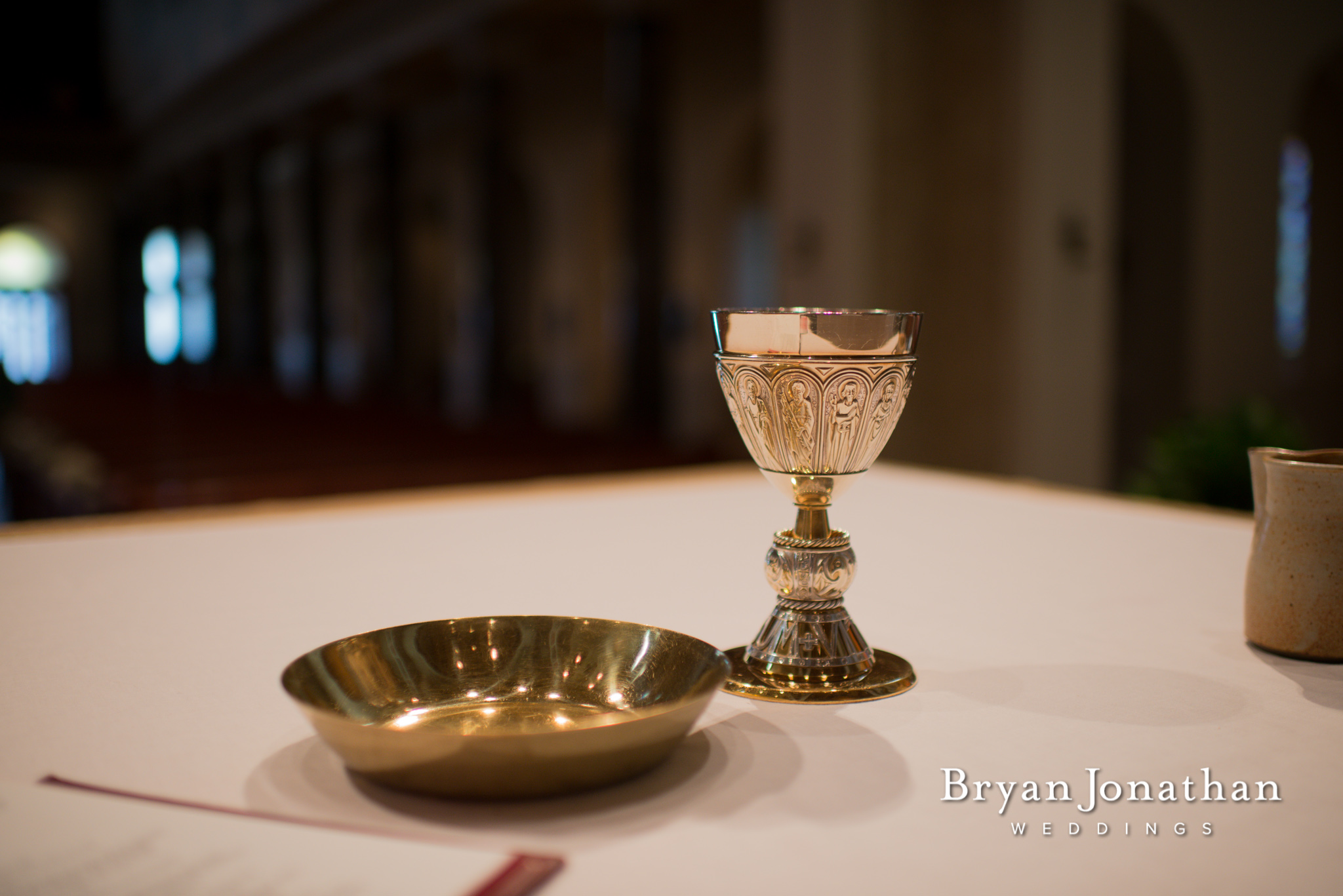
At Mass we proclaim this mystery.  Through the power of Christ, bread and wine become the Lord’s body and blood for our spiritual food.  As we receive communion the words “the body of Christ” state not only what we receive but what we become.  For as we receive the Lord in holy communion, we become the Body of Christ – empowered to share the Lord’s love in our world that others who hunger might be fed.