Category Archives: Lent

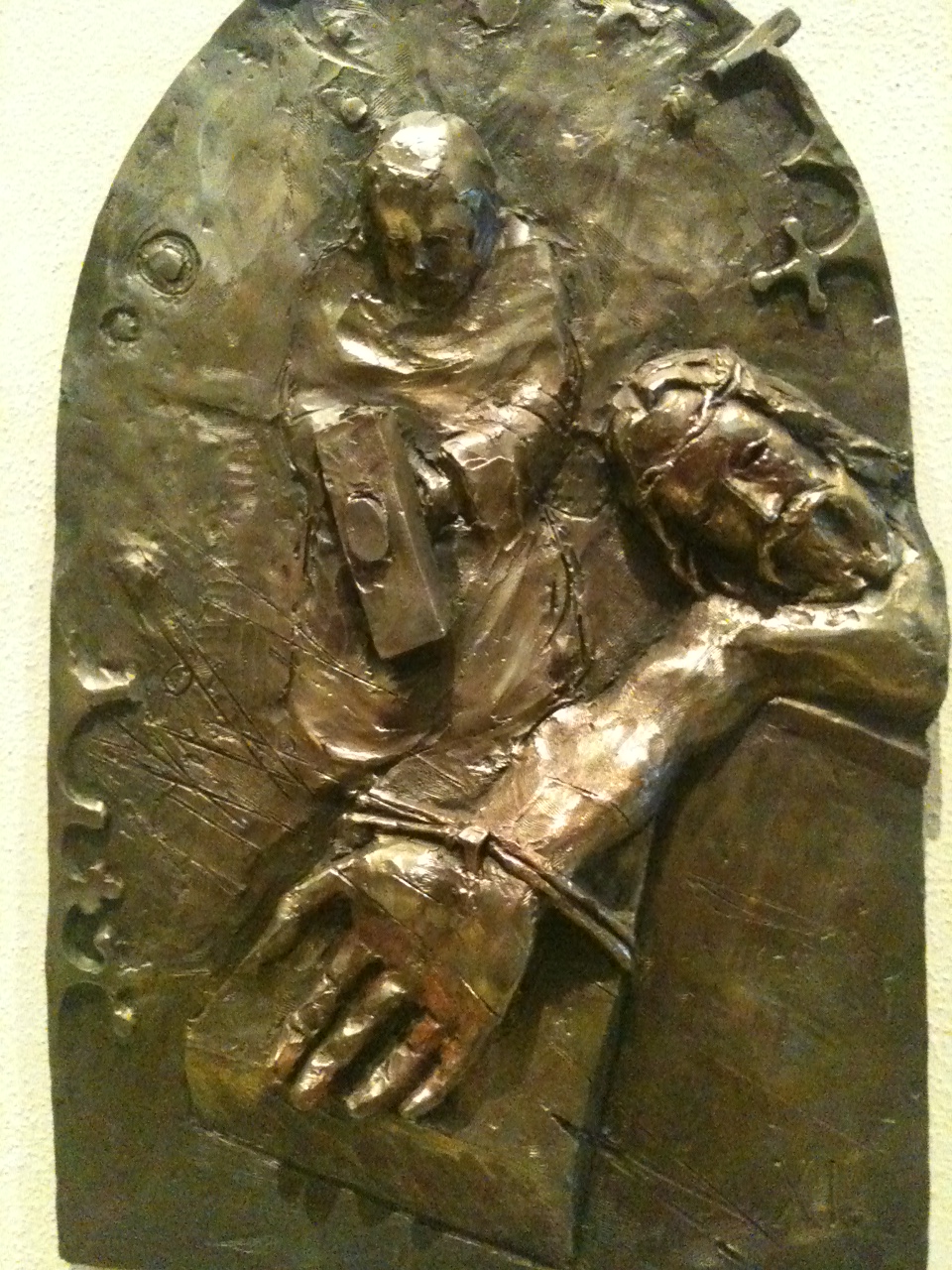
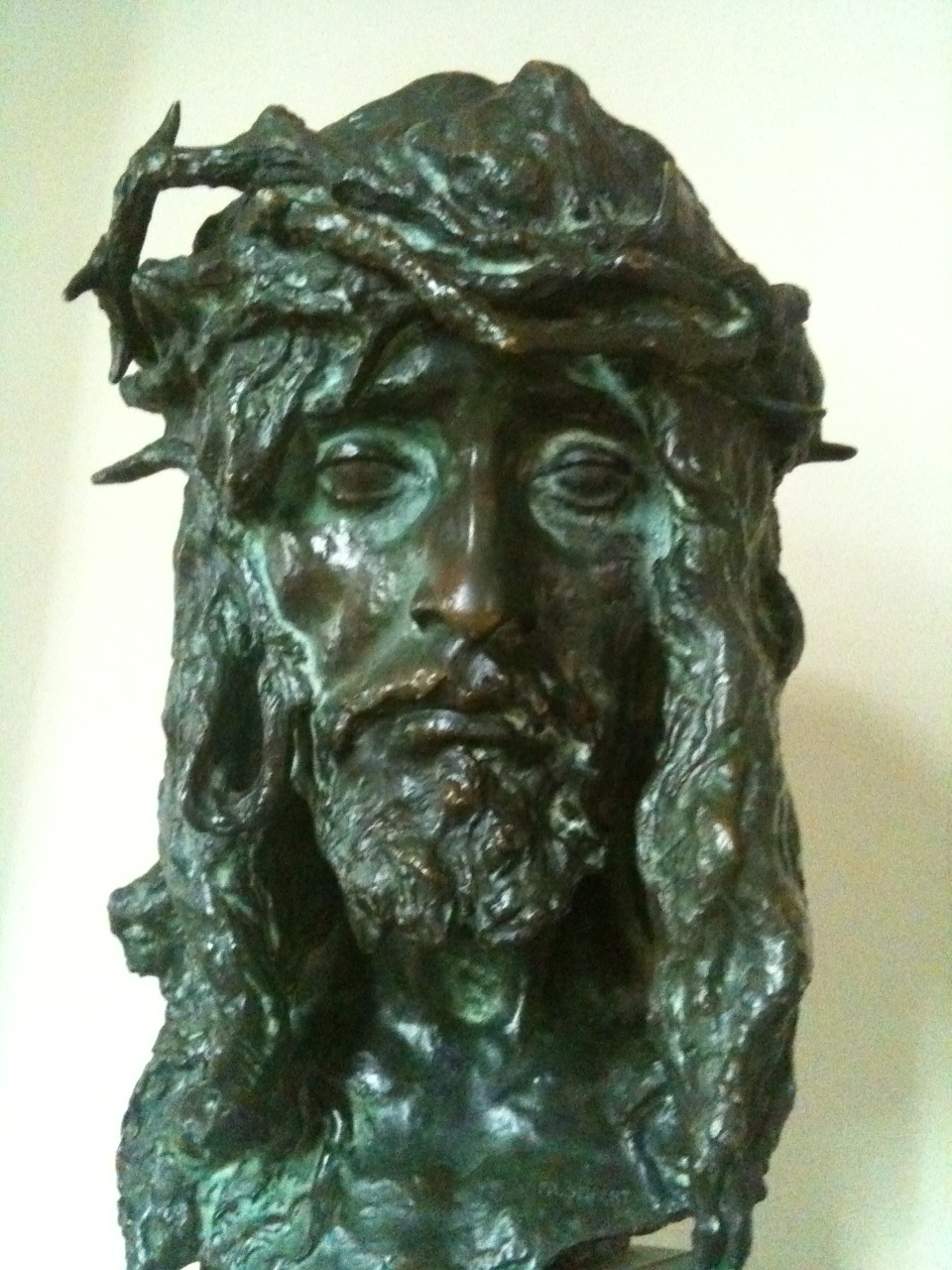
Palm Sunday – The Cross

The Face of Christ

Study:  Reflect on a time you experienced weakness and suffering.  Where did you find the strength to continue?

Pray:  Gaze upon a crucifix and offer to Christ any struggles you are facing right now.  Bring the needs of your loved ones to the foot of the Cross as well.

Serve:  Is there someone in your life who is carrying a heavy cross right now?  How can you offer comfort and assistance?

Palm Sunday Readings (with Year A reading for the Procession with Palms)

Fr. Andrew’s Homily Podcast

How many times throughout our lives have we made the sign of the Cross?  Stop and think:  at Mass; meal prayers; morning & evening prayers; special gatherings; and moments of blessing and grace.  This simple action, which we teach to children at an early age, invokes a connection with the passion of Jesus.

We adorn our homes with the Cross.  A crucifix is a common gift to a new home; crosses are placed in bedrooms and common areas as a reminder that Jesus is the source of our help and strength.

We adorn ourselves with the Cross as well:  a crucifix on a chain; a cross in our pocket; earrings; rings; bracelets; and all the extra cards, bookmarks, figurines, and miscellaneous items that remind us that Jesus died on a Cross.

The passion we read every year on this day focuses our attention on the central mystery of our faith.  Out of love for us God sent His Son, Jesus, who gave his life on the Cross that we might have eternal life.  Through his suffering and death, we recognize that God has made a pathway possible that we might all journey through this life to the gates of Heaven.

The Cross teaches us many lessons:

  • Life is difficult, and at times painful
  • Weakness and sin are part of our experience
  • God identifies with our pain
  • God dies that we might have life

At the core of our teaching the Cross stands as the testament of God’s love for us.  Yet the Cross appears to be an embarrassment – after all, why would God (all powerful, all knowing, supreme) choose to be humiliated?  Does that not mean that God is weak?  Why could God not take away our sins in a way that showed majesty and splendor?

In reality, the weakness revealed in the Cross uncovers our frailty, not God’s.  Jesus endured the Cross because of our broken, wounded nature.  He carried the Cross because we were unable to – as St. Paul writes “The wages of sin is death” in Romans 6:23 – and he bore the suffering, pain, and grief that are the natural result of our sinfulness.  God is not weak, rather God takes on our weakness so that we can be made whole.

The Cross proclaims the truth that God meets us where we are in life.  In our weakness, in our humiliation, in our low moments of doubt and sin God comes to us.  Jesus, like us in every way but sin, understands our pain because through his Cross he shares in the suffering of the world.  He knows us, loves us, and saves us through his Cross.

Every time we make the sign of the Cross may we recall what the Lord endured for us.  Through the Cross we discover our strength as we trust in God’s love and  seek to follow that love as we journey through this life toward the world to come.

We adore you, O Christ, and we praise you.  Because by your Holy Cross you have redeemed the world!


5th Sunday of Lent – A Second Chance


Second Chance

Study:  Reflect on a time when you were given a second chance.  How did you feel?  How did you respond?

Pray:  Is there something in your past that has held you back from growing?  Ask the Lord for the grace to begin again.

Serve:  Is there someone you know who could use a second chance?  How can you help them to start over?

5th Sunday of Lent Readings

Fr. Andrew’s Homily Podcast

Anyone who plays games knows about second chances.  They happen in board games when we get to “roll again”, and they happen in sporting events when one team gets a break through a change in the action.  They are part of the game, and they usually bring plenty of excitement and interest.

A second chance usually gives the player new opportunities and hope.  When a second chance is offered, it provides for the possibility to correct past mistakes.  Second chances can revitalize a player’s efforts.  Simply put, they can breathe new life into the game.

In the Gospel today we hear how Jesus calls Lazarus back from the dead.  Lazarus, who had been in the tomb four days, was loved by family and friends alike.  This love is witnessed in Jesus, whose tears reveal the depth of his concern.

I have always wondered how the story of Lazarus continued after this miracle.  What did people say every time they saw him?  Did people point to him as an example of the power of Jesus?  Did he wake up each day thanking God for another opportunity to love the people around him?

This miracle shows us a fundamental truth about God:  the Lord grants us second chances. Through the miracle of Jesus, Lazarus has been given back the gift of life.  This miracle provides the possibility for him to look back on the past and make a break with it.  In other words, his new life is an opportunity to begin again.

The story of Lazarus inspires us with hope.  God gives us second chances, too!  There are times when we may reflect on our lives, and we know that there is something that needs to change.  We need to let it “die” so that God can call us back to life.

Perhaps we have acted or spoken in a way that has been harmful to another.  Perhaps we have abused our bodies or put ourselves or others at risk through unwise choices.  Or maybe an event or decision in the past has kept us from living our lives in the present.

Whatever it is, God gives us a second chance.  Through his journey from Good Friday to Easter Sunday, Jesus makes it possible for us to break from sin and live in the light of God’s grace.  We can start again, living with the faith, hope, and love that can only come from Jesus Christ.


4th Sunday of Lent – A Life Worth Living

Beautiful Life - People

Study:  When have you sensed and recognized the precious value of life?  How did you respond?

Pray:  Offer prayers for those who struggle to embrace the gift of their lives.

Serve:  Is there someone nearby who is overcome by weakness, failure, or struggle?  How can you help?

4th Sunday of Lent Readings

The philosopher in me ponders a recurring question:  Why does God bother with us?  Why does the Lord of all creation seem to care about us?  Why does God have anything to do with us, especially when the universe is such a big place?  After all, why would God want to spend time caring for over seven billion people – aren’t there more important things to do?

Consider the role God plays in the readings this week:
1st – God chooses us according to our hearts.
Psalm – God shepherds us in our need.
2nd – God enlightens us in our darkness.
Gospel – God heals in our weakness.

In all four cases, God is acting on our behalf, despite our weakness, failings, and struggles.  The Lord continues to reach out to people, making hope possible in the midst of the challenges of life.  It does not seem to matter that people make mistakes or fall short of their abilities.  God still seems to care.

We are told that we are made in the image and likeness of God (Genesis 1:26), and we are told that God loved us so much he sent Jesus (John 3:16). What then can we learn about the Lord from these readings we hear today?

It seems to me that throughout these readings we discover that God values our lives, even when they are broken and limited by sickness and sin. God looks at us, with all our faults, and rejoices whenever we turn our hearts and minds to Jesus.

If the Lord finds joy in our lives, however feeble or faint, should we not do the same?  If God was willing to give us Jesus that we might have eternal life, should we not reflect on just how powerful this gift of life really is and act accordingly?

When we acknowledge that God acts for us because God loves us – completely, sincerely, and out of a thorough knowledge of all our sins – then we have hope.  We recognize that life is precious, and we find inspiration to make the most of this day, this moment, lest we lose even one opportunity to share our lives with God and one another.  With understanding comes this simple fact: we possess a life worth living – made by God, redeemed by God, and sustained by God!

Once we believe that Jesus died because he loves us, then all the actions we see in the readings today make sense.  May we embrace what God has done for us, and share with joyful hearts a life worth living.


3rd Sunday of Lent – Thirsty for Water

Living Water

Study:  When have you been in need for water?  When have you been in need of God’s grace?

Pray:  Is there something in your life that is parched and dry?  Ask the Lord for the Living Water that refreshes our souls.

Serve:  Is there someone you know who is withered and weak?  How can you bring them new strength and assistance?

3rd Sunday of Lent Readings

Fr. Andrew’s Homily Podcast

Imagine a tall glass of water.  You are tired and hot, and you hold the cool glass and start to drink.  Immediately, relief spreads through your throat and body, and as you set down the glass you say, “Ahhh!” and smile.

We all have experiences of being thirsty.  Maybe it is after a few slices of pizza or some extra salty snacks; perhaps it’s before an operation or medical checkup, when we are told that we cannot eat or drink anything from midnight on; it could be that we have just had a lot of exercise and are dehydrated.  Yet no matter what the situation is, we know the feeling when we are thirsty for water.

Our bodies need water.  Some studies tell us we  should be drinking a minimum of eight glasses a day.  This dependence on water is found in our survival; a person can live for weeks without food, but only a couple of days without water.

Our critical need for water becomes the source of the images found in the first reading and Gospel today.  Water is the subject for both Moses and Jesus.  Under God’s direction and guidance, Moses strikes the rock and provides water for the people in the desert.  Jesus, through his discussion with the woman at the well, reveals that he is the water that gives eternal life.

These readings remind us that God brings the Living Water to us.  In our need the Lord quenches our thirst as he did for the people in Meribah.  In our need the Lord comes to us as he did for the woman at the well.  For just as we need water to sustain our bodies, so too do we need Jesus Christ to give us life in this world and in the world to come.

Are you spiritually thirsty?  Is there something missing that you long for in your soul?  Is it love, joy, peace, patience, kindness, goodness, faithfulness, gentleness, or self-control?  Just as our bodies respond to water with renewed strength, so also our thirst for “living water” reminds us that God offers us refreshment for our souls.  Lent is a perfect time to recognize our need for the Lord and ask for the grace and strength to face the challenges of today.

It is with water that we welcome new members into the Christian family through baptism.  It is with Holy Water that we sign ourselves with the Cross of Jesus Christ.  During the Easter season we will celebrate the sprinkling rite as we renew our own baptismal promises.  In all these cases, water becomes the medium to remind us of God’s presence.

Every time we pick up a glass of water we have the chance to remember how dependent we are on this simple substance.  May this reminder lead us more deeply into the mystery of God’s love for us and our need to recognize the Lord each day in the world around us.  May we drink deeply from the living water of Jesus Christ.


2nd Sunday of Lent – Promises

Sunrise Promise

Study:  Consider moments when you have made and kept a truly important promise.  How did that promise inspire and help you grow?

Pray:  Ask the Lord for the gift to trust in His promises.  Pray for guidance to follow Christ – even when it is difficult.

Serve:  How can you help someone who is striving to keep their promise of faith?

2nd Sunday of Lent Readings

Growing up, I earned money by baby sitting.  I watched a number of kids (that is, until I got a driver’s license…), and I learned several valuable lessons.  One of the things I discovered was not to promise to do something unless I was absolutely certain I could carry it out.  If something went wrong and I had to change plans, the kids would shout, “You PROMISED!!!!”

Promises have tremendous power.  A promise can inspire us, offering strength and hope in our moments of weakness.  Promises are a sign of our trust in the word of another.  We accept a promise when we believe that another person will live up to an agreement or contract.

There are two crucial elements about promises:  making them and keeping them.  Making a promise means that we invite another into a relationship of trust.  Keeping a promise means that we fulfill our agreement through our words and deeds.

Both of these elements are necessary.  If we only make promises (without fulfilling them) then our word is meaningless, and people are unable to count on us in a time of need.  Yet if our fear of action holds us back from making promises, then we will never be considered by others as approachable or accessible; we become distant and separated from other people.

In the Scriptures today we see God’s promises extended to Abram and Jesus.  Abram is promised God’s blessing and prosperity upon himself and his descendants.  Jesus, revealed through his transfiguration, is promised the glory that will be fulfilled through his death and resurrection.

For Abram and Jesus, life will not be easy.  Difficulties and sorrows will accompany their path through life.  Yet the promises revealed in these readings show that they will be sustained in their trials.  God’s promises will give both hope and life.

These promises belong to us as well.  Like Abram and Jesus, we know the struggle and challenge that can occur in life.  There are moments when we look to God’s promises to be made and kept, that we might persevere in our desire to live a good and holy life.  May we accept the Lord’s promise of strength and guidance, trusting that as we live according to our faith in Christ, we are confident that the Lord is near.


1st Sunday of Lent – Testing & Temptation

Desert Test

Study:  Where in my life have I fallen short and failed?  What lessons (however painful) have I learned?

Pray:  Ask the Lord for the grace and strength to face temptations.  Do not be afraid!  This is an opportunity to trust in the mercy and love of Jesus.

Serve:  Is there someone in your life who is struggling right now?  How can you help them through this time of testing?

1st Sunday of Lent Readings

Fr. Andrew’s Homily Podcast

Recall back to your school days.  No matter what grade or level of studies, all of us received tests as part of our education.

I remember once sitting in a class where some students were grumbling to the professor about an upcoming exam (I was angelically studying in a corner…).  The professor stopped the class to say, “Look, there are lots of reasons for exams, but there are two things that are important to me:  First, I need to know the limits of your knowledge.  Second, I want to see how you can apply what you have learned to other areas of study.”

Those two ideas stayed with me, for what is true for tests applies equally to life.  We experience tests all the time, and through these moments we discover amazing insights into our hearts.  Being tested (or tempted) reveals the limits of our strength, courage, patience, and trust; it also shows how we apply what we know (such as our faith in Christ) with what we encounter (trials, disturbances, disease, fear).

The Scriptures today offer two examples of testing which result in very different outcomes.  In the first reading, we see the weakness of Adam & Eve before the temptation of the serpent.  Their choices resulted in separation from God and one another.

In the Gospel we hear the encounter between Jesus and Satan in the desert.  The Devil tempts Jesus through three classic fears:  the fear of physical weakness, the fear of being powerless, and the fear of death.  These fears, which the Lord will ultimately face at his crucifixion, are rejected each time through Scripture and faith in God’s presence.

The lesson for us is clear.  Like Adam & Eve, we have all sinned and fallen short of God’s grace.  Yet in our moments of weakness, doubt, and fear we can look to the life of Jesus for strength and new hope.  We, too, can trust that just as the Lord overcame his testing, we can also find guidance and direction through our faith in Christ in our time of need.

Once we trust that the Lord will be with us, we can face our testings and temptations with a new perspective.  These tests show us where we need to ask the Lord for help, revealing our limitations and teaching us to see our blind spots.  In this way our temptations are simply one more opportunity for us to recognize the Lord’s grace at work in our hearts.


Preparations for Lent

Cross

Study:  Looking back in my life, are there any activities, people, or situations that have helped me to grow?

Pray:  Ask the Lord for the wisdom to recognize the Fruits of the Spirit and the courage to embrace them.

Serve:  Look for an opportunity this Lent to offer a part of your life to helping another – especially someone who has no way to pay you back.

The season of Lent offers a powerful opportunity for conversion, spiritual growth, and developing our relationships with the Lord and one another.  However, I also know that this season has a way of sneaking up on us.  Life moves fast, and we can get caught up in any number of tasks – missing the necessary preparation and perspective to get the most out of these 40 Days.

As a guide, I suggest starting with the “Fruits of the Spirit” that St. Paul writes about in his letter to the Galatians (5:22-23).  They are:

  • Love
  • Joy
  • Peace
  • Patience
  • Kindness
  • Goodness
  • Faithfulness
  • Gentleness
  • Self-Control

First, do we see these in our lives?  Are there people, situations, interactions, locations (home, work, school, community) where we see consistent evidence of their presence?  If so, then how can we help them flourish and grow?  How can we create more opportunities to allow the Spirit to work in our lives?

Second, are these absent in our lives?  Or worse, are their opposites present?  Is hatred, despair, turmoil, and the like alive in our hearts?  If so, how can we make the necessary changes to allow the Spirit into our lives?

Now here’s how this gets practical.  It is often customary during Lent to “do” something or “give up” something for these 40 days.  How about this…

  1. “Do” something that fosters the Fruits of the Spirit in my life.
  2. “Give up” something that is in conflict with the Fruits of the Spirit.

Where do we look?  Try this for starters…

  1. WHAT we do – the Activity
  2. WHO we do it with – the People
  3. WHERE we do it – the Location

“Doing” can include any number of things:

  • Helping a neighbor, family member or friend – in a spirit of kindness and gentleness
  • Drawing near to people who are spiritually good – who make us more loving and peaceful
  • Spending time on activities that help us use God’s talents in a good and holy way
  • Concentrating our efforts on opportunities where we know that God is present
  • Being in locations and situations that foster a strong and healthy life

“Giving up” can look like this:

  • Is there anything destructive, harmful, unholy, or evil that needs to be removed?
  • Are there people who are leading us to harm or destruction?
  • Are there locations, situations, or circumstances that are unholy for us?

Using the “Fruits of the Spirit” as a measurement, we can quickly reveal the pattern of our lives.  If it is spiritually fruitful, then we can strengthen this.  If it is spiritually destructive, then perhaps this season of Lent gives us an opportunity to give it up and start directing our lives in better ways.

Furthermore, Lent has classic opportunities for Study, Prayer, and Service:

Study: Scripture, the Catechism, a Devotional, Spiritual Reading

Prayer: Mass, Confession, Rosary, Scripture, Devotions, Stations of the Cross

Service: at home, the neighborhood, the community, the Church

God keeps inviting, keeps forgiving, and keeps extending grace and mercy to all who seek it.  Now is the time to get ready for a powerful Lent – where we turn to Jesus and allow His grace to transform our hearts.  Give serious thought to what you can do to make this season special, and open your to heart to Jesus Christ.

What will you do?  What will you give up?  Make it a great Lent!


Palm Sunday – The Cross of Christ

Station - Jesus in Crucified

Study: Read the Passion narrative again; put yourself in the drama of the Lord’s death. Stand with Mary at the foot of his cross.

Pray: Take time to gaze at the cross. Look beyond the art to the reality of the Lord’s passion. Dwell upon his wounds and thank him for his sacrifice.

Serve: Consider who is in need of healing in your life. Are there people who are carrying a heavy cross? Might you be like Simon of Cyrene – perhaps able to help them with a part of the load?

Palm Sunday Readings

How many times throughout our lives have we made the sign of the Cross? Stop and think: at Mass; meal prayers; morning & evening prayers; special gatherings; and moments of blessing and grace. This simple action, which we teach to children at an early age, invokes a connection with the passion of Jesus.

We adorn our homes with the Cross. A crucifix is a common gift to a new home; they are placed in bedrooms and common areas as a reminder that Jesus is the source of our help and strength.

We adorn ourselves with the Cross in many ways: a crucifix on a chain; a cross in our pocket; earrings; rings; bracelets; and all the extra cards, bookmarks, figurines, and miscellaneous items that remind us that Jesus died on a Cross.

The passion we read every year on this day focuses our attention on the central mystery of our faith. Out of love for us God sent Jesus, who gave his life on the Cross that we might have eternal life. Through his suffering and death, we recognize that God has made a pathway possible that we might all journey through this life to the gates of Heaven.

The Cross teaches us many lessons:
* Life is difficult, and at times painful
* Weakness and sin are part of our experience
* God identifies with our pain
* God dies that we might have life

At the core of our teaching the Cross stands as the testament of God’s love for us. On one hand the Cross is an embarrassment – after all, why would God (all powerful, all knowing, supreme) choose to be humiliated? Does that not mean that God is weak? Why could God not take away our sins in a way that showed majesty and splendor?

Yet on the other hand, the Cross is a statement that God meets us where we are in life. In our weakness, in our humiliation, in our low moments of doubt and sin God comes to us. Jesus, like us in every way but sin, understands our pain because through his Cross he shares in the suffering of the world. He knows us, and loves us even more.

Every time we make the sign of the Cross may we recall what the Lord endured for us. May the Cross be our strength as we trust in God’s love, and may we seek to follow that love as we journey through this life toward the world to come.


5th Sunday of Lent – Justice & Mercy

Flower

Study:  When have I truly experienced mercy from another person?  When have I been clearly in the wrong yet encountered understanding and compassion?

Pray:  Is there something in my life that needs God’s mercy?  Is there something or someone that I need God’s help to face?

Serve:  How can I practice mercy right now with someone in my life?

5th Sunday of Lent Readings

Teaching in the temple area, Jesus is confronted by the scribes and Pharisees with a woman (where is the man?) caught in adultery.  We are told that their intention is not justice, but to trap Jesus – so he can be arrested and silenced.

Here is the overview of John 8:1-11.
1           Jesus at the Mount of Olives
2          Jesus teaching in the temple area
3-6      Woman is brought to Jesus; Law is stated
7          Jesus writing on the ground
8          “Let the one without sin cast the first stone”
9          Everyone leaves; Jesus & the Woman alone
10        “Has no one condemned you?”
11        “No one, sir.”
“Neither do I…Go, and sin no more.”

Note that in this passage the Lord addresses two different groups.  The first group is composed of sinners.  His words to the scribes and Pharisees are profound:  “Let the one among you who is without sin be the first to throw a stone at her.”  Obviously, they must drop their stones; reflection and experience bring back numerous reminders of their sins.

Yet there is someone present who is without sin – JESUS!  His words to the crowd are about himself; he has the right and the authority to judge.

When the crowd finally disperses, he has the opportunity to speak to the woman.  “Neither do I condemn you.  Go, and from now on do not sin any more.”  Two crucial points surface from these words.

First, Jesus tells the truth; the behavior in question is a sin.  He does not ignore the fact, nor does he try to defend or explain it away.  He says it simply and directly.  His word is justice.

Second, the compassion of Jesus is evident in his gentle forgiveness.  He has the right to judge her, and he chooses mercy.

With the scribes and Pharisees Jesus reminds us “Do not judge, and you will not be judged.” (Matthew 7:1).  With the woman Jesus reminds us that in our sin and weakness we come to the Lord who longs to heal and restore us.

Which response speaks to us today?  We know that sin is real.  We know that all of us have failed and fallen through temptation and evil.  Do we need to ask forgiveness – for ourselves, or for presuming to judge others?  The Lord waits for us!


4th Sunday of Lent – The Prodigal Son

A man & two sons

Study:  Which one am I in the parable – the son in need of forgiveness or the son who needs to forgive?

Pray:  How does God’s forgiveness touch my heart – at Mass, Confession, or private devotion?

Serve: How can I be like the father in the parable, reaching out to those in need of the grace of repentance and forgiveness?

4th Sunday of Lent Readings

This Gospel reading is very familiar.  Let’s take a moment to break it down into its basic parts:

The Younger Son – selfish & foolish
The Older Son – hardworking & unforgiving
The Father – eager to reach out to both sons

In our reading today, we discover both the context and reason for Jesus offering this parable, as well as the central points within it.  These verses are part of Luke – chapter 15.

1-3          Jesus with sinners, the Pharisees complain
4-7         Parable of the Lost Sheep (not heard today)
8-10       Parable of the Lost Drachma (not heard today)
11-32     Prodigal Son
11-12     Younger son wants his share
13           Younger son leaves father, squanders money
14-16    Younger son penniless, works as a slave
17-19    Younger son “comes to his senses”
20a        Younger son returns to his father
20b        The father sees the son, runs to meet him
21           The younger son repents to his father
22-24    The father celebrates – his son is back to life
25-27    The older son hears about his brother
28-30    The older son is angry – speaks to his father
31-32     The father’s response to the older son

What are some of the lessons of this parable?

1.  God comes to us.
2.  God longs for our life and health.
3.  God does not force us to repent.
4.  We must “come to our senses” first.
5.  Repentance & forgiveness challenge us.

Remember, Jesus was with “sinners” at the beginning of this reading.  He was reaching out to people who had made choices in the past that had led them away from God and other people.  The parable is a way to show that God is constantly inviting us back to a relationship.

The same is true for us.  Whether we stand in need of forgiveness, or need to let go of our bitterness and anger – the Lord searches for us and invites us to celebrate whenever repentance is present and life & hope are restored.