Author Archives: Fr. Andrew Ricci

About Fr. Andrew Ricci

Unknown's avatar
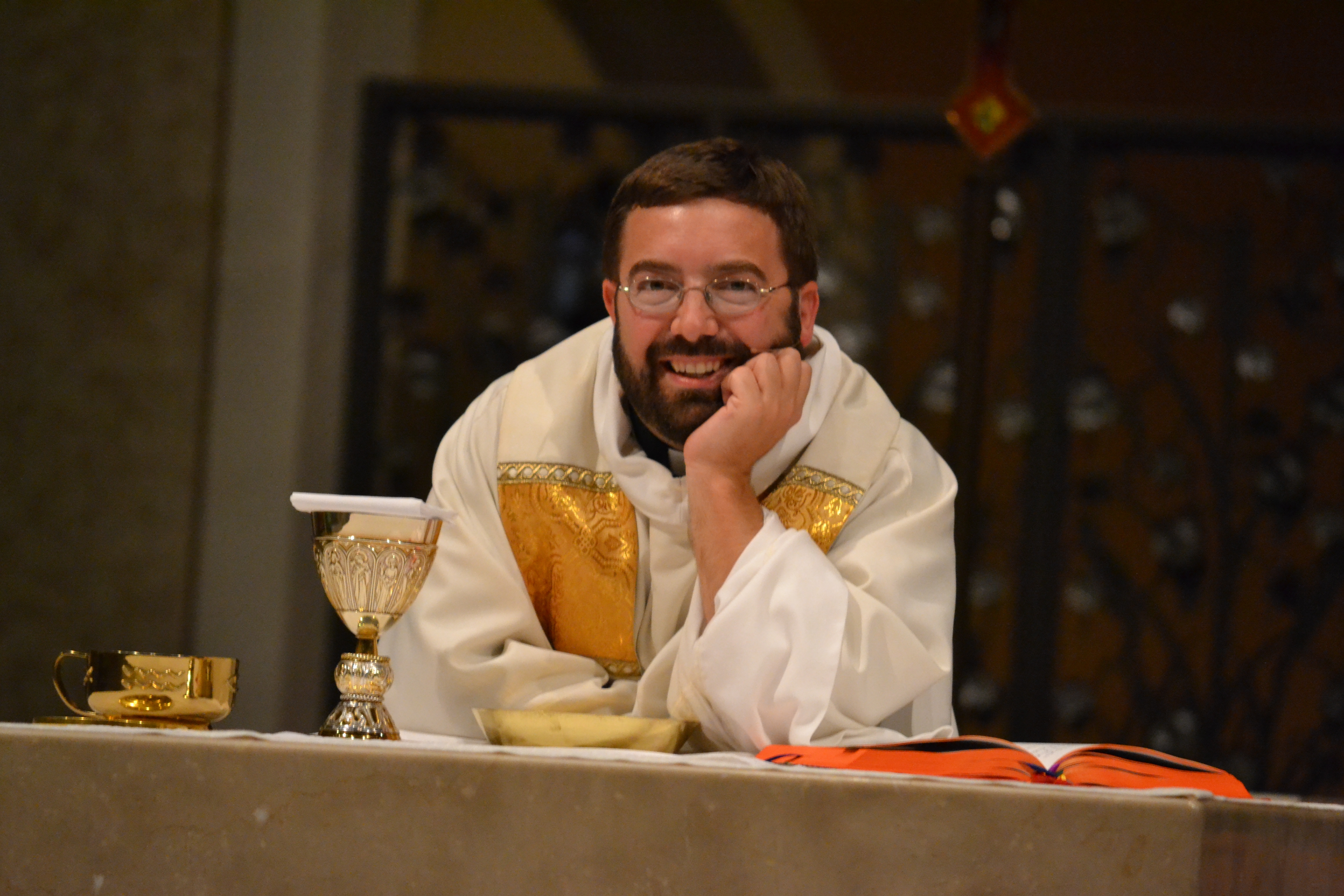
A Catholic priest since 1997, Fr. Andrew Ricci is currently the rector of the Cathedral of Christ the King in Superior, WI. His website "Three Great Things" can be found at studyprayserve.com and his podcasts can be found under "Catholic Inspiration" in the iTunes store.

Preparations for Lent

Cross

NOTE:  This post was first published on February 26, 2014.  I share it once again because I know that if we take a little time now to prepare our hearts then this holy season comes alive with grace and power.  May this podcast and the ideas listed below help us all make this Lent the best ever!

Fr. Andrew’s Homily Podcast – Preparing for our Best Lent!

Web Resources from the US Bishops 

Study:  Looking back in my life, are there any activities, people, or situations that have helped me to grow?

Pray:  Ask the Lord for the wisdom to recognize the Fruits of the Spirit and the courage to embrace them.

Serve:  Look for an opportunity this Lent to offer a part of your life to helping another – especially someone who has no way to pay you back.

The season of Lent offers a powerful opportunity for conversion, spiritual growth, and developing our relationships with the Lord and one another.  However, I also know that this season has a way of sneaking up on us.  Life moves fast, and we can get caught up in any number of tasks – missing the necessary preparation and perspective to get the most out of these 40 Days.

As a guide, I suggest starting with the “Fruits of the Spirit” that St. Paul writes about in his letter to the Galatians (5:22-23).  They are:

  • Love
  • Joy
  • Peace
  • Patience
  • Kindness
  • Goodness
  • Faithfulness
  • Gentleness
  • Self-Control

First, do we see these in our lives?  Are there people, situations, interactions, locations (home, work, school, community) where we see consistent evidence of their presence?  If so, then how can we help them flourish and grow?  How can we create more opportunities to allow the Spirit to work in our lives?

Second, are these absent in our lives?  Or worse, are their opposites present?  Is hatred, despair, turmoil, and the like alive in our hearts?  If so, how can we make the necessary changes to allow the Spirit into our lives?

Now here’s how this gets practical.  It is often customary during Lent to “do” something or “give up” something for these 40 days.  How about this…

  1. “Do” something that fosters the Fruits of the Spirit in my life.
  2. “Give up” something that is in conflict with the Fruits of the Spirit.

Where do we look?  Try this for starters…

  1. WHAT we do – the Activity
  2. WHO we do it with – the People
  3. WHERE we do it – the Location

“Doing” can include any number of things:

  • Helping a neighbor, family member or friend – in a spirit of kindness and gentleness
  • Drawing near to people who are spiritually good – who make us more loving and peaceful
  • Spending time on activities that help us use God’s talents in a good and holy way
  • Concentrating our efforts on opportunities where we know that God is present
  • Being in locations and situations that foster a strong and healthy life

“Giving up” can look like this:

  • Is there anything destructive, harmful, unholy, or evil that needs to be removed?
  • Are there people who are leading us to harm or destruction?
  • Are there locations, situations, or circumstances that are unholy for us?

Using the “Fruits of the Spirit” as a measurement, we can quickly reveal the pattern of our lives.  If it is spiritually fruitful, then we can strengthen this.  If it is spiritually destructive, then perhaps this season of Lent gives us an opportunity to give it up and start directing our lives in better ways.

Furthermore, Lent has classic opportunities for Study, Prayer, and Service:

Study: Scripture, the Catechism, a Devotional, Spiritual Reading

Prayer: Mass, Confession, Rosary, Scripture, Devotions, Stations of the Cross

Service: at home, the neighborhood, the community, the Church

God keeps inviting, keeps forgiving, and keeps extending grace and mercy to all who seek it.  Now is the time to get ready for a powerful Lent – where we turn to Jesus and allow His grace to transform our hearts.  Give serious thought to what you can do to make this season special, and open your to heart to Jesus Christ.

What will you do?  What will you give up?  Make it a great Lent!


Eucharist: Why We Do What We Do – Catholic Inspiration

Three Great Things

Would you like to learn a little more about the Eucharist?   Why we do what we do as Catholics?  How to get more out of Mass?  How to let the power of Eucharist shine through your life?  This Parish Mission was given at St. Dominic Church in Frederic, WI on March 8, 2014.

Eucharist Podcast #1 – “Why We Do What We Do”  (45 minutes)

Eucharist Podcast #2 – “Getting the Most out of Mass”  (49 minutes)

Eucharist Podcast #3 – “Eucharist as a Way of Life” (28 minutes)

The first talk draws on the Gospel story of Emmaus (Luke 24:1-35) and the writing of St. Justin Martyr.  It then outlines the teaching and command of Jesus to receive the Body of Christ so that we become the Body of Christ.

The second talk offers a series of practical points on how to prepare and participate in the Mass so that its power can direct our lives.

The third talk discusses how Eucharist and Adoration can nourish our spiritual lives and then goes on to connect with a reflection from Pope Francis (given on February 21, 2014) that shows three distinct ways that the Eucharist inspires a Catholic Way of Life.

Each talk stands alone.  While they are all interconnected you may listen to them as a group or individually.  Either way, may the Eucharist – the source and summit of our prayer life – renew our hearts with the grace of Jesus Christ!


6th Sunday of the Year – Suffering: Part II

XIR222724

Study:  Reflect on wounded relationships in your life.  What needs to be done to bring them healing?

Pray:  Ask the Lord for the grace to bring healing to the relationships in your life, especially where suffering has caused misunderstanding or fear has led to doubt and uncertainty.

Serve:  Are there people in your life that are struggling in their relationships?  How can you be a bridge that fosters unity and reconciliation?

6th Sunday of the Year Readings

Fr. Andrew’s Homily Podcast

Last week I focused on the personal nature of suffering.  When we are in pain, when we hurt, we can easily focus on ourselves.  This is not necessarily a bad thing; suffering can help us confront reality and strive for healing and wholeness.  In our suffering we are aware of blessings that we may have taken for granted – our sight can become sharper as we realize the gifts that have been lavished upon us.

There is another dimension of suffering, however.  Suffering commonly affects relationships; when one person suffers, it is often the case that others suffer as well.  Consider the following:

  • Physical suffering can keep us from human touch/contact
  • Intellectual distress can cause us to lash out in doubt and misunderstanding
  • Emotional anguish can prevent us from connecting with others because of fear and anger
  • Spiritual suffering can obscure our values and beliefs with God and others

There are countless examples, but the point is clear – the pain and anguish a person suffers can directly affect relationships with God and one another.  Suffering can become an obstacle that blocks us from the very persons who can bring healing and relief.  Often the greatest wound from suffering is isolation: in our weakness we withdraw from the very people who can help us the most.

The 1st Reading, Responsorial Psalm, and Gospel today reveal both the obstacles of suffering and the bridges that God makes possible through healing grace.  In the face of suffering the Lord comes, not just to bring healing to a person, but healing to the relationships among persons.  God longs not only to renew our lives but the lives around us as well.  Where suffering brings isolation the Lord brings unity – drawing us together in reconciliation and love.

This communal aspect of suffering thus begs two questions for our consideration:

  1. Is suffering affecting relationships in my life right now?
  2. How can I invite the Lord to bring healing/reconciliation?

When the Jesus healed the leper in the Gospel today, he did more than give the man back his health – he gave back his relationships as well.  The man (formerly cut off from human society) is now restored to his family, his friendships, and his participation in the community.  His life has been restored.

As we look to our own encounters with suffering we keep an eye to the ways in which our relationships are harmed/healed.  May we call upon the grace of Christ to touch our lives, and bless the lives of those around us.


Reconciliation – Catholic Inspiration

Three Great Things

The Sacrament of Reconciliation, which also goes by the names of Confession or Penance, is a powerful treasure.  Yet there are many misconceptions, many fears, and many questions that surround this great gift to the Church.  Sometimes I think that folks would rather have a dental root canal than walk into a confessional…

If it has been some time since you have gone to Confession, do not fear!  This incredible Sacrament continues to transform hearts and change lives; the following presentation dispels some of the myths and answers many of the common questions that are frequently asked.

This sacrament has four components:

  • Contrition – sometimes called repentance, shows we are sorry
  • Confession – where we admit what we have done
  • Reparation – where we undertake a penance as an outward sign we want to make things right
  • Absolution – where the priest, speaking on God’s behalf, extends God’s grace and forgiveness

This sacrament will touch our hearts and change our lives!  Confession is not only an experience of forgiveness, but it is a direct encounter with God’s grace – a profound and intense path that leads to the love of Jesus Christ.

This 45 minute presentation was given to the RCIA class on March 16, 2014.  These remarks address a wide range of practical issues that are frequently asked and are meant to help us all understand how to embrace the great sacrament of Confession, especially if we are a little hazy about the last time we stepped into a confessional.

Fr. Andrew’s Reconciliation Podcast


5th Sunday of the Year – Suffering: Part I

Jesus healing

Study:  Reflect on moments of sickness and healing.  Where did you see God’s hand at work in your life?

Pray:  Is there something in your heart that is keeping you from being healed?  Ask the Lord for the grace to remove the obstacles that prevent the saving touch of Jesus.

Serve:  Who in your life is struggling with suffering right now?  How can you help support them in their need?

5th Sunday of the Year Readings

Fr. Andrew’s Homily Podcast

Maybe you’re different, but I find it ridiculously easy to take my health for granted.  I can find myself in patterns of thought where I just assume that my body will work exactly the way it is suppose to, without hindrance, mishap, or breakdown – and you know what happens when you assume…

Let’s face it: suffering stinks.

It took parish priesthood to teach me how precious is the gift of life, and that includes the gift of health.  I make routine visits to the hospitals, say Mass at the nursing homes, and anoint people frequently at church for the surgeries, procedures, tests, and treatments that are part of our battle for healing.  All of us know – either personally or through loved ones – the challenges of suffering.

Some might ask, “Why does God allow this to happen?  Wouldn’t a loving God keep everyone healthy and happy?”  Admittedly when we see people who, through no fault of their own, endure horrible pain and illness we rightfully want to know why; at least, it is one of my Top Ten questions to ask the Almighty.  And while we do not get our answers in this life, we can acknowledge that suffering is part of human experience; it is something that – in greater and lesser ways – we will all encounter in our journey through life.

We see an authentic expression of suffering in the words of Job and the crowd who came to Jesus.  Job’s words echo the cry of many who lose hope in the face of ongoing physical, mental, and spiritual anguish; the press of the crowds around Jesus underscores our deep desire to find healing and relief.

And in the midst of the reality of human suffering, we encounter Jesus at the heart of our experience.  The Lord does not avoid human misery; rather, he reaches out to touch and bless it.  It is this encounter with Jesus – healing body and soul, preaching Good News to the poor in spirit, and casting out evil wherever it is present – that renews lives and fosters hope.

God seeks our healing:

  • In sound bodies (Body)
  • In clear thinking (Mind)
  • In right relationships (Heart)
  • In spiritual harmony (Soul)

So, what needs to be healed in our lives today?  What in our lives – Body, Mind, Heart, and Soul – needs to be touched and blessed by Christ?  God knows our need, may we come to the Lord and seek the one who longs for us to be made whole.


4th Sunday of the Year – Power & Authority

healing

Study:  Consider a time in life when you used power and authority well.  What helped and guided you?

Pray:  Ask the Lord for the wisdom and courage to live your life in accordance with God’s commands.

Serve:  How can you make a difference with your life today?  What is in your reach to do that makes an immediate difference?

4th Sunday of the Year Readings
Fr. Andrew’s Homily Podcast

In great and small ways, we all exercise power and authority.  Some people make daily decisions that shape the lives of nations; others rule kingdoms no bigger than the back garden.  Yet regardless of size and shape, the fact remains that power and authority are part of human life.

Having these two dynamic attributes, however, are no guarantee that they will be used wisely and well.  History is filled with both good and bad examples where power and authority have been used – for great good and great harm.

Like all gifts, power and authority find their origin in the Lord.  God is the source of all life, and every blessing, every ability, derives its strength from the throne of Heaven.  Both the first reading and the Gospel today acknowledge this truth: Moses proclaims that God will raise up a future prophet for the people; Jesus teaches with authority and casts out demons.  As Christ fulfills the promise of Moses, the Lord extends his power to conquer sin and death that we might have hope in this world as we look to the world to come.

In light of these readings two thoughts emerge for consideration:

  • Do I acknowledge God’s power and authority in my life?
  • Do I use the power and authority I have for God’s glory?

Think about it.  We often know what we should do…the question is, do we do it?!  The Lord’s commands (forgiveness, prayer, service to the poor, justice, etc.) are not nice things to think about in our spare time.  They are dictates from on high that are meant to enliven us and fill us with grace, peace, and joy.  The problem of course is that our own ego can get in the way and redirect our energy away from God.  In these moments, we search our conscience (Remember the Examination of Conscience last week?) and return to the Lord.

And while we are examining our hearts, we have the opportunity to put into practice the power and authority we have in a 1001 ways.  Consider:

  • Family, Friends, Acquaintances, Colleagues, Classmates
  • Strangers, Enemies, Chance Visitors
  • The Environment, The Legal System, Local Government
  • Any place where our lives touch another…

Since all power comes from God and flows through us, it might be helpful to recall that one day we are going to stand before Jesus Christ.  With loving eyes he will look into our souls and ask what we did with the gift of life we were given.  It’s not the mistakes we made that will be hardest to bear, but the opportunities we missed to good with what we had.  Perhaps today we might reflect on the Lord’s commands for our lives, and reconsider how we might put them into practice with the power we possess.


Prayer – Catholic Inspiration

Three Great Things

How does someone pray?  What are the practical tips that can help us grow closer to the Lord and one another?

  • How do you deal with distractions?
  • How do you determine a time, place, preparation, and format?
  • How do you use resources?
  • What if it’s not working?

This presentation was given at “Theology on Tap” at Dubh Lihn’s in Duluth, MN on November 11, 2013.

If you have 30 minutes and want some helpful pointers for better prayer, then this podcast is for you!

Fr. Andrew’s “Prayer” Podcast


3rd Sunday of the Year – Repent, and Believe in the Gospel

repentance

Study:  Recall a time when you made a serious mistake.  What steps did you take to make it right?  Do you have any unfinished work that needs to be done?

Pray:  Saying “I’m sorry” and “I forgive you” can be very difficult; don’t try it alone!  Ask the Lord for the grace and strength.

Serve:  How can you help another on the path to repentance?  How might you encourage people to seek healing and forgiveness?

3rd Sunday of the Year Readings

Fr. Andrew’s Homily Podcast

Remember back in elementary school when we all learned long division?  Perhaps you remember some of those really long problems that took a whole sheet of paper to write?  I recall the excitement when I found the answers at the end of the book, only to have my hopes crushed when the dreaded words “show your work” were part of the instructions…

To demonstrate the exercise our 4th grade teacher, Mrs. Tempesta, would put a problem on the chalk board and demonstrate line by line, showing the work and how the process repeats until you made your way through the entire problem.  At the end you would have the answer, with all the work to prove it.

I remember asking Mrs. Tempesta what would happen if you made a mistake early on in the process.  She smiled and repeated the problem along side the original – with one tiny mistake.  The wrong answer at the end of the work glared at our class; when we asked what do you do if your answer doesn’t match the solution in the book, she replied, “You have to start at the beginning, find your mistake, and rework a new solution.”

Welcome to repentance.

We all make mistakes: we say things we can’t take back; do things we regret; allow things to happen that we’d give anything to erase.  And while we can’t change the past our faith tells us that we have a process that can bring healing and restore relationships.  Like long division, we find our mistakes, REPENT, and rework a solution that follows a new path of behavior.

The words “I’m sorry” and “I forgive you” are some of the most powerful in any language.  The first reading and the Gospel today are especially adamant that we take them to heart – repenting of our sins and choosing a Godly path that brings healing to our lives.  Remember: God never gives up on us!  The process looks like this:

  • We run through our own personal examination of conscience
  • We admit it – perhaps directly or in the Sacrament of Confession
  • We are sorry for the hurt we have done, acknowledging our sins/mistakes
  • We do our part to make it right – doing what we can to fix and heal
  • We call upon God’s healing grace and strength

Perhaps it’s been awhile since we stepped into a confessional.  Perhaps it’s been awhile since we have honestly looked into our hearts.  Today we can take a moment to look inside, see what doesn’t belong, and make the move to repent of our sins and turn to the Lord.  May we see in the example of Jonah and Jesus today that we have hope; God keeps calling – inviting us to turn away from sin and embrace the Good News.

And if you are looking for some help in checking out your heart, try these options for an Examination of Conscience.


2nd Sunday of the Year – The Call of the Lord

God's Call

Study:  Reflect on an experience in life when you have been called to do something.  Who called you?  What did it feel like?

Pray:  Ask the Lord for guidance to discern how to follow Jesus Christ today.

Serve:  Are there people in your life who are experiencing a calling?  How can you help them discover their path?

2nd Sunday of the Year Readings

Fr. Andrew’s Homily Podcast

Have you ever had moments in life when you wish the answers were written in the sky with letters that were clear and easy to read?  Where there is no doubt what to do; no hesitation that a certain choice is the best; no worry that something has been missed?  The question surfaces frequently:  How do we know the Lord’s call for our lives?

In the Scriptures today we have two examples where people are being called by God:

  • The call of Samuel in the temple of the Lord
  • The call of two of John the Baptist’s disciples by Jesus

While each story presents a perspective that is unique, both have some points that are worth noting:

  1. God takes the initiative.  It is the Lord who begins the encounter, speaking Samuel’s name or asking the disciples, “What are you looking for?”
  2. There is a human response.  Samuel calls out, “Here I am” while the disciples begin a conversation, “Where are you staying?”
  3. A call to action.  Both Samuel and disciples do something.  Samuel reaches out to Eli; the disciples stay with Jesus and one of them (Andrew) brings his brother Peter to meet the Lord.

The same three steps continue today.  God keeps inviting!  The Lord’s grace ceaselessly pours out upon the earth, inviting and empowering us to draw closer to God and one another.  Everything we have comes from the Lord, who takes the initiative to reach out to us in love.

Our response – both in word and deed – completes this initiative.  Accepting the Lord’s call we grow in wisdom and strength, developing our God-given gifts for service in the world.  As we continue to say yes to the Lord’s guidance we become more and more alive, become a conduit through which Christ’s mission touches the hearts and lives of others.

So how and where does the Lord speak today?  Where do we look for the call?  A few starting thoughts…

  • Start by reading the Scriptures! (It is the Word of God, after all.)  I recommend first digging into the Gospels.
  • Pray everyday.  It doesn’t have to be very long, but it does have to be real and from your heart.  Take a couple of minutes to count your blessings, make your petitions, and close with the Lord’s Prayer.
  • Reach out to people of faith for fellowship & strength.  (Remember: united we stand!)
  • Go to Confession.  It’s a powerful way to begin again with God’s help.
  • Go to Mass weekly.  (Let’s see: get a Sacrament; hear God’s Word; pray alone and with others; fellowship; with a little peace & silence…not a bad gig.)

May we say yes to the Lord’s call in our lives, responding with full and open hearts, serving one another with the strength of Jesus Christ!


The Baptism of the Lord

baptism of the Lord

Study:  Recall a moment when you “died” to something sinful.  Who or what gave you strength?

Pray:  Thank the Lord for the precious gift of your life – and count your blessings!

Serve:  How can you offer some of your time or talent to help another face life and death issues?

Baptism of the Lord Readings

Fr. Andrew’s Homily

Living on the shores of Lake Superior, I am blessed with an abundance of water in my life.  Here in northern Wisconsin – with our countless clean, freshwater lakes – it is easy to take for granted this precious resource.

Yet consider these two elements of Water:

  • Life giving
  • Death dealing

Water is essential for human life.  Approximately 55-60% of our bodies are composed of water, and this crucial substance is always present wherever people are living and thriving.  What’s more, all life on our planet requires water – it simply is invaluable for existence.

Yet a surplus of water can lead to destruction.  A flood may literally wash away everything in its path with power that cannot be overcome.  Too much water and life drowns, unable to find the proper balance to survive.

This sense of life and death that we discover about water is not only true for life; it is also apparent when we discuss spiritual life.  In baptism we use water to reveal both of these aspects:

  • New life through a configuration to Jesus Christ
  • Death to sin through Christ’s death on a Cross

Through baptism, we are joined to the death and resurrection of Jesus.  Freed from sin by the Lord’s sacrifice on the Cross, we are raised up to newness of life in this world as we prepare to be united to the Lord forever in heaven.

The Baptism of the Lord by John the Baptist reminds us that our experience of God draws on our relationship with the Lord.  His life becomes our life; his death frees us from our death.  Configuring our lives to Jesus through our baptism, we not only become his disciples – we open our hearts to receive his grace.

May we call upon that grace as we face the challenges and blessings of life today.  Trusting in Christ, we engage our lives for service as we follow his example of life and death.