Author Archives: Fr. Andrew Ricci

About Fr. Andrew Ricci

Unknown's avatar
A Catholic priest since 1997, Fr. Andrew Ricci is currently the rector of the Cathedral of Christ the King in Superior, WI. His website "Three Great Things" can be found at studyprayserve.com and his podcasts can be found under "Catholic Inspiration" in the iTunes store.

15th Sunday of the Year – Like Riding a Bike

How to ride a bike

Study:  Consider one area in your life that you could improve living your faith.  What would it be?

Pray:  Ask the Lord to give you opportunities to stretch and grow.

Serve:  How might the Lord be calling you to be a Good Samaritan today?  Right now?

15th Sunday Readings

My first bike was lime green.  It had a banana seat with curved handlebars (NOT designed for comfort).  The fenders were made out of industrial steel and it weighed more than I did.  In time I made a little wooden box to fit behind the seat that was barely big enough to hold chewing gum.  I thought it was the most awesome set of wheels in the world.

I still remember learning to ride it.  My family lived out in the country and we had a fairly long driveway.  I started with training wheels until one day my dad took them off.  He walked beside me a couple of times as I practiced and then watched at a distance as I rode (and occasionally fell) on the driveway.

Do you remember when you learned to ride?  At the time it is an exhilarating feeling.  The wind rushes by, the speed is great, and a new found sense of freedom appears.  What a moment!

Yet this discovery happens through trial and error.  Learning to ride a bike takes diligence and determination.  You can’t read it in a book or learn about it by watching television.  Riding a bike happens when we get on the seat and start pedaling.  It happens when we act, and in the process we learn by doing.

In the Scriptures today we are reminded that all the learning and teaching of our faith is only good when it is put into action.  The commands are not difficult to understand, and they do not require extensive explanation.  Yet without hard work, time, and steadfast application they are meaningless; only through action does our faith become real.

The Good Samaritan is a wonderful example.  As this Samaritan – filled with compassion – tends to the wounds and sores of the beaten man, he differs from the Levite and Priest (who knew better and still walked by).  He was a stranger and foreigner, yet he practiced his faith in God with a sincerity that serves as a sharp contrast to the “religious professionals” of his day.

We have opportunities every day to practice our faith.  Kindness, charity, forgiveness, patience, hope, and understanding are but a sample of the ways we show to others the faith we profess.  In the end our faith is not complicated; the challenge is to live each day with the conviction that God calls us to holiness and invites us to live the love of Christ with one another.


14th Sunday of the Year – God Works Through Us

Love one another

Study:  Name three people who have had a real influence in your life.  What did they do or say that made the difference?

Pray:  In your daily prayer, when you pray for people call to mind their faces (preferably smiling!).

Serve:  Who can you help today?  How might you be the living witness of Christ to someone God places in your path?

14th Sunday Readings

In the Gospel today Jesus chooses seventy-two disciples to go out and minister to the people.  They journeyed to every town Jesus intended to visit, proclaiming the Good News and healing the sick.

I’ve often wondered about this commission.  Why did Jesus do this?  We know through the Scriptures that Jesus performed countless miracles, so why did the Lord pick out certain people to share in his ministry?  He certainly didn’t need them, yet they were empowered by Jesus to participate in his work of redemption.

Simply put, God works through people.  The Lord chose these seventy-two individuals to be conduits of grace.  As instruments of God’s power, these disciples not only furthered the ministry of Christ, they became coworkers of God’s plan for the Kingdom.  These people, chosen by the Lord, proclaim the Word of God with a human voice.

Furthermore, God works through people to build a human community.  We do not walk through life alone.  The Lord not only invites us to reach out, but the Lord supports his people in their service.  This is why the disciples went out in pairs; they were able to strengthen each other in difficult moments and celebrate in their joys.

For these reasons the Church exists today.  God calls us to grow together – reaching out to those in need and supporting one another as we follow our path of discipleship.  This is the purpose of our sacraments, our prayer, our Eucharist, and our lives in the larger community.

For when we realize that God works through people we discover that God works through us.  The Lord invites us to be open to the Spirit of Christ.  As we imitate the example of Jesus by the practicing the love he proclaimed, we continue the Lord’s saving work here on Earth.  Our hands and feet carry on the service of Jesus so that healing and hope might continue.

The sending of the disciples reveals that God intends to give us an opportunity to participate in this wonderful work.  May we be open to this invitation, sharing the many gifts and talents we have received as we offer our lives to help build the Kingdom of Heaven.


13th Sunday of the Year – Called to Follow the Lord

Blue hills

Study:  What keeps you from trusting others?  What keeps you from trusting God?

Pray:  Is there something in your life that is holding you back from God?  Take it to prayer.

Serve:  Is there someone in your life right now who can use your help following the Lord?  What can you do?

13th Sunday Readings

The scenario looks like this:  a group of people are assembled together on a project and one of the leaders comes up and says, “I need someone to help me.  Any volunteers?”

Several possible responses may occur:

1.  No one says a word but looks at the floor and tries to disappear.

2.  Many people speak up, but they want to know what the task is before they will commit.

3.  One or two raise their hands, but they say that they have other things to do first.

4.  Many people raise their hands, and say, “Yes.  What do you need?”

While we might hope that we are always generous with our time, we know that there are moments when we are guarded and skeptical when someone makes a blind request.  We want to know some basic facts.  What is the task?  How much time will it take?  How much effort or skill?  Who will be working with me?

These questions are reasonable; in our day to day efforts they are the foundation of common sense relationships.  We ask these questions to insure that we are not going to commit ourselves to something that is distasteful, beyond our ability, or overly time consuming.

Yet there are times when we say “Yes!” without a moment’s hesitation.  We agree to a task sight unseen, not knowing the cost.  We are willing to offer ourselves, trusting that we will be able to carry out what we are asked to do.

The key to a willing volunteer is trust.  Trust implies that the one who follows believes in the one who leads.  When we trust another we do not necessarily need to know all the details; we know that the one we follow will not subject us to something that is beyond our scope or destructive to our lives.

In the Gospel today Jesus invites people to follow him, yet he receives many different responses.  Some gave excuses, some misunderstood him, and some turned away – yet the Lord continued to invite them to follow.

This invitation is ours as well.  Christ calls us to follow him, yet he does not tell us the cost.  May our faith help us to trust, that we might have the strength to volunteer all that we have in our journey through life.


12th Sunday of the Year – Take Up Your Cross

Station - Jesus takes his Cross

Study:  Think about a “cross” that you have had in life.  Reflect on how you were able to carry it.

Pray:  Bring your “cross” to the Cross of Christ.  Ask him for the strength you need.

Serve:  Perhaps there is someone in your life who is carrying a heavy cross.  How are you being called to help?

12th Sunday Readings

Jesus answered his question “Who do you say I am?” with a commentary.  The Christ of God came to endure suffering, pain, rejection, and death.

In short, he came to carry a Cross.

I often find that as a priest one of the most gifted times in my ministry is when I have the opportunity to offer the Sacrament of the Anointing of the Sick.  I pray with people, often during painful and agonizing moments, and extend the comfort and grace of Jesus Christ.  It is a powerful, moving, and humbling experience.

As I leave, I often am led to gratitude.  It is easy for me to get caught in my own challenges and stresses, to be sidetracked by my own frustrations and issues.   I find that when I confront the crosses that others carry I  begin to count my blessings rather than my problems.

The fact is, we all carry crosses.  Some are small, some are large.  Some are with us only a short time, others last for years.  Yet as we embrace the challenges and difficulties of life we remember that God meets us where we are.  Jesus did not avoid his Cross, and he will walk with us as we carry our own.

Furthermore, the Cross is not the end.  The death and resurrection of Jesus transform the Cross into a sign of hope.  We face our struggles with the promise of God’s redeeming help.  The Cross directs us to face our fears and trust that the Lord’s grace is greater than any darkness in this world.

So what crosses do we confront today?  What challenges do we face?  As we remember the Cross of Christ may we ask the Lord for the help and strength we need today.  Mindful of the blessings God has given us, may we embrace our own cross and trust that God will help us along the way.


11th Sunday of the Year – Forgiveness

Confessional

Study:  Recall a moment when you have experienced forgiveness in your own life; how did it transform you?

Pray:  Is there something in your life that calls for forgiveness?  Pray for the grace and strength to do it.

Serve:  Is there someone you can help in the journey of forgiveness?  Is there something you can do that removes an obstacle and allows forgiveness to occur?

11th Sunday of the Year Readings

The Scriptures today reveal different examples of confronting our sins and receiving forgiveness.

The first reading from the Second Book of Samuel brings us into the latter part of the story of David and Bathsheba.  David: 1 – has sexual relations with this married woman;  2 – tries to cover up his sin by tricking and intoxicating Bathsheba’s husband Uriah;  3 – orders the brutal death of Uriah while he is fighting a battle for David.

The prophet Nathan has just told a parable to David, and when David promptly responds with the demand for justice, Nathan blasts him with the crimes he has committed.  At this point we step into the reading to discover three points:
God (very clearly) points out David’s sins
– David repents
– God forgives David’s sin

The psalm response today offers words that we might want to keep near us at all times:
“Lord, forgive the wrong I have done.”

The Gospel reading from Luke points out the reality of sin and the profound experience of grace that happens in forgiveness.  As Jesus receives the anointing of his feet, he instructs a Pharisee about the connection between mercy and love.

All three examples underscore the powerful impact of forgiveness in our lives.  In our moments of sin and temptation we encounter the darkest and most terrible parts of our hearts.  When we are honest with ourselves, we can be horrified by the potential for evil that lies within us.

Yet it is in these very experiences that we find Christ present.  The Lord will not permit us to cast a blind eye toward our sins; we are compelled to face the evil that we have done and name it.  What might otherwise fill us with shame becomes a moment of grace; Jesus Christ knows our sins (better than we do) and STILL LOVES US!  Completely!  Without limit!

Perhaps it’s time we recall the psalm response.  Perhaps it’s time that we stop for a moment and reflect on the mercy and grace that God freely grants us in our moments of weakness and sin.  Our choice to let go of sin and turn to Christ will open our hearts and fill us with a spirit of grace, hope, and peace.


10th Sunday of the Year – Arise!

Station - Jesus in the Tomb

Study:  Reflect on a time of grief and loss in your life.  Where did you find support and strength?

Pray:  Pause to consider those who are going through grief and hold them up in your daily prayers.

Serve:  Do you know someone who is struggling with grief right now?  Perhaps a visit or an act of kindness could make the day a little brighter.

Last October I was traveling through the Holy Land and I passed through the village where Jesus performed the miracle that is recounted in the Gospel today.  I find it easy to imagine the situation: a group of people walking in procession with a widow as  they carry her dead son out of the city.  There is grief, terrible loss, and the sense that the entire community is mourning with this woman.

Then an encounter with Jesus.  First he has pity, then he offers consolation, then a single word: arise!

In a moment everything changes.  The Lord gives the man back to his mother, the procession is filled with fear and wonder, and God is praised.

We all know that death is a part of life.  Like the seasons of the year, there are times for birth, growth, harvest, and death.  Yet there are also times when death happens outside this cycle – in moments of tragedy, unforeseen illness, and accident – and our lives are turned upside down in a heartbeat.

In these moments when we are filled with questions, doubts, and uncertainty.  And like the widow in today’s Gospel we can invite the Lord to draw near.  The same pity, consolation, and hope is ours – Christ meets us in our weakness and with tender compassion he touches our hearts.

His love is empowered through the victory of his death and resurrection.  His sacrifice on the Cross opens the gates of Heaven for us.  For at the hour of our death we long to look upon Jesus who will say “Arise!” to us and welcome us to eternal life.

Perhaps you are dealing with grief in your life, or perhaps you are walking with someone in the midst of grief.  The Gospel today gives us an opportunity to face death with the conviction of faith – this is not the end, but a new beginning with the Lord.  May the pity, consolation, and mercy of Jesus help us to be tender with others in their grief, and may it help us to face the hour of our own death with trust in the Lord’s love.


The Body and Blood of Christ

Bread

Study:  Read John 6; Matthew 26:26-29; Mark 14:22-25; Luke 22:15-20.  Note that Jesus defines what this is and commands us what to do.

Pray:  The next time you receive Holy Communion, take an extra moment to recognize Christ in the Eucharist and welcome Him into your life.

Serve:  We need food for physical strength and we require spiritual food for spiritual strength.  What tasks are before you right now that require God’s grace and help?

We all know people who love to cook and serve food.  They are the ones who always have something on hand for company, and they delight in offering a “little something” when visitors stop by.  Often in conversation sooner or later the question will be asked, “Are you hungry?  Would you like something to eat?”

Feeding people covers a variety of human needs.  Whether it is for our  hospitality, or gathering for a celebration, or simply nourishing our bodies, food is a central part of our existence.  It is one of our most basic and regular needs.

To ask someone, “Are you hungry?” not only recognizes this fundamental need, but it reveals our desire to serve another out of love.  Hunger is a universal experience, and our willingness to feed others shows our practical concern and our solidarity with those around us.

Experience teaches us that food is not the only nourishment we require.  Besides sustenance for our bodies we are also aware that we need spiritual strength as well.  Friendship, fellowship, prayers, and the support of a community and family are essential to our health and well being.

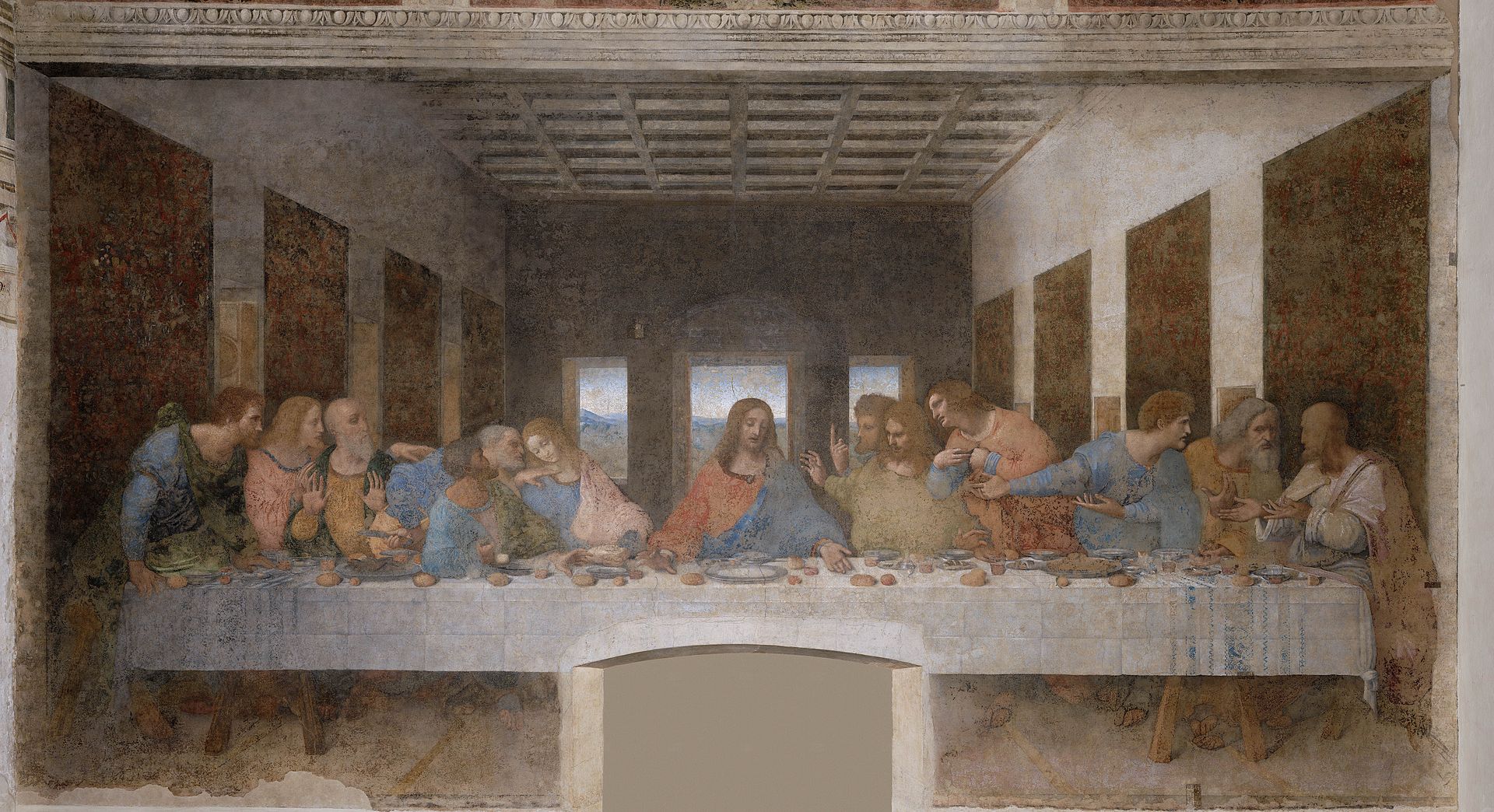
Jesus knew that people were hungry.  The Lord fed thousands with bread and fish.  He fed multitudes with hope and comfort through his teaching.  He fed the hearts of people in need of forgiveness and peace by his healing.  And on the night he was betrayed, he left his disciples with a way that they could be nourished through his body and blood for all time.

God knows our hunger.  In our need God comes to us with an abundance of life and goodness, inviting us to come and feast that we might have life.  In the Eucharist we proclaim that out of love the Lord Jesus is among us so that the community might receive the nourishment needed for our journey through life.

At Mass we proclaim this mystery.  Through the power of Christ, bread and wine become the Lord’s body and blood for our spiritual food.  As we receive communion the words “the body of Christ” state not only what we receive but what we become.  For as we receive the Lord in holy communion, we become the Body of Christ – empowered to share the Lord’s love in our world that others who hunger might be fed.


The Most Holy Trinity

iPhone 082

Study:  Recall a time when you had an experience of God.  Consider how you have changed because of this encounter.

Pray:  Is there something or someone in your life who is in need of an encounter with God?  Are you grateful for an encounter you have witnessed in your own life?  Take this to your prayer.

Serve:  How can you help others encounter God in their lives?  What can you do for others to remove obstacles and allow them to experience God’s grace?

Here in the North we are blessed with an abundance of natural resources.  Forests, lakes, rich farmland, beaches, trails, and countless other treasures comprise the bounty of our countryside.  Many of these resources are easy to take for granted, especially for those of us who live among them all year long.

Take water for example.  The lakes and rivers of Wisconsin inspire and relax people throughout the seasons.  From fishing to water skiing, the activities surrounding water are endless.  Indeed, when compared to other places around the world, our supply of fresh water is a priceless commodity.

Of course water does come in different forms.  As a solid, liquid, or gas water is both useful and easily recognizable.  The different forms help us to understand that one substance can be revealed in a variety of ways; something can be the same while appearing in a different or even contradictory fashion.

The Holy Trinity is one of the central mysteries of our faith.  At its heart lies our belief that there is one God who is revealed to us in three different ways:  the Father, the Son, and the Holy Spirit.  These three Persons, who we invoke every time we make the sign of the Cross, are part of the experience of faith which the followers of Jesus encountered.

As the disciples listened to the teaching of Christ, they understood that Jesus was the Father’s only Son.  They accepted the promise that Jesus, who rose from the dead and ascended into heaven, would ask the Father to send the Advocate – the Holy Spirit, to guide them and give them strength.  It is through our faith in Christ that we come to this knowledge, for God is revealed to us through these three Persons, who are in complete and inseparable unity.

Yet the Trinity is not only a mystery which teaches us about God; it is a mystery for our own lives as well.  Just as the Father sent the Son, and later the Holy Spirit – we, too, are sent to reach out to our sisters and brothers with the knowledge and hope that we have received.  We are invited to both live in unity with those around us, even as we work to bridge the divisions and hostilities which separate us.

The Trinity is a mystery that reveals to us the love of God – through the Father, Son, and Holy Spirit.  May we respond in a similar fashion, reflecting the love of God to those around us.


Pentecost – Finding our Strength

Holy Spirit - St. Peter's

Study:  Reflect on a time when you felt God’s strength.  Was it with the help of others or in a particular situation?  How did God help you?

Pray:  We all need strength to face challenges in life.  Ask for the power of the Holy Spirit to face what lies ahead.

Serve:  How might the Holy Spirit be working through you to help another?  How might the Spirit call you to serve someone else?

Pentecost Readings:

Where do people find their strength?  As a priest I have had the privilege of walking with families during moments of trial and difficulty.  At times when pain and struggle seem too difficult to bear, I often witness people who face incredible obstacles through their faith, which sustains them in truly amazing ways.

Faith gives life, guidance, meaning, and strength.  Yet what makes our faith possible?  How does God empower our faith in the midst of the activity and demands of daily life?  The answer is simple:  The Holy Spirit.

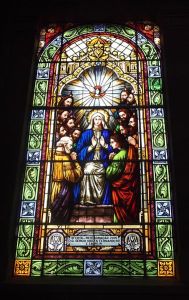
The feast of Pentecost celebrates the coming of the Holy Spirit upon the Church after Jesus ascended into Heaven.  Through this coming the Apostles were transformed – their hearts were on fire, blazing with a desire to live as Christ taught, and sharing what they had received with others.

Pentecost was an amazing event!  Through the power of the Holy Spirit, the Church gained courage and strength that it had not previously experienced.  Disciples (who had formerly been afraid and doubtful) were now fearlessly proclaiming the Good News – facing even persecution and death.

Something happened.  Something powerful and life changing.  Something that could not be attributed to a human cause.  Through Pentecost God intervened in the lives of people, and from this moment the Church has been on fire.

Yet Pentecost was not a one-time event.  Indeed, the power of this feast continues through the whole Church.  The Holy Spirit, promised to us by Jesus, is sent by the Father so that this same strength is ours as well.  It is the Spirit which dwells within us, guiding and empowering us in our moments of need.

Every saint, every person of faith, every heroic and Christ-like act of goodness – is filled with the power of the Holy Spirit.  For whenever we open our hearts, asking the Spirit to dwell in our lives, God will send the Spirit to give us the strength we need.

This is our promise!  We stand in the same tradition as the Apostles, and we seek God to be with us.  Just as God sent the Spirit upon the early Church, so too will God send the Spirit upon the Church today.  What is needed is an invitation:
Come Holy Spirit!
    Kindle in our hearts the fire of your love! 


7th Sunday of Easter – Ascension

Sunset

Study:  Transitions are a time of uncertainty.  Consider a time when you experienced a transition: how did it feel?  How did you face it?

Pray:  When faced with the unknown we come to the Lord for direction.  Pray that the Holy Spirit will send both wisdom (to know what to do), and strength (so you can do it).

Serve:  Who in your life is alone right now.  How might you walk with another in a time of transition and uncertainty?

7th Sunday of Easter – Ascension Readings:

There are moments in life when it is difficult to say good-bye.  Whether it is a relocation through work, the completion of school, or the death of a loved one, we know that these events challenge us to move on with the transitions in life.

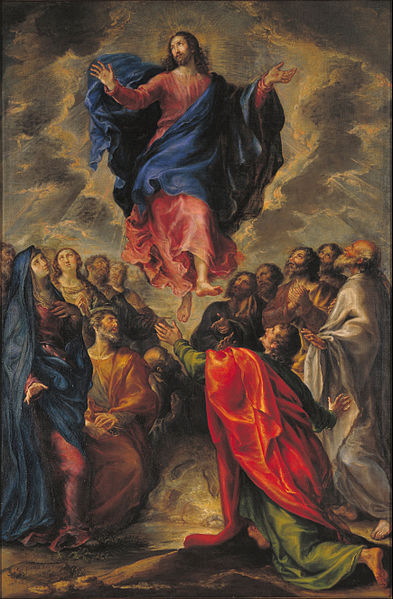
The Feast of the Ascension marks one of these transitions in the Church.  This feast demands that we ask the question, “Now what?” as the Lord is taken from our midst.  The disciples must now discover the new ways that God is at work in their lives – especially now that Jesus is no longer with them.

But unlike other transitions, where people pass out of our lives and are separated from us by physical distances or death, Jesus leaves his disciples in a different way.  By ascending into heaven he does not move out of our lives, but rather he comes into contact with all life.  Through his ascension the Holy Spirit comes upon all people, and Jesus touches our lives in a new and mysterious way.

The mystery of the Ascension is closely connected to the Resurrection of Jesus.  The early Church recognized that the saving work which God did through Jesus included both of these events.  We say in the Creed, “…he rose from the dead…(and) ascended into heaven…” in the same breath – for these two events show that the Lord’s work is unlike anything else ever done before.

Through his Resurrection, death and sin no longer have power over Jesus Christ; his sacrifice on the Cross offers hope for the whole world.  Through his Ascension, all people can know Jesus and the Spirit; taken up to heaven, the Lord is now present to all people regardless of time or space.

This feast reminds us that Christ does not abandon his people.  The Lord is near, and we enjoy his presence even though we cannot touch him as the disciples did.  We know that God walks with us, and we trust that the Lord will give us the strength to carry out the mission of the gospel through the transitions we face in this life.